


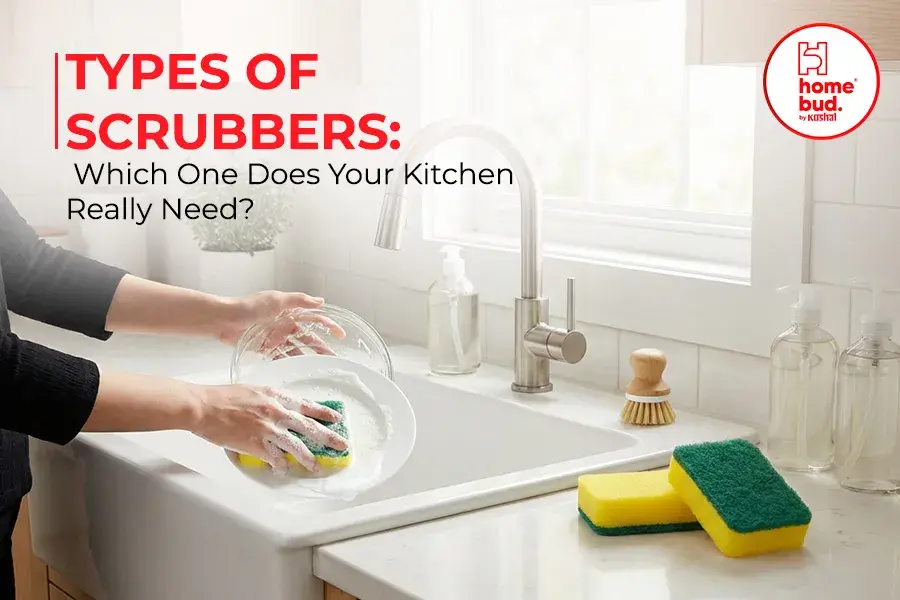
Let’s be honest. Not all dishes are created equal.
Some need a gentle wipe. Some need a little pressure. And some burnt pans? They need backup.
That’s exactly why understanding the types of scrubbers matters. Because using the wrong scrubber for the wrong job either wastes time… or damages your utensils.
At Home Bud, we believe cleaning should feel easy, not exhausting. And choosing the right scrubber is the first step toward a smarter kitchen routine.
So let’s break it down: how many types of scrubbers are there, what’s the difference between them, and when should you use each one?
Why One Scrubber Is Never Enough
In every kitchen, you’ll find:
- Light oil stains
- Sticky masala residue
- Burnt deposits
- Delicate cookware
- Heavy-duty vessels
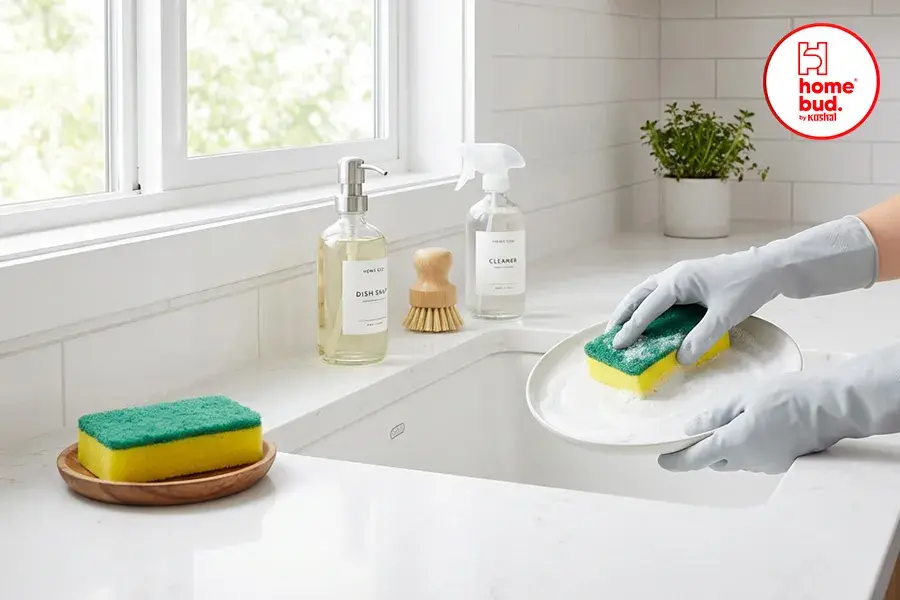
No single scrubber can handle all of that. That’s why there are different types each designed for a specific level of cleaning.
And this is where Home Bud offers three powerful yet practical options:
- Kitchen Scrub Sponge
- Sandwich Sponge Scrub
- Stainless Steel Scrubber
Each one serves a purpose. Let’s understand how.
Kitchen Scrub Sponge Gentle But Effective
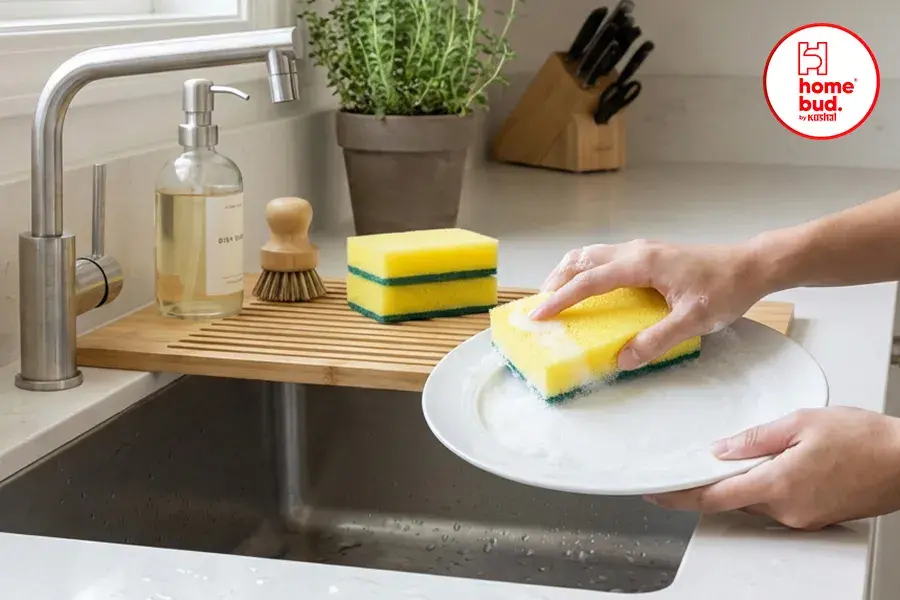
If you’re looking for an everyday clean kitchen sponge, this is your go-to.
The Kitchen Scrub Sponge by Home Bud is soft yet effective. It’s designed for:
- Removing oily stains
- Cleaning daily dishes
- Being gentle on hands
- Safe use on delicate cookware
This type of sponge scrubber is perfect for plates, bowls, and light utensils that don’t need aggressive scrubbing.
When to Use It:
- After daily cooking
- For non-stick cookware
- For quick clean-ups
The soft sponge layer absorbs soap efficiently while the scrubbing side removes grease without scratching surfaces. If your goal is maintaining shine without damage, this is the ideal scrubber for regular use.
Sandwich Sponge Scrub The Balanced Performer
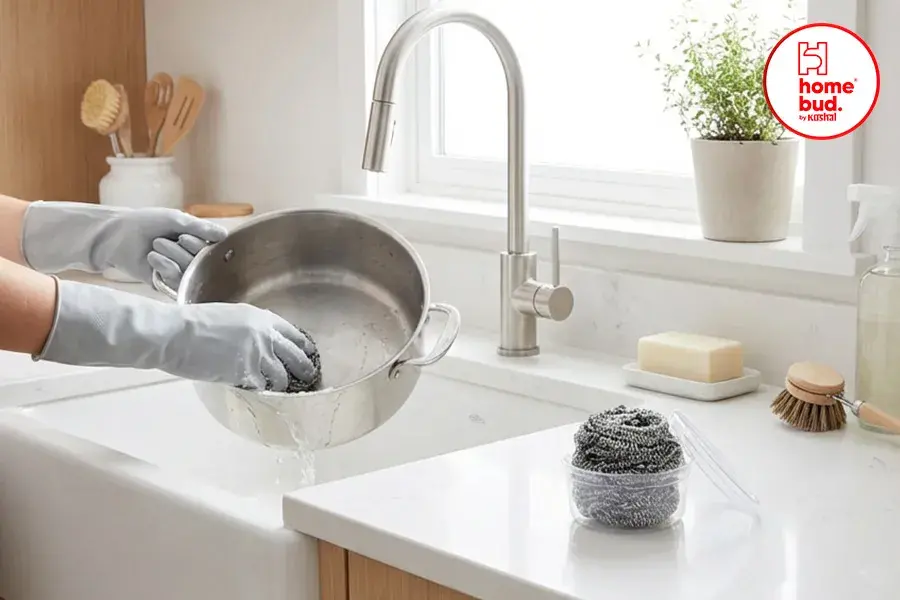
Now, if your dishes need something slightly stronger but still controlled, the Sandwich Sponge Scrub steps in.
This isn’t just a basic scrubber. It’s crafted with three layers:
- A scrubbing layer
- A foam layer that holds detergent
- A base that supports structure
This layered design makes it a powerful sponge scrubber that:
- Holds froth inside
- Reduces detergent wastage
- Cleans stubborn grease
- Stays comfortable in hand
It’s thicker and stronger than a regular clean kitchen sponge, but still gentle enough for everyday use.
When to Use It:
- For stubborn oily vessels
- For heavy masala stains
- For utensils that need a little extra pressure
The difference between this and a regular sponge is durability and cleaning strength. It gives you deeper cleaning without shifting to harsh materials.
Stainless Steel Scrubber The Tough Fighter
Now we come to the heavy-duty option — the steel scrubber.
Some burnt deposits don’t leave easily. For those moments, you need strength.
The Stainless Steel Scrubber (2 pcs) from Home Bud is designed for:
- Burnt utensils
- Tough grime
- Deep stains
- Long-lasting performance
A steel scrubber is rust-resistant, durable, and made for intense cleaning.
When to Use It:
- Burnt kadai bottoms
- Pressure cookers
- Iron or steel utensils
- Thick deposits
But remember — this type of scrubber should not be used on non-stick cookware. It’s powerful, and that’s exactly why it works so well on tough surfaces.
Main Difference Between the Three Types of Scrubbers
Let’s simplify it:
Type | Strength Level | Best For |
Kitchen Scrub Sponge | Light | Daily dishes & delicate cookware |
Sandwich Sponge Scrub | Medium | Oily & stubborn kitchen stains |
Stainless Steel Scrubber | Heavy | Burnt & hard deposits |
The biggest difference lies in:
- Material
- Scrubbing power
- Surface compatibility
A clean kitchen sponge is for maintenance. A layered sponge scrubber is for stronger grease. A steel scrubber is for extreme cleaning needs.
And that’s why knowing your scrubber types saves effort.
How Many Types of Scrubbers Are There in a Kitchen?
In a practical kitchen setup, three types are more than enough:
- Soft sponge scrubber
- Multi-layer sponge scrubber
- Steel scrubber
Together, they handle 90% of kitchen cleaning situations.
At Home Bud, these three scrubbers are designed to complement each other not replace each other.
How to Use Each Scrubber Properly
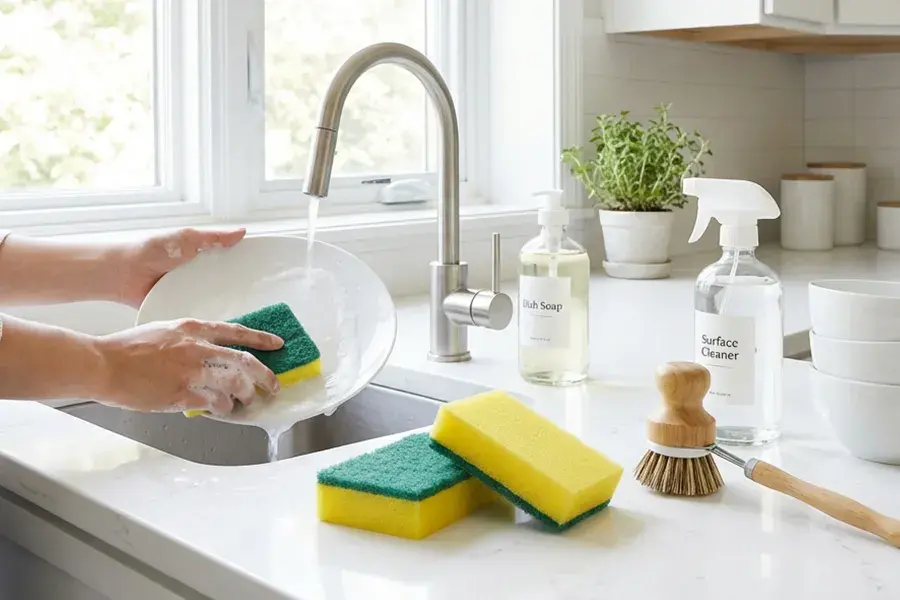
Using the right scrubber correctly extends its life.
For Sponge Scrubber:
- Rinse after every use
- Let it dry properly
- Replace when worn out
For Steel Scrubber:
- Use only on heavy surfaces
- Rinse thoroughly
- Let it dry to prevent moisture build-up
Simple habits improve performance and hygiene.
Why Home Bud Scrubbers Make Cleaning Easier
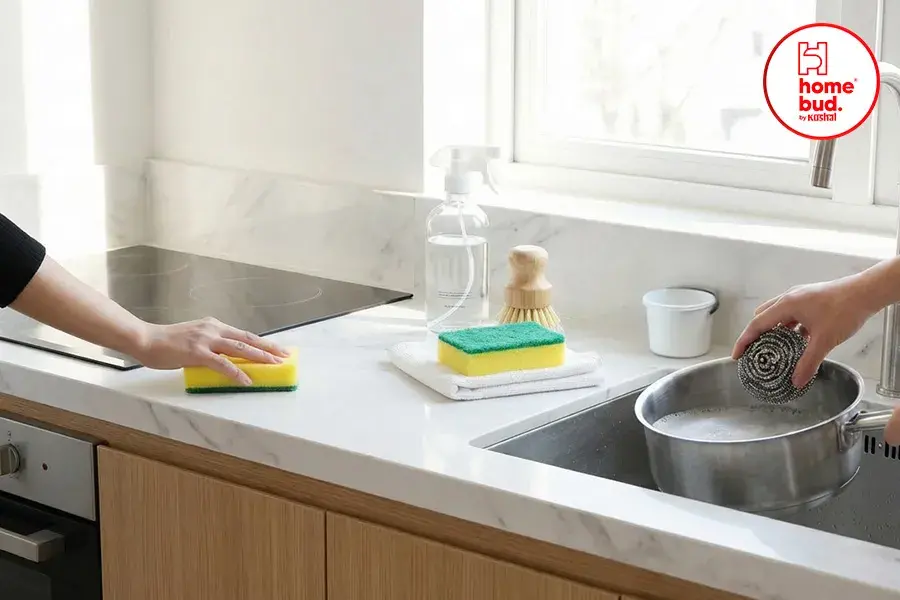
Cleaning isn’t about scrubbing harder. It’s about scrubbing smarter.
Home Bud focuses on:
- Long-lasting materials
- Comfortable grip
- Efficient detergent use
- Safe cleaning performance
Whether it’s a gentle clean kitchen sponge or a strong steel scrubber, the goal is the same — effective cleaning without damaging your utensils.
Choose Smart, Clean Smart
Every kitchen deserves the right tools.
Understanding the types of scrubbers helps you:
- Protect cookware
- Save time
- Reduce effort
- Improve hygiene
Instead of forcing one scrubber to do everything, let each type do what it’s best at.
With the right mix of sponge scrubber and steel scrubber options from Home Bud, your kitchen cleaning becomes faster, easier, and more satisfying.
Because a clean kitchen isn’t about effort.
It’s about the right scrubber.
FAQs: Types of Scrubbers
1. How many types of scrubbers are there?
In a kitchen, there are mainly three types: sponge scrubber, layered sponge scrubber, and steel scrubber.
2. What is the difference between sponge and steel scrubber?
A sponge scrubber is for light cleaning, while a steel scrubber handles burnt and tough deposits.
3. Can I use a steel scrubber on non-stick pans?
No, steel scrubbers may damage non-stick coating.
4. What is a clean kitchen sponge used for?
It’s used for daily dishes and light grease removal.
5. Which scrubber is best for burnt utensils?
A stainless steel scrubber works best for burnt deposits.
6. How often should I replace my scrubber?
Replace sponge scrubbers every few weeks depending on usage.
7. Is the sandwich sponge scrub good for heavy oil?
Yes, its layered design holds detergent and removes stubborn grease effectively.
8. Why choose Home Bud scrubbers?
They are durable, effective, and designed for different levels of cleaning needs.