
Cloth Clip
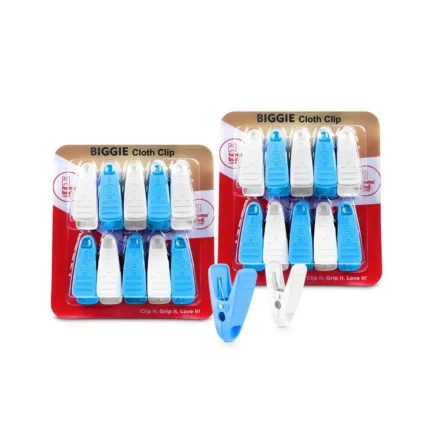
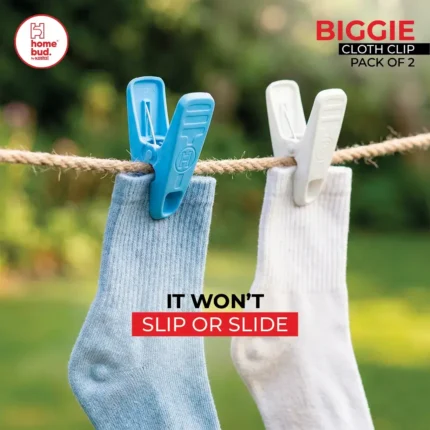
Biggie Cloth Clip
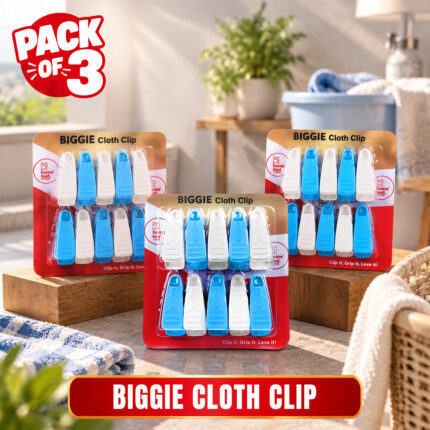
Biggie Cloth Clip Pack of 3
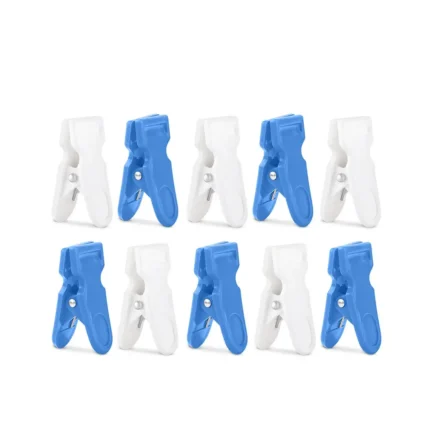
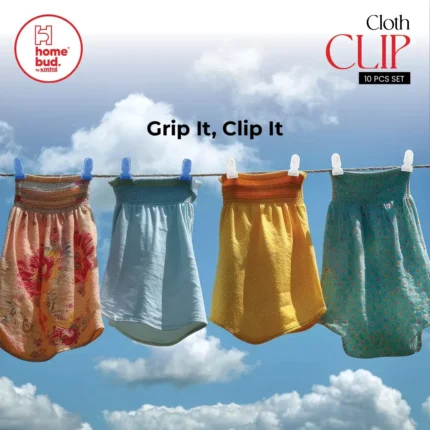
Cloth Clip (10 Pcs Set)
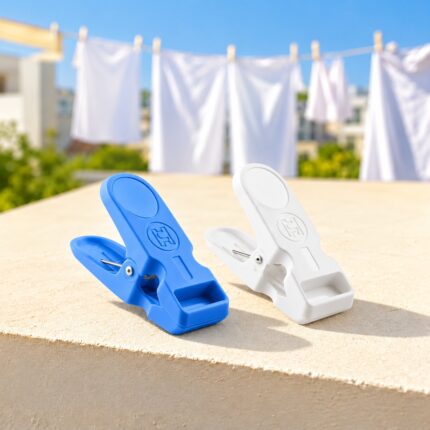

Grippo Cloth Clip

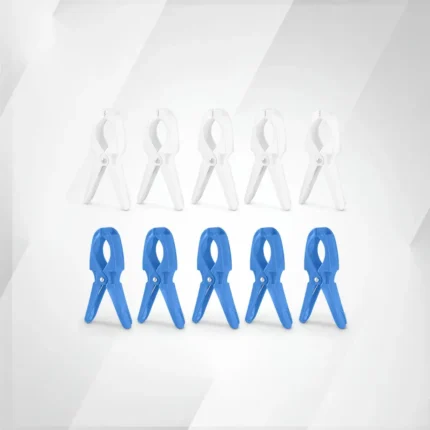
Jumbo Cloth Clip (10 Pcs Set)
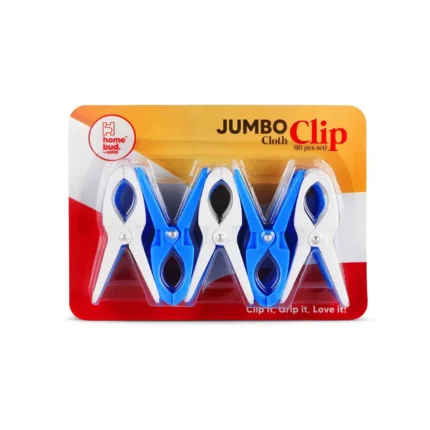
Jumbo Cloth Clip Pack of 3
Cloth Clip, Strong Grip Laundry Pegs for Every Fabric and Every Home
A cloth clip is one of those things you do not think about until the wrong one lets you down. A weak spring that loses its grip after a week. A clip that snaps in the first monsoon wind. Thin plastic that cracks under the weight of a wet towel or a heavy denim pair of jeans. You end up re-buying the same low-quality clips repeatedly and spending more over a year than a good set of clips would have cost from the start.
At Homebud, our cloth clips for drying clothes are built around three principles that matter most to Indian households, strong grip that holds in wind, durable plastic that does not crack or fade in direct sunlight and rain, and a size range that matches what you are actually drying. Whether you hang delicate dupattas on a thin balcony rope or heavy wet towels on a steel rod, we have a clip sized for the job.
Browse all three Homebud cloth clip options above and find the right size for your laundry routine.
Why the Right Cloth Clip Makes a Real Difference in an Indian Home
Balcony drying is the primary laundry method for the vast majority of Indian households. Unlike homes with drying machines or large outdoor yards, Indian apartment balconies work with limited space, thin ropes or steel rods, and exposure to everything from dry summer heat to monsoon winds and heavy rain.
In this environment, a weak clip is not just inconvenient, it means clothes that fall into the balcony drain, wet garments that blow against a dirty wall, or a saree that drops several floors because the clip gave way on a windy afternoon. A strong, well-made cloth clip is a practical necessity in this setting, not an optional accessory.
The spring inside the clip is the single most important component. A spring-loaded cloth clip with an industrial-grade spring maintains its grip force consistently over months of daily use in wet conditions. A clip with a weak or low-grade spring provides adequate grip when new but loses its tension progressively until it is barely holding anything at all. This is why the cheapest clips feel fine in the shop and are replaced within weeks.
The plastic quality determines how long the clip body itself survives outdoor conditions. Quality plastic cloth clips resist the UV degradation that makes cheap plastic brittle and prone to snapping, the moisture absorption that weakens the clip body over time, and the temperature cycling from hot Indian summers to monsoon cold that stresses low-grade plastic to cracking.
Smooth inner jaw surfaces on the clip prevent the clip from leaving pressure marks on delicate fabrics like chiffon, georgette, or cotton kurta fabric. Ribbed or rough jaw surfaces grip more firmly on heavy fabrics but can leave marks on fine materials, understanding this helps you choose the right clip size for the right garment.
Three Cloth Clip Sizes, Matched to What You Are Actually Drying
Homebud offers three cloth clip options specifically designed for different laundry needs. Here is how to choose the right one.
The Cloth Clip 10 Pcs Set at Rs. 125 is the everyday standard size, the right choice for daily laundry loads of light to medium weight garments. T-shirts, cotton kurtas, children's clothing, school uniforms, dupattas, light salwar sets, undergarments, and socks all dry perfectly on a standard size cloth clip. The spring provides a firm grip that holds these garments on a rope or rod through a typical balcony breeze without leaving pressure marks on lighter fabrics. At 10 clips per set, it covers a full standard laundry load for a small to medium household. This is the workhorse of the Homebud clip range, the clip you will reach for most often on most days.
The Biggie Cloth Clip at Rs. 165 is the step-up option for heavier everyday fabrics and garments that standard clips struggle to hold securely. Wet bath towels, thick cotton bedsheets, men's denim jeans, heavy winter woolens, and bulky garments benefit from the wider jaw and stronger spring of the Biggie clip. The wider jaw spreads the grip force across a larger surface area of the fabric, which both holds heavier weight more securely and reduces the risk of leaving a concentrated pressure mark on thicker fabrics. If your balcony faces a direction that gets strong wind or if you regularly dry heavy items, the Biggie is the practical daily-use choice.
The Jumbo Cloth Clip 10 Pcs Set at Rs. 140 is the heavy-duty option designed for the largest and heaviest laundry items in any household. Sarees, particularly heavy silk, cotton, or embroidered sarees that hold significant water weight when wet, are the primary use case. Double bedsheets, large curtains taken down for washing, heavy woolen blankets, and thick towel sets all benefit from the Jumbo clip's maximum jaw opening and strongest spring tension. A wet silk saree can weigh over a kilogram when freshly washed. Only a Jumbo-sized clip with sufficient jaw opening and spring strength holds it securely on a rope without the clip sliding along the rope or the saree pulling the clip open. With 10 clips per set and a rating of 4.86 out of 5, this is the most reviewed and highest-rated product in the Homebud clip range.
Cloth Clips for Every Fabric Type in an Indian Household
Indian laundry is significantly more diverse than western laundry in terms of fabric weight, size, and structure. A single household may dry everything from a newborn's muslin cloth to a heavy silk saree in the same balcony drying session. Here is the fabric-specific guide to choosing the right Homebud clip.
For cotton everyday wear, shirts, kurtas, t-shirts, salwar bottoms, the standard Cloth Clip 10 Pcs Set is the correct choice. Cotton is medium weight, holds water moderately, and does not require the stronger grip of a larger clip for everyday drying conditions.
For silk, chiffon, and georgette sarees and dupattas, the Jumbo Cloth Clip is the right option for the saree body due to its ability to hold the weight of the full wet saree, while a standard clip can be used on the dupatta or lighter pieces. Always clip these delicate fabrics at the edge or border of the garment rather than through the body of the fabric to avoid any stress marks.
For heavy cotton or polyester sarees, the Jumbo Cloth Clip handles the weight and width of these garments most securely, particularly at the pallu end which tends to be heavier than the body of the saree.
For baby and children's clothing, which is lightweight but needs secure holding because small garments on a balcony rope are prone to blowing off in even mild wind, the standard clip provides more than enough grip and its firm spring keeps small garments in place reliably.
For denim jeans, the Biggie Cloth Clip is the correct choice. Heavy wet denim exerts significant downward force and a standard clip tends to slip or open under the weight of a full pair of jeans. The wider jaw and stronger spring of the Biggie maintains a secure grip on denim waistbands and hems.
For thick bath towels and bedsheets, the Biggie handles standard single and double bath towels well. For very large family-size bedsheets, the Jumbo Clip's maximum jaw opening handles the thicker folded edge of the sheet at the rope.
Using Cloth Clips Beyond Laundry, Everyday Household Uses
A good quality cloth clip is one of the most versatile household tools you can own. The same strong grip and durable construction that makes it effective for laundry drying makes it useful for a wide range of everyday home organisation tasks.
Food bag sealing is one of the most common secondary uses for cloth clips in Indian kitchens. Sealing an open packet of atta, a half-used packet of dal, or a bag of snacks with a strong clip keeps the contents fresh and prevents spills in the pantry or kitchen cabinet. The strong spring of the Homebud clips creates a secure seal on most standard plastic and paper packaging.
Chip bag and snack packet sealing is a daily use case in homes with children. A standard or Biggie clip on an open packet of biscuits, chips, or namkeen keeps the contents crisp and the packet organised on the kitchen shelf.
Organising cables, wires, and cords by clipping them into neat bundles at the back of a desk or entertainment unit is a practical household use that a firm plastic clip handles well.
Craft and art projects, display boards, photo and document organisation, temporary bag closures during travel, the spring-loaded clip design works for any application where a firm, repositionable grip is needed.
Securing curtains or drapes that need to be temporarily held aside during cleaning or ventilation is another common household application where a strong cloth clip is the most practical tool available.
What to Look For When Buying Cloth Clips in India
With a large number of options available at similar price points, knowing what separates a quality cloth clip from a cheap one helps you make a buying decision you will not regret within a month.
Spring quality is the first thing to evaluate. A spring-loaded cloth clip is only as good as the spring inside it. The spring should feel firm and consistent when you open and close the clip by hand. A spring that feels loose or that opens too easily with minimal finger pressure will not maintain adequate grip force under the weight of wet garments. The Homebud clips use springs engineered for consistent grip force over extended repeated use in wet outdoor conditions.
Plastic density and finish tells you about the long-term durability of the clip body. Quality plastic has a smooth, even surface without visible seams, rough spots, or thin areas. It should feel solid and rigid rather than hollow or flexible when squeezed. Thin, hollow plastic clip bodies crack under grip pressure and degrade quickly in UV exposure. The Homebud clip bodies are moulded from dense, UV-resistant plastic that maintains its structural integrity through years of outdoor balcony use.
Jaw surface design affects both grip effectiveness and fabric safety. A jaw with fine ribbing or texture provides grip without concentrating force on a small area of fabric. Smooth jaw surfaces are gentler on delicate fabrics. The right jaw design depends on what you are primarily drying, the Homebud range covers both with the standard clip's balanced jaw and the Biggie and Jumbo's wider jaw surfaces designed for heavier fabrics.
Pack size and value matter for households with regular full laundry loads. A pack of 10 covers a single standard drying session for a small household. Larger families or households that dry multiple loads per day benefit from having two to three sets available so one set can be in use while another is being loaded or cleared.
Frequently Asked Questions About Cloth Clips
What is the difference between a standard cloth clip and a jumbo cloth clip?
A standard cloth clip is sized for light to medium weight garments, shirts, kurtas, children's clothing, socks, and undergarments. A Jumbo cloth clip has a wider jaw opening and a stronger spring designed for heavy wet items like sarees, large bedsheets, thick towels, and blankets that a standard clip cannot hold securely due to their weight and thickness. The Biggie Cloth Clip sits between the two, ideal for denim, heavy cotton, and bath towels.
Are Homebud cloth clips suitable for balcony rope drying in wind?
Yes. Homebud cloth clips are designed for outdoor balcony use in Indian weather conditions including the strong winds common during pre-monsoon and monsoon months. The spring-loaded design provides a strong grip force that holds garments on ropes and rods securely in standard balcony wind conditions. For very exposed balconies facing strong wind, using the Biggie or Jumbo clips rather than standard clips adds additional grip security for heavier garments.
Will plastic cloth clips crack or break outdoors in Indian summer heat?
Quality plastic cloth clips made from UV-resistant materials handle Indian summer conditions well. The Homebud clips are made from dense plastic designed to resist the UV degradation and heat cycling that cracks cheaper plastic. Avoid leaving clips in direct intense sunlight for extended periods when not in use, storing them in a bag or container between laundry sessions significantly extends their lifespan.
How many cloth clips do I need for a family household?
A household of 3 to 4 people doing one full laundry load per day typically needs 20 to 30 clips to cover the load comfortably, including garments of different sizes and weights. Two to three sets of Homebud Cloth Clip 10 Pcs gives you this coverage. For larger families or households that dry multiple loads, having 30 to 40 clips available across standard and jumbo sizes covers all laundry needs without running short.
Can I use cloth clips on a steel rod instead of a rope?
Yes. Homebud cloth clips work on both laundry ropes and steel drying rods. The jaw width accommodates both the thin rope and the thicker steel rod diameter commonly used in Indian balcony and bathroom drying setups. The Biggie and Jumbo clips with their wider jaw openings are particularly well suited to thicker steel rods.
Which cloth clip is best for hanging sarees?
The Jumbo Cloth Clip 10 Pcs Set is specifically designed for heavy garments like sarees. Its wider jaw and stronger spring handle the weight of a full wet saree on a balcony rope without slipping or opening under the load. Clip sarees at the top edge or border of the pallu and at the starting end to distribute the weight across two clips and prevent any single clip from bearing the full weight of the saree.
Are these clips safe for delicate fabrics?
The standard Cloth Clip 10 Pcs Set and the Jumbo Cloth Clip both have smooth-edged jaws that do not leave harsh pressure marks on most standard fabrics when used correctly. For very delicate fabrics like chiffon or fine silk, clip at the edge or border of the garment rather than through the body of the fabric to minimise any contact with the surface. Avoid overtightening by selecting a clip size that opens to the fabric thickness naturally rather than one that needs to be forced open.