
Your Kitchen Deserves a Proper Wiper and We Have One
-
Posted by
homebud
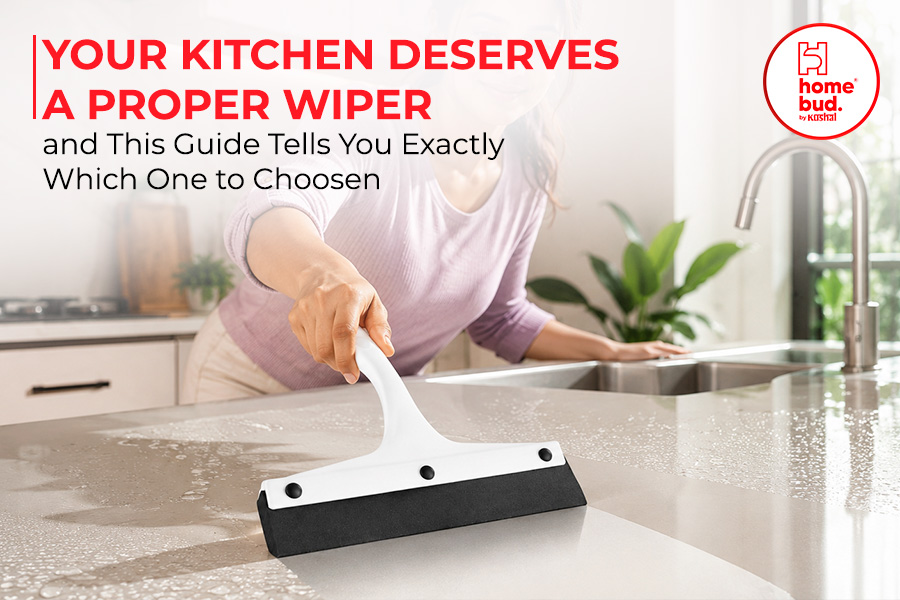
Most people who search for a wiper for kitchen do not start by knowing the exact product they are looking for. They start with a problem. The kitchen platform is always wet after washing. The area around the sink never seems to dry properly. The cloth they are using leaves the surface looking smeared rather than clean. The backsplash tiles behind the stove have a persistent dull film that regular wiping does not remove.
These are not separate problems. They are all the same problem seen from different angles. The kitchen is a wet, oily, high-use surface environment and a damp cloth is simply not the right tool for managing it. A wiper for kitchen is. And once you understand what a kitchen wiper is, how it works, and which type works best for your specific kitchen surfaces, the daily frustration of a counter that never feels properly clean will be something you remember rather than something you live with.
This guide covers everything about choosing and using a wiper for kitchen surfaces in Indian homes — from what the product category actually is, to the difference between rubber and silicone blades, to which surfaces each type works best on, to why the Homebud Kitchen Wiper at Rs. 90 is the right choice for most Indian households.
What Is a Wiper for Kitchen and Why Most Indian Kitchens Need One
A kitchen wiper is a compact, handheld cleaning tool with a rubber or silicone blade attached to a short handle. You hold it in one hand and sweep it across a wet surface in a smooth stroke, and the blade pushes water, oil residue, and spill liquid cleanly off the surface in that single pass. It is also called a kitchen squeegee, a slab wiper, a countertop wiper, or a platform cleaner depending on who is describing it and where.
The key distinction from a floor wiper is size and use case. A floor wiper has a long handle and a wide blade designed for pushing water across large floor areas. A kitchen wiper has a short, handheld design with a compact blade sized for counter-height surfaces — kitchen slabs, sinks, stovetops, tiles, and glass surfaces. The two tools serve different purposes and using a floor wiper for counter surfaces is awkward, impractical, and usually left in the other room.
The key distinction from a kitchen cloth is the mechanism of cleaning. A cloth absorbs water into its fibres, holds it there, and transfers it elsewhere when wrung out. On a smooth kitchen surface, a cloth does not remove water so much as move it around, leaving a thin moisture film as it dries. A rubber blade wiper does not absorb. It displaces — physically pushing the water off the surface edge in a single stroke. The surface is dry immediately after the wiper passes. No moisture film. No water marks. No streaks.
In an Indian kitchen where three full meals are prepared daily, where water splashes from the sink constantly, where oil mist from tadkas settles on the platform surface, and where hard water leaves mineral deposits as surface moisture evaporates, this difference in mechanism is the difference between a kitchen counter that is genuinely clean and one that is persistently grimy despite daily wiping.
The Indian Kitchen Surface Problem That a Wiper Solves Better Than Anything Else
To understand why a wiper for kitchen is so specifically suited to Indian homes, you need to understand what Indian cooking does to kitchen surfaces that most cleaning guides written for western kitchens simply do not address.
Indian cooking uses oil at high heat as the foundation of almost every dish. The moment oil hits a hot pan, it produces fine vapour that disperses through the kitchen air and settles on every nearby surface. The kitchen platform, the backsplash tiles, the stovetop surround, and the area around the sink all accumulate this fine oil film with every single cooking session. This oil film is invisible when freshly deposited, but over a day of cooking it combines with water from sink splashes, steam from boiling, and dust from the air to create the sticky, slightly tacky residue that makes Indian kitchen surfaces feel perpetually unclean even after wiping.
A damp cloth passed over this combined water and oil film typically smears it rather than removing it. The cloth distributes the oil-water mixture across the surface in a thin layer that resets to its previous grimy state as it dries. A rubber blade wiper on a freshly cleaned, slightly wet surface pushes both the water and the loosened oil residue off the surface edge before it can resettle. The result is a platform that is both dry and visibly cleaner after a single pass.
Hard water is the second specifically Indian kitchen challenge. Most Indian cities have significantly hard tap water with high mineral content. When water droplets on a kitchen surface air-dry naturally, the minerals in the water are left behind as white chalky deposits on the surface. These deposits are what cause the dull, spotted appearance on kitchen granite and the white ring marks around the sink that develop within weeks of a kitchen being put into daily use. A kitchen wiper that removes the water completely before it air-dries eliminates the mineral deposit problem at the source. No standing water means no evaporation means no mineral residue.
Rubber Blade vs Silicone Wiper for Kitchen Surfaces
This is the question that matters most when choosing a wiper for kitchen use and the one that most product listings answer with generic specifications rather than practical guidance. Here is the honest breakdown in plain language.
A rubber blade kitchen wiper creates a firm, consistent seal with flat smooth surfaces and pushes water efficiently in a single clean stroke. The firmness of the rubber is what makes it so effective at completely clearing a flat granite or marble kitchen counter in one pass. The blade does not flex much, which means it maintains contact with the surface uniformly across its full width throughout each stroke. This uniform contact is what produces the streak-free result on flat kitchen surfaces.
Rubber is the better choice when the primary goal is efficient water removal from flat counters and slabs. It handles the daily kitchen cleaning routine most effectively because it clears water fastest with the least number of strokes. It is slightly more affordable than silicone and widely available. The Homebud Kitchen Wiper uses a premium rubber blade specifically because rubber delivers the most effective daily water clearance on the flat granite, marble, and tile surfaces that dominate Indian kitchen counters.
A silicone blade kitchen wiper is softer and more flexible than rubber. It conforms to slight surface variations and curves more closely and creates a marginally tighter seal on very smooth or polished surfaces. Silicone does not crack or harden over time the way rubber can in very dry or very hot environments, which means a silicone blade tends to last longer before needing replacement. Silicone is also naturally resistant to bacterial adhesion, which makes it slightly more hygienic in a food preparation environment.
Silicone is the better choice when the kitchen surfaces include delicate polished stone, high-gloss ceramic, or any surface where you want maximum gentleness and the slightly more flexible blade conformity that silicone offers. For everyday Indian kitchen use on standard granite, vitrified tile, and stainless steel surfaces, the practical difference between a good rubber blade and a silicone blade in daily use is small. Both work effectively. Rubber tends to be the daily workhorse choice and silicone the choice for premium surface care.
Every Kitchen Surface a Wiper Can Clean and How to Use It on Each
A kitchen wiper is not a single-use tool. Used correctly, it covers most of the surfaces in an Indian kitchen and eliminates the need for multiple different cleaning tools for different areas. Here is the surface-by-surface guide.
The kitchen platform or slab is the primary use surface for a kitchen wiper and the one it is most directly designed for. After washing vegetables, rinsing dishes, cleaning up after cooking, or dealing with a water spill, a single smooth pass with the rubber blade from one end of the counter to the sink edge or counter edge clears the entire surface of water in a moment. For a standard Indian kitchen counter of 60 to 90 cm, two to three overlapping strokes with a compact kitchen wiper complete the job in under fifteen seconds. The counter is genuinely dry immediately after rather than air-drying over the next ten minutes while accumulating more water from the next cooking task.
The stainless steel kitchen sink is the surface that generates the most water in the kitchen and the one that most benefits from a daily wiper pass. After every round of washing, the sink interior and the counter area around the sink are wet. A quick pass of the kitchen wiper across the sink surface and the surrounding platform before you put the vessel away takes five seconds and prevents the mineral deposit water marks that make stainless steel sinks look dull and spotted within weeks of installation.
The glass or tiled stovetop surround accumulates a combination of oil mist, steam condensation, and cooking splatter that is most easily cleaned immediately after cooking while the residue is still wet and loose. A rubber blade kitchen wiper across this surface after every cooking session pushes the wet residue toward the counter edge before it dries and bakes onto the surface. This habit alone reduces the frequency of the intensive stovetop deep cleaning session that most households dread to once every few weeks rather than every few days.
The kitchen backsplash tiles behind the sink collect water splash from washing and oil vapour from cooking. These tiles are typically the area of the kitchen that becomes visibly grimy fastest and most persistently. A quick wipe with the kitchen wiper after the morning dishwashing and after the evening cooking session pushes the freshly settled water and light oil film off the tile surface before it can dry and bond. Kitchen tiles maintained with this daily habit stay noticeably cleaner between proper cleaning sessions.
The dining table and kitchen table surface benefits from the compact rubber blade for clearing water from cup rings, spills, and the moisture left behind after wiping the table with a damp cloth. A rubber blade pass after the cloth wipe picks up the residual moisture that the cloth leaves behind and produces a dry, streak-free table surface rather than one that looks clean when wet but shows water marks as it dries.
Why a Kitchen Wiper Is More Hygienic Than a Kitchen Cloth on a Food Preparation Surface
This is the conversation that most kitchen cleaning guides avoid because it requires acknowledging something uncomfortable. The kitchen cloth — the staple cleaning tool in most Indian homes — is one of the least hygienic surfaces in the kitchen. Studies on household kitchen hygiene consistently find that the kitchen cloth has among the highest bacterial loads of any surface in the home, higher than the toilet in many cases.
The reason is structural. A cloth absorbs moisture and food particles into its fibres and retains them there. Between uses, the cloth sits damp in a warm kitchen environment where bacteria multiply rapidly. Every surface the cloth subsequently touches receives some of this bacterial load. On a food preparation surface like a kitchen counter where vegetables are cut and food is prepared, this bacterial transfer has direct hygiene implications.
A rubber blade kitchen wiper has no porous surface and retains no moisture. The blade is solid material with nothing to absorb food particles or bacteria into. After each use, a quick rinse under the tap removes everything from the blade surface and it dries immediately. Between uses it is not harboring any growth. This is not a theoretical difference. It is a functional hygiene advantage that is particularly meaningful on kitchen surfaces where food contact happens.
This does not mean a kitchen cloth has no place in the kitchen. Cloths are necessary for wiping up dry spills, cleaning with soap, and tasks where absorption is the goal. What it means is that for the specific task of removing standing water from kitchen counter surfaces after washing, a rubber blade wiper is both more effective and more hygienic than a cloth.
Choosing the Right Kitchen Wiper for Your Kitchen Layout and Daily Routine
Not all kitchen wipers are built the same and the wrong choice means a tool that either does not fit the kitchen layout or does not get used because it is uncomfortable or impractical. Here is what to look for.
Blade width of 15 to 25 cm is the right range for most Indian kitchen counters. A blade that is too narrow requires more strokes to cover the counter and takes longer. A blade that is too wide is difficult to manoeuvre in the compact space around a sink or stovetop. The compact blade width of the Homebud Kitchen Wiper is specifically sized for Indian kitchen counter dimensions where the workspace is often compact and efficiency of reach matters.
Handle ergonomics determine whether the wiper gets used daily or becomes a drawer item after the first week. A handle that is comfortable to grip with a single hand, that does not slip when slightly wet, and that gives you natural control over the direction and pressure of the blade is the difference between a tool you reach for automatically and one you have to think about using. The Homebud Kitchen Wiper is designed with daily ease of use as the primary handle consideration.
Blade quality determines whether the first stroke produces the clean, streak-free result that justifies the tool. A blade with uneven thickness, rough edges, or poor surface finish does not seal consistently with the counter surface and leaves residual water in the uneven areas. The premium rubber blade in the Homebud Kitchen Wiper is manufactured to a consistent edge quality that produces the streak-free result buyers describe in their reviews — Ishita Lakhani noted the rubber edge glides smoothly and leaves no marks behind, and Nisha said it wipes water and spills in one smooth swipe.
Ease of storage between uses is the practical consideration that determines whether the wiper becomes part of your daily kitchen routine. A wiper that is easy to rinse, quick to dry, and that has a place to hang or stand beside the sink is a wiper you will use consistently. A wiper with no natural storage position ends up in a drawer and is eventually forgotten. The Homebud Kitchen Wiper is compact enough to stand beside the sink or hang on a hook with its handle, making it immediately accessible for every use rather than something you have to go and find.
FAQ on Kitchen Wiper Small
A kitchen wiper is a compact handheld tool with a rubber or silicone blade used to clear water, spills, and surface moisture from kitchen counters, slabs, sinks, and tiles. It is distinct from a floor wiper in its compact handheld size and short handle designed for counter-height use rather than floor level cleaning. A floor wiper has a long pole handle and a wide blade for clearing large floor areas of standing water. The two tools serve different surfaces and should not be used interchangeably.
For standard Indian kitchen surfaces including granite counters, marble slabs, vitrified tiles, and stainless steel sinks, a rubber blade provides the most effective daily water removal because its firm seal creates a complete water clearance in a single stroke. Silicone is softer and more flexible, making it slightly better for delicate polished surfaces and more durable in very dry or hot environments. For most Indian home kitchens, a quality rubber blade kitchen wiper is the right everyday choice.
No. A kitchen wiper and a kitchen cloth serve different functions. The wiper is best for removing standing water and moisture from smooth surfaces quickly and hygienically. The cloth is necessary for applying cleaning solution, absorbing dry spills, and wiping surfaces with soap. The two tools complement each other. Use the cloth for cleaning with a cleaning product and the wiper for removing the residual moisture after cleaning to leave the surface genuinely dry.
Hold the wiper comfortably in one hand and position the blade flat against the counter surface at the far edge of the wet area. Apply light, even downward pressure so the full blade width contacts the surface and push in a smooth continuous stroke toward the sink. The water collects ahead of the blade and falls into the sink at the end of the stroke. For the sink interior itself, use shorter angled strokes directed inward toward the drain.
Yes. The rubber blade is safe on glass and tiled stovetop surfaces and effectively removes water, steam condensation, and light oil residue. Use it immediately after cooking while the stovetop surface residue is still wet and loose for the best result. This habit significantly reduces the buildup that makes stovetop deep cleaning necessary.
Yes. Rated 4.9 out of 5 by buyers who use it daily in Indian kitchens, it delivers the streak-free single-pass result its design promises at a price that makes it the easiest Rs. 90 you will spend on your kitchen. With free shipping and a 7-day return policy, there is no reason not to try it and see what your kitchen counter actually feels like when it is genuinely dry and clean after every use.
A wiper for kitchen is not a luxury item. It is a practical daily tool that solves a problem every Indian kitchen has and that no cloth can solve as effectively. Once you experience a kitchen counter that is genuinely dry and streak-free after every wash rather than perpetually damp and slightly grimy, going back to managing it with a cloth will feel like the cleaning equivalent of washing dishes with a rag rather than a sponge.
Get the Homebud Kitchen Wiper at Rs. 90 today and find out what your kitchen has been missing.