


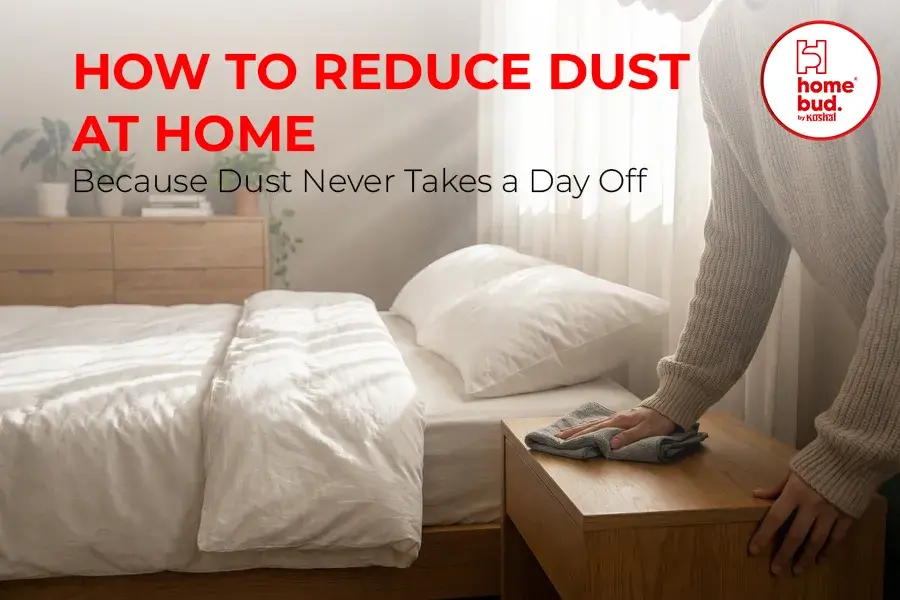
You clean today. Tomorrow… the dust is back. It settles on shelves, floats in sunlight, hides in corners, and somehow reappears even after you just swept. If you’ve ever wondered how to reduce dust at home, you’re not alone. Dust is one of the most common and most frustrating household problems.
But here’s the truth: dust cannot be eliminated completely. What you can do is learn how to reduce dust in the house, control it smartly, and prevent it from building up too quickly.
And this is exactly where the right cleaning tools make all the difference.
At HomeBud, cleaning isn’t about doing more work. It’s about doing it better.Let’s break it down.
Why Does Dust Keep Coming Back?
Before we talk about how to control dust in the house, it helps to understand where dust comes from:
- Outdoor dirt entering through doors and windows
- Fabric fibers from clothes and upholstery
- Pet hair
- Dead skin particles
- Air circulation
That’s why just wiping surfaces once isn’t enough. You need a smart routine and the right tools to reduce dust effectively.
Step 1: Start with Proper Floor Cleaning
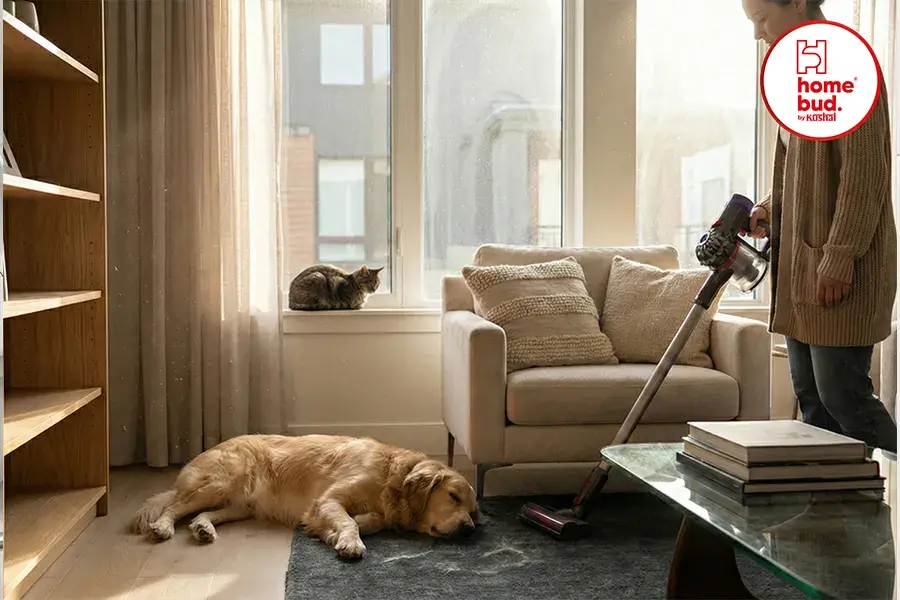
Most dust settles on floors first. If you’re serious about learning how to reduce dust at home, begin with regular floor cleaning. Sweeping daily prevents dust from rising into the air and settling again on furniture.
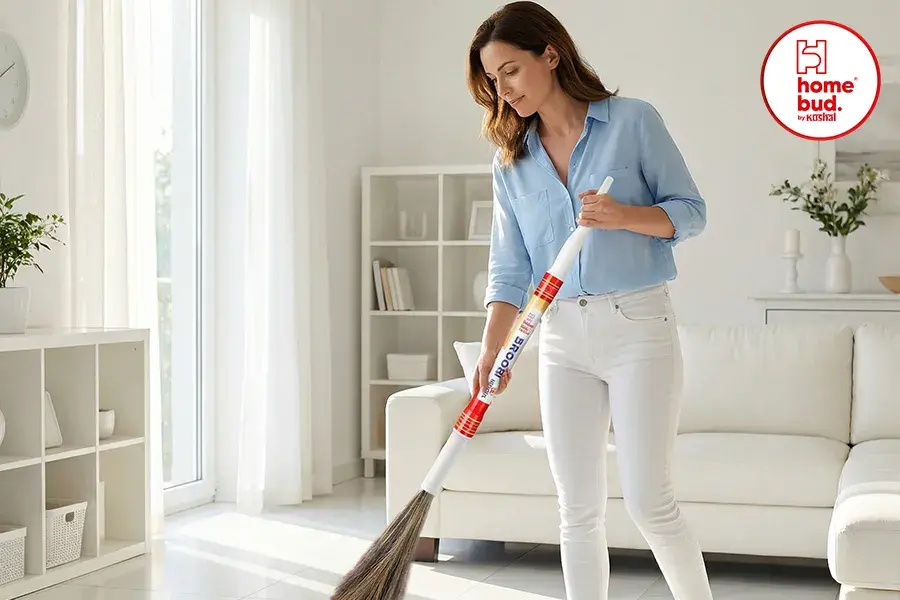
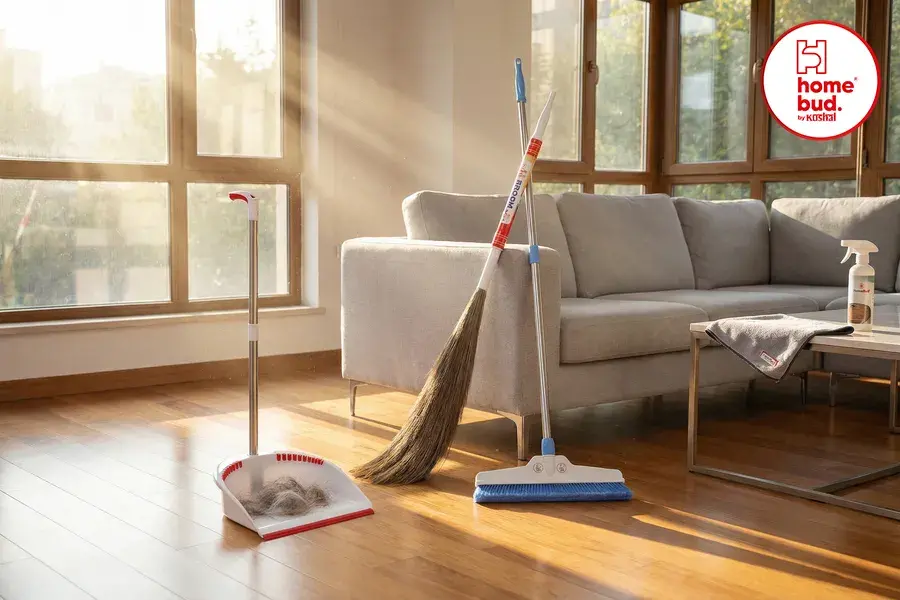
A high-quality HomeBud broom is designed to trap dust instead of spreading it around. Its bristles are structured to collect fine particles from corners and edges where dust loves to hide.
For daily maintenance, a quick sweep with a HomeBud broom reduces surface dust significantly.
If you’re asking yourself how to reduce dust in the house, this is your first and most important step.
Step 2: Use a Floor Duster for Fine Dust
Sweeping removes visible dust, but what about the fine layer you can barely see?
That’s where the HomeBud Wroom Floor Duster steps in. It’s designed specifically to trap fine dust particles that traditional sweeping might miss.
If you really want to know how to decrease dust in house, using a floor duster regularly makes a huge difference. It captures lightweight particles instead of just moving them around.
Using the Wroom floor duster 2–3 times a week dramatically improves air quality and reduces dust buildup on surfaces.
Step 3: Control Dust Before It Settles
Preventing dust is just as important as cleaning it.
If you’re wondering how to control dust in the house, focus on:
- Keeping windows closed during high-pollution hours
- Removing shoes at the entrance
- Washing curtains and bedsheets regularly
- Cleaning under furniture
And when it comes to under furniture and tight corners, the combination of a HomeBud broom and Wroom floor duster works beautifully. These tools are lightweight, easy to maneuver, and designed for daily use.
Step 4: Clean High-Touch and High-Dust Areas Weekly
Dust doesn’t just settle on floors. It collects on:
- Window sills
- Shelves
- TV units
- Ceiling fans
Once you understand how to reduce dust at home, you’ll realise that regular light cleaning is better than occasional heavy cleaning.
Using HomeBud cleaning tools consistently makes the routine faster and less exhausting.
How Often Should You Clean to Reduce Dust?
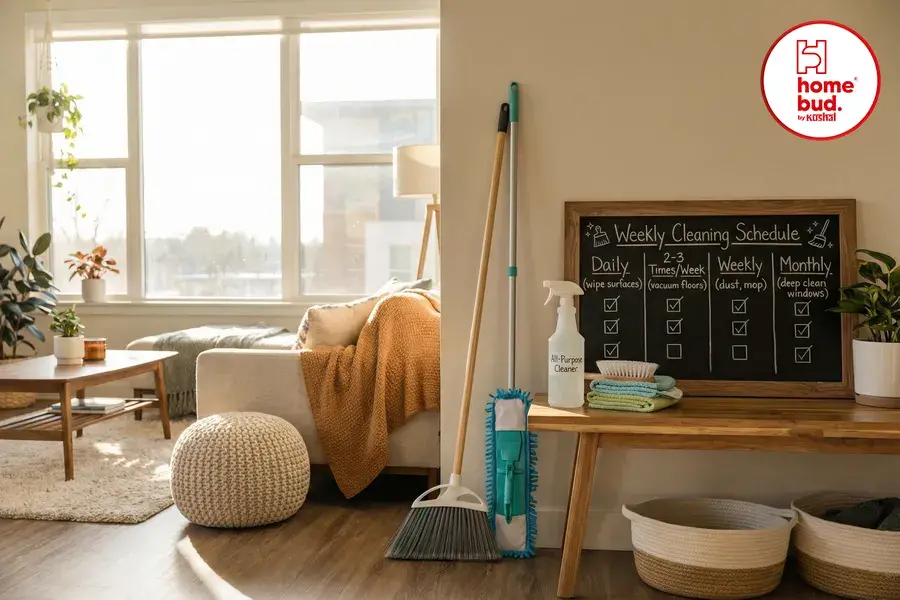
Here’s a practical guide:
- Daily: Sweep using a HomeBud broom
- 2–3 times a week: Use the Wroom floor duster
- Weekly: Clean under furniture and corners
- Monthly: Deep clean hidden areas
This combination answers the common question: how to reduce dust in the house without constant deep cleaning?
The answer is consistency.
Why HomeBud Makes Dust Control Easier
Dust control isn’t about scrubbing harder. It’s about using tools designed for everyday efficiency.
HomeBud products focus on:
- Fine dust collection
- Lightweight handling
- Durability
- Daily usability
When you use a HomeBud broom for daily sweeping and a Wroom floor duster for fine dust removal, you’re not just cleaning you’re actively reducing dust circulation.
If someone asks you how to decrease dust in house, you now know that proper floor cleaning tools are the real solution.
Small Habits That Make a Big Difference
Want to master how to control dust in the house? Try this:
- Open windows strategically for ventilation
- Avoid dry dusting (it spreads particles)
- Clean from top to bottom
- Sweep before mopping
With a consistent cleaning routine supported by HomeBud tools, your home stays fresher for longer.
Dust Less, Live More
Learning how to reduce dust at home isn’t about eliminating dust completely. It’s about managing it smartly.
With:
- Regular floor cleaning
- A reliable HomeBud broom
- The Wroom floor duster for fine particles
- Simple daily habits
You’ll notice less dust, cleaner surfaces, and a more comfortable living space.
Because a clean home isn’t about perfection. It’s about feeling fresh every day.
FAQs: How to Reduce Dust at Home
1. How to reduce dust at home naturally?
Sweep daily, use a floor duster, and maintain good ventilation.
2. How to reduce dust in the house quickly?
Start with regular floor cleaning using a quality broom and dust-trapping tools.
3. How to control dust in the house effectively?
Clean consistently, especially floors and hidden corners.
4. How to decrease dust in house long-term?
Use a floor duster regularly and maintain a cleaning routine.
5. Does sweeping help reduce dust?
Yes, daily sweeping prevents dust from circulating in the air.
6. How often should I clean floors to reduce dust?
Daily sweeping and 2–3 weekly dusting sessions are ideal.
7. Why does dust return so quickly?
Dust comes from fabrics, air, outdoor particles, and daily activities.
8. Are HomeBud broom and Wroom effective for dust?
Yes, they are designed to trap fine particles and make daily cleaning easier.
9. Can I completely eliminate dust?
No, but you can significantly reduce it with consistent cleaning.
10. What is the best tool for fine dust removal?
A floor duster works best for trapping lightweight dust particles.