
Broom
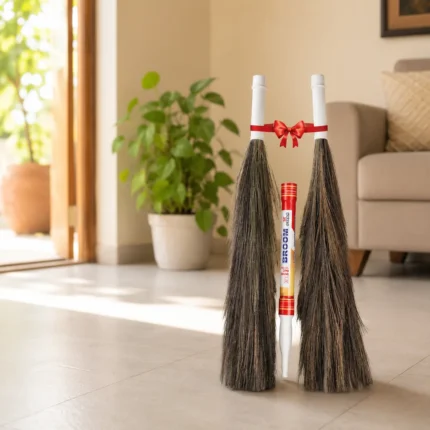

2 Pcs Broom

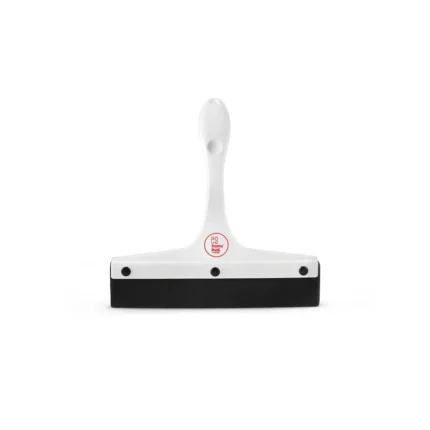
2 Pcs Broom + Kitchen Wiper Combo

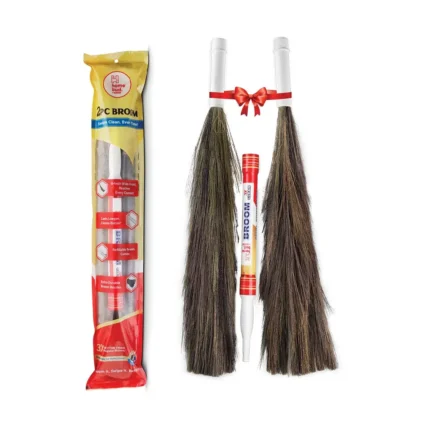
2 pcs Broom+WipeExpert Bathroom Wiper
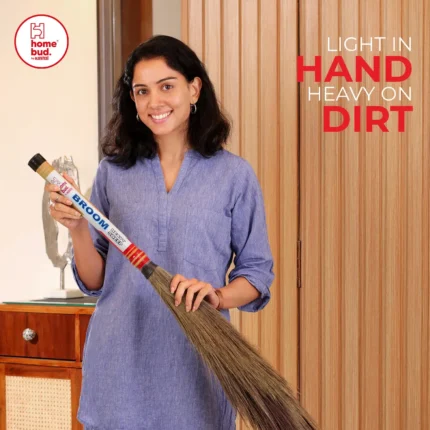
Broom

Broom+WipeExpert Bathroom Wiper
Broom for Home, The Right Jhaadu for Every Floor and Every Room
A broom is the first cleaning tool you reach for every single day. Before mopping, before wiping, before anything else, sweeping comes first. And yet most households use whatever broom came to hand last time without giving much thought to whether it is actually the right tool for their floors and their daily cleaning routine.
The difference between the right broom and the wrong one shows up immediately in how long it takes to sweep a room, how much dust gets stirred up versus gathered, how your back feels after a full sweep of the house, and how long the broom itself lasts under daily use. Bristle stiffness, handle length, head width, and material quality are not minor details. They are the factors that determine whether your daily jhaadu takes five minutes and leaves the floor genuinely clean, or takes fifteen minutes and leaves fine dust resettling on the floor surface behind you.
At Homebud, our brooms are built for real Indian home conditions, daily sweeping across tiled floors, compact apartment layouts, high-dust environments, and the full range of Indian household cleaning demands from a quick morning sweep to a thorough weekly clean.
What Makes a Good Broom for Indian Homes
Indian homes face a specific combination of cleaning challenges that a generic broom is not always built to handle effectively. Understanding what to look for in a quality household broom helps you make a buying decision that serves your home well for months rather than weeks.
Bristle density is the first factor that separates an effective broom from a mediocre one. A broom with sparse bristles takes more strokes to cover the same floor area, leaves gaps between passes that miss fine dust and debris, and wears out faster because each individual bristle carries more of the total sweeping load. A densely bristled broom covers more area per stroke, gathers fine particles more completely, and distributes the sweeping force across more bristles, which means each bristle lasts longer before wearing down.
Bristle stiffness determines what the broom is effective at cleaning and on which surfaces it is safe to use. Stiffer bristles generate more friction against the floor and are excellent at dislodging stubborn debris, sand, and coarse dirt, but they can scratch polished marble and vitrified tile surfaces if the bristle material is too hard. Softer, more flexible bristles glide across smooth tile and marble without scratching, gather fine dust effectively, and are the right choice for daily indoor sweeping. The right bristle stiffness depends on where you are sweeping and what you are sweeping up.
Handle length and grip affect how comfortably and effectively you can sweep without straining your back. A handle that is too short forces you to bend, which is tiring and hard on the lower back when sweeping large areas. A well-designed broom handle at the right length allows you to sweep in a natural, upright posture with your back straight, using a smooth back-and-forth motion that covers the floor efficiently without physical strain. The grip section of the handle should be comfortable to hold for the duration of a full house sweep, not just for a few strokes.
Head width determines how quickly you can cover a given floor area. A wider broom head covers more floor per stroke and finishes the same room in fewer passes. For large open areas like living rooms, kitchens, and corridors, a wider head is significantly more efficient. For compact spaces, bathrooms, and areas around furniture, a narrower or more manoeuvrable head gives better control.
Material durability determines how the broom holds up under daily use. Plastic bristles are washable, resistant to moisture, and maintain their shape better than natural fibre bristles over repeated wetting and drying. They are the practical choice for daily use in Indian homes where the broom is used in all weather conditions and in areas like the bathroom and kitchen where moisture contact is common.
Which Homebud Broom Is Right for Your Home
Homebud currently offers two broom options designed to cover the full range of daily home sweeping needs.
The Broom at Rs. 240 is the standard daily-use household broom built for everyday sweeping across indoor tiled floors. Heavy-duty bristles deliver powerful sweeping with minimal effort, making it effective at picking up fine dust, hair, food crumbs, and general daily floor debris across living rooms, bedrooms, kitchens, and corridors. The lightweight handle ensures comfortable daily use without arm fatigue during a full house sweep. Rated 4.57 out of 5 by buyers, it is the reliable everyday jhaadu that handles your daily cleaning routine consistently and without fuss. At Rs. 240, it is a practical, value-for-money choice for any household.
The 2 Pcs Broom at Rs. 290 takes the standard broom further with a twin-bristle design that provides maximum floor coverage in less time. The dual-head construction means you cover more floor area per stroke than a single-bristle broom, which makes a visible difference in how quickly you finish sweeping a large kitchen, an open living room, or a corridor. Sturdy handle and tough bristles make it long-lasting for daily heavy use, which is why it is the better choice for households that sweep frequently, for larger homes with more total floor area, and for anyone who wants to cut down their daily sweeping time. Rated 4.71 out of 5, it is the top-rated broom in the Homebud range and the one that professional cleaners would reach for first when speed and coverage matter.
Matching Your Broom to Your Floor Type
Different floor surfaces in Indian homes need slightly different sweeping approaches. Using the right broom for your specific floor type makes the sweeping more effective and protects your floor surface from unnecessary wear.
Vitrified and polished tile floors are the most common floor type in Indian apartments. These surfaces show every speck of dust and require a broom that gathers fine particles effectively without scratching the tile glaze. A broom with dense, medium-stiffness plastic bristles sweeps these floors cleanly and efficiently. Avoid brooms with very stiff or coarse bristles on polished vitrified tile as they can cause micro-scratching on the tile surface over time.
Marble floors need a gentle sweeping approach. Marble is a softer natural stone that is more susceptible to scratching than ceramic or vitrified tile. A broom with softer, more flexible bristles is the right choice for marble floors. Sweep with light pressure and avoid pressing down hard on the bristles, particularly if the marble surface has a high polish finish.
Ceramic tile floors with grout lines are more forgiving than polished marble or vitrified tile and work well with medium to slightly stiffer bristle brooms. The grout lines collect fine dust and debris, and a broom with firm enough bristles to sweep into the slight recesses of the grout provides a more complete clean than a very soft broom that merely glides across the tile tops.
Bathroom and wet area floors benefit from a broom that is water-resistant and maintains its sweeping performance when slightly damp. Plastic bristle brooms are the correct choice for bathrooms because unlike natural fibre bristles, plastic does not absorb moisture, develop mildew, or lose its shape after contact with water.
Outdoor areas, balconies, and terraces deal with heavier debris including grit, leaves, dried mud, and coarse outdoor dust. These areas need a broom with stiffer bristles that can push heavier particles without the bristles splaying outward under the load. For the best results on outdoor surfaces, keep your indoor broom separate from your outdoor broom, outdoor grit and bacteria should not be brought inside on the same broom used for indoor floors.
The Right Sweeping Technique for a Cleaner Floor
Having the right broom is half the job. The other half is using it correctly, and there are a few technique points that professional cleaners follow that make a significant difference in the result.
Always sweep from the far end of the room toward the exit so you are not walking over already-swept areas and re-depositing dust. Work in overlapping strokes so no section of floor is missed between passes. Long, smooth strokes that keep the bristles in contact with the floor throughout the full length of the stroke are more effective than short, choppy movements that lift the broom repeatedly and scatter dust upward.
For rooms with furniture, sweep the open areas first, then use the broom to work debris out from under furniture edges and into the main area before the final sweep toward the door. Angling the broom slightly toward corners and along the base of walls catches the dust and debris that accumulates in these areas and is most often missed during a quick sweep.
After sweeping, always mop or wipe the floor before walking on it to remove the fine dust layer that sweeping alone cannot fully collect. A dry sweep followed by a damp mop or wiper pass is the professional standard for genuinely clean floors.
How to Care for Your Broom and Extend Its Life
A well-maintained broom performs better and lasts significantly longer than one that is stored and used carelessly. Here is the maintenance routine that keeps a quality broom performing at its best.
After every sweeping session, shake the broom head or tap it gently against a wall or floor edge to dislodge trapped dust and debris from between the bristles. This prevents buildup that compresses the bristles and reduces their sweeping effectiveness over time.
Every one to two weeks, wash the broom head with warm water and a small amount of liquid dish soap. Work the bristles gently with your hand to remove embedded dust and dirt, rinse thoroughly, and allow the broom to dry completely before storing it. A damp broom stored in a closed space develops mildew on natural fibre bristles and unpleasant odour on any bristle type. Always dry before storing.
Store the broom hanging on a hook or standing with the bristle end upward whenever possible. Storing a broom with the bristles pressed against the floor permanently bends the outer bristles outward, which reduces the sweeping effectiveness of the broom edge and causes the broom to leave a thin line of unswept debris along the outer edge of each stroke.
Replace your broom when the bristles have visibly splayed outward and no longer form a consistent sweeping edge, when individual bristles are breaking off and appearing on the floor during sweeping, or when the broom requires noticeably more passes to cover the same floor area it used to clean in one or two strokes. A worn-out broom does not clean effectively no matter how skilled the technique.
Frequently Asked Questions About Brooms
What is the difference between a soft broom and a hard broom for home use?
A soft broom has more flexible, finer bristles that sweep gently across smooth floor surfaces without scratching them. It is the right choice for daily indoor sweeping on tile, marble, and polished floors. A hard or stiff-bristle broom has stiffer, more rigid bristles that generate more friction against the floor and are better suited for outdoor surfaces like concrete, rough tile, and terraces where coarser debris and heavier dirt need more force to dislodge. For most Indian homes, a medium-stiffness plastic bristle broom covers indoor daily sweeping effectively.
Which broom is best for marble floors?
A broom with softer, more flexible bristles is the correct choice for marble floors. Marble is more susceptible to surface scratching than ceramic or vitrified tile, and a broom with stiff or coarse bristles used repeatedly on marble can dull the surface polish over time. Sweep with light pressure and avoid pressing the broom hard against the marble surface.
Can I use the same broom for indoor and outdoor sweeping?
It is not recommended to use the same broom for both indoor and outdoor sweeping. Outdoor brooms collect heavy grit, mud, and bacteria from outdoor surfaces. Bringing these into the house on the same broom transfers outdoor contaminants onto indoor floor surfaces. Keep a dedicated broom for indoor daily sweeping and a separate one for balconies, terraces, and outdoor areas.
What is the best way to store a broom?
Store the broom either hanging from a hook on a wall or with the bristle end upward, never resting on the bristle head with the handle leaning against a wall. Resting on the bristle end permanently bends the outer bristles outward and reduces sweeping effectiveness. Hanging or inverting the broom keeps the bristles in their correct shape and extends the life of the broom significantly.
How often should I replace my household broom?
Under daily use in an Indian household, a quality plastic bristle broom should last six to twelve months before the bristles splay significantly enough to reduce cleaning effectiveness. Signs that replacement is needed include visibly bent-out bristles that no longer form a straight sweeping edge, bristles breaking off during sweeping, and needing noticeably more effort and more passes to sweep the same area.
Which Homebud broom is better for a large home?
The 2 Pcs Broom at Rs. 290 is the better choice for larger homes. Its twin-bristle design covers significantly more floor area per stroke than a single-head broom, which translates to faster sweeping of large living rooms, long corridors, and open-plan kitchens. For homes with high daily foot traffic or for families that sweep multiple times a day, the wider coverage and sturdy construction of the 2 Pcs Broom make it the more practical and efficient choice.
Is a plastic handle broom better than a wooden handle broom?
For Indian home conditions, a plastic handle is generally the more practical choice. Plastic handles are lightweight, do not absorb moisture or swell in humid conditions, are easy to clean, and do not develop the cracks that wooden handles can develop over time in varying moisture and temperature conditions. A well-moulded plastic handle with a comfortable grip provides the same control and leverage as a wooden handle at lower weight and with better longevity in everyday Indian home use.
Browse both Homebud broom options above, the everyday Broom at Rs. 240 and the wide-coverage 2 Pcs Broom at Rs. 290, and choose the one that matches your floor size, your daily sweeping routine, and your household's cleaning demands. Strong bristles, durable construction, and free shipping on every order.