
Floor Duster
Floor Duster
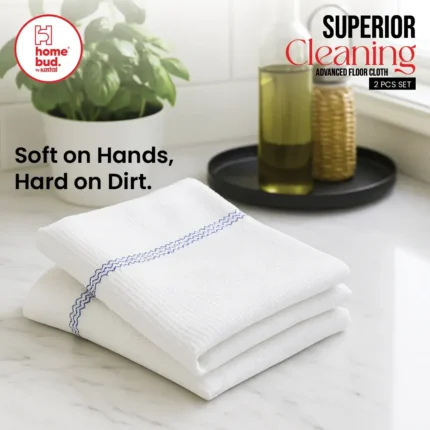
Floor Duster — Shop Cotton and Microfiber Pochha Cloth for Home Cleaning
Every Indian home has a daily ritual that keeps the floors clean — the pochha. Whether it is a quick morning sweep before the day starts or a thorough wet mop after cooking, the floor duster cloth you use determines how clean your floor actually gets and how long the cloth itself lasts before falling apart.
A worn-out, thin pochha pushes dust around instead of collecting it. A poor-quality mop cloth drips water unevenly, leaves streaks, and shreds after a few washes. If you have dealt with either of these problems, you already know that the cloth matters as much as the effort you put in.
This page brings together Homebud's full floor duster collection — cotton and microfiber options built for the real demands of Indian home cleaning. Whether you clean daily or maintain a weekly routine, whether you have marble, tile, or stone floors — you will find the right pochha cloth here.
What Is a Floor Duster and Why the Right One Makes a Difference
A floor duster — commonly called a pochha, mop cloth, or floor cleaning cloth — is an absorbent textile tool used for wet mopping, dry dusting, or both on hard floor surfaces. Unlike a mop with a fixed head, a floor duster cloth is typically used by hand or wrapped around a wiper stick, giving you direct control over pressure and coverage during cleaning.
In Indian homes, the pochha is the primary floor cleaning tool used daily in kitchens, living rooms, bathrooms, and bedrooms. The cloth is wrung out in water mixed with floor cleaner, then used in broad strokes across the floor to pick up dust, grime, and wet residue in a single pass.
The material of the floor duster determines almost everything — how much water it holds, how effectively it picks up dust without scattering it, how quickly it dries between uses, and how many wash cycles it survives before losing its texture. Getting this right means less effort per clean and a cloth that lasts for months rather than weeks.
Types of Floor Dusters in This Collection
Homebud's floor duster range covers the two materials that perform best in Indian home conditions — traditional cotton and modern microfiber. Each has specific strengths depending on your floor type, cleaning frequency, and preference for wet or dry use.
Cotton Floor Duster — The Indian Kitchen Classic
The cotton floor duster is what most Indian households have used for generations, and for good reason. Cotton is naturally absorbent, soft enough for most floor surfaces, and tough enough to handle the vigorous wringing and scrubbing that daily Indian floor cleaning demands.
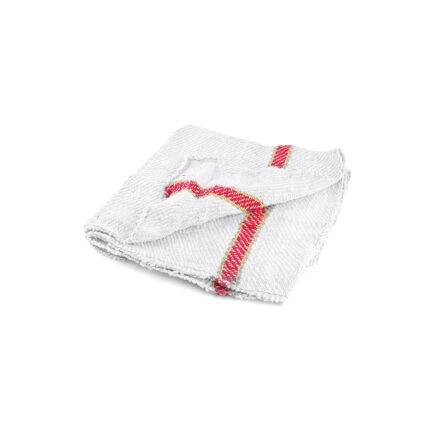
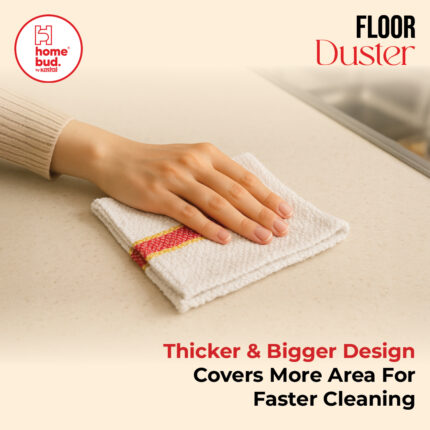
The Floor Duster from Homebud is made from quality cotton material that holds water evenly across the full cloth surface, ensuring consistent coverage with every stroke rather than the patchy wet-dry result you get from a thin, poorly made pochha.
- High water absorption: Quality cotton fibres draw in and hold significant water volume, allowing you to cover more floor area per dip without the cloth running dry mid-stroke or dripping excessively between passes
- Durable through repeated washing: Cotton floor dusters that are properly constructed maintain their fibre integrity through dozens of machine or hand wash cycles, making them a genuinely reusable and economical cleaning investment
- Effective on all common Indian floor types: Cotton works well across ceramic tile, vitrified tile, stone, and mosaic floors — the soft fibre picks up dust and grime without scratching or streaking the surface
- Comfortable to use by hand: For households that clean pochha-style by hand rather than with a wiper attachment, the weight and texture of quality cotton cloth feels natural in use and does not cause hand fatigue during extended cleaning sessions
Microfiber Floor Duster — Advanced Cleaning Performance
Microfiber floor dusters represent the modern evolution of the pochha. The synthetic microfiber material is engineered with millions of tiny fibres per square centimetre — each one capable of trapping dust, bacteria, and fine particles that cotton fibres simply push past.
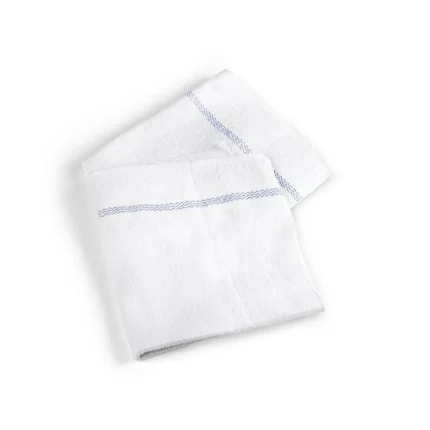
The Superior Cleaning Advanced Floor Cloth from Homebud brings microfiber performance to everyday Indian home cleaning — a cloth that cleans more thoroughly with less water and dries faster between uses.
- Superior dust trapping: Microfiber's split-fibre construction creates a static-like attraction to fine dust particles, picking them up and holding them inside the cloth rather than redistributing them across the floor surface the way a flat cotton cloth can
- Quick-dry between uses: Microfiber releases moisture faster than cotton after wringing, meaning the cloth is ready for the next cleaning session sooner and is less likely to develop the damp smell that cotton cloths can develop when stored wet
- Effective with minimal water and cleaner: Microfiber's cleaning efficiency means you achieve the same result using less water and less floor cleaning product per session — a practical saving for households that clean daily
- Lightweight and easy to handle: Microfiber cloths are lighter than equivalent cotton cloths even when wet, making them easier to wring and manoeuvre during cleaning — particularly useful for older household members or anyone who finds a heavy wet cotton pochha difficult to handle
Cotton vs Microfiber Floor Duster — Which One Is Right for Your Home
| Feature | Cotton Floor Duster | Microfiber Floor Duster |
| Water absorption | Very high | High, releases faster |
| Dust trapping | Good | Excellent |
| Dry floor dusting | Moderate | Very effective |
| Wet mopping | Excellent | Very effective |
| Drying time after use | Slower | Faster |
| Suitable for marble floors | Yes, gentle on surface | Yes, streak-free result |
| Suitable for tile floors | Yes | Yes |
| Wash cycle durability | High with proper care | High |
| Weight when wet | Heavier | Lighter |
| Best suited for | Daily wet mopping, heavy soiling | Fine dust, quick cleans, dry use |
| Price point | More economical | Slightly higher |
The practical answer for most Indian homes: Keep both. Use the cotton floor duster for heavy daily wet mopping after cooking and bathing, and use the microfiber cloth for quick dry dust sweeps and for rooms with polished marble or premium stone floors where streak-free results matter most.
How to Choose the Right Floor Cleaning Cloth for Your Home
Four questions will point you to the right floor duster immediately.
What Type of Floors Do You Have
Floor surface determines how much grip and softness your cleaning cloth needs to deliver results without causing damage.
- Ceramic and vitrified tiles: Both cotton and microfiber work well — cotton for heavy wet mopping, microfiber for quick daily maintenance
- Polished marble and granite: Microfiber is the stronger choice — its fine fibres clean without the light abrasion that cotton weave can introduce on polished stone over time
- Mosaic and anti-skid tiles: Cotton's weight and absorbency handles the uneven texture of these surfaces better during wet mopping
- Wooden or laminate flooring: Microfiber is strongly preferred — it cleans effectively with minimal water, reducing the moisture exposure that can damage wood-based flooring over time
How Often Do You Clean
Cleaning frequency affects how many cloths you need and which material holds up better under your routine.
- Daily cleaning households: Invest in two to three quality cotton or microfiber cloths so you always have a clean dry one ready while another is drying or in the wash
- Every alternate day cleaning: One good quality cloth of either type handles the routine comfortably with proper drying between uses
- Weekly deep cleaning: A larger, heavier cotton cloth provides the coverage and saturation needed for a thorough weekly wet mop of the full home
- Multi-room homes: Consider having dedicated cloths per floor or per room type — a separate cloth for kitchen, bathroom, and living areas maintains hygiene across zones
Wet Use, Dry Use, or Both
Most floor dusters work for both wet mopping and dry dusting, but material affects which function each cloth performs better.
- Primarily wet mopping: Cotton's high absorption makes it the natural choice for dipping in a bucket of water and floor cleaner and mopping across large floor areas efficiently
- Primarily dry dusting: Microfiber's electrostatic dust-trapping ability makes it far more effective than cotton for dry sweeping — cotton tends to push fine dust while microfiber collects and holds it
- Both wet and dry in daily routine: Keep one microfiber cloth for the morning dry sweep and one cotton cloth for the evening wet mop — this two-cloth system covers your full daily floor cleaning routine
How Much Washing Durability Do You Need
A floor cloth that shreds, thins out, or loses its texture after ten washes is not economical regardless of its initial price.
- Machine wash households: Look for cloths that specify machine wash compatibility — both the Homebud cotton floor duster and microfiber floor cloth are designed for repeated washing without structural breakdown
- Hand wash households: Cotton is particularly forgiving of vigorous hand washing and wringing — the natural fibre handles the mechanical stress of daily hand washing well
- Durability over economy: A slightly more expensive cloth that survives fifty washes costs far less per use than a cheap cloth that falls apart after ten washes — always factor wash cycle durability into the buying decision
The Professional Cleaner's Floor Mopping Technique
Owning the right floor duster is step one. Using it correctly is what delivers a genuinely clean floor rather than just a wet one.
Sweep or dry dust before wet mopping. Always remove loose dust, hair, and dry debris from the floor before applying the wet pochha. Mopping over dry debris pushes it into wet streaks and grinds particles against the floor surface. A quick dry microfiber sweep before the wet mop dramatically improves the final result.
Use the right water temperature. Warm water loosens grease and sticky residue on kitchen floors far more effectively than cold water. For bathroom floors, room temperature water mixed with a floor disinfectant is sufficient for daily cleaning.
Wring thoroughly before each pass. A dripping wet pochha leaves too much water on the floor, takes longer to dry, and can damage wood-adjacent flooring materials over time. The cloth should be damp enough to clean but not so wet that it leaves puddles behind each stroke.
Work from the far corner toward the door. Always mop from the furthest point in the room and work backward toward the exit. This prevents you from stepping on the clean wet floor mid-session and avoids tracking footprints across freshly mopped areas.
Rinse the cloth between rooms. Carrying the same dirty water from the kitchen into the bedroom defeats the purpose of cleaning. Rinse the cloth and refresh the water between different rooms, especially moving from kitchen and bathroom zones to living and bedroom areas.
Dry the cloth properly after every use. This is the single most important maintenance habit for floor cloth longevity. A wet cloth left bunched in a corner grows bacteria, develops odour, and weakens faster. Rinse thoroughly after use, wring completely, and hang the cloth in a ventilated area to dry fully before the next use.
Floor Duster Care and Maintenance — Making Your Cloth Last
A quality floor duster lasts months, not weeks — but only with basic care that most people skip.
Wash after every two to three uses. Daily use picks up significant floor grime, cleaning chemical residue, and fine particles that accumulate inside the cloth fibres. Regular washing keeps the cloth hygienic and maintains its cleaning effectiveness by clearing clogged fibres.
Wash cotton cloths separately from other laundry. Floor dusters carry floor bacteria and cleaning chemicals that you do not want mixing with clothing in a combined wash. A dedicated wash for floor cloths with a normal detergent and warm water keeps them clean without contaminating other fabrics.
Avoid fabric softener on microfiber cloths. Fabric softener coats the microfiber strands and reduces their dust-trapping ability — the softener fills the tiny gaps in the fibre structure that give microfiber its cleaning power. Wash microfiber cloths with detergent only and no softener.
Inspect and replace when texture degrades. Run your hand across a dry cloth. If the surface feels thin, smooth, or slick rather than textured and slightly grippy, the fibres have degraded and the cloth is no longer cleaning effectively even if it looks intact. Replace at this point rather than continuing with a cloth that is only moving dirt rather than collecting it.
Frequently Asked Questions About Floor Dusters
What is the difference between a floor duster and a mop?
A floor duster cloth is used directly by hand or wrapped around a flat wiper base for floor cleaning. A mop typically has a fixed or spin-style head permanently attached to a long handle. Floor duster cloths are more versatile, washable, and economical — they are also the standard cleaning tool in most Indian homes where the pochha method is the norm.
Which is better for Indian homes — cotton or microfiber floor cloth?
Both serve different purposes well. Cotton is better for heavy daily wet mopping with bucket water and floor cleaner. Microfiber is better for dry dusting, quick maintenance cleans, and polished marble or stone floors. For most Indian households, having one of each type covers the full range of daily floor cleaning needs.
How often should I replace my floor duster cloth?
Under regular daily use and proper washing, a quality cotton or microfiber floor duster should last three to six months before needing replacement. Replace sooner if the cloth has thinned significantly, lost its texture, develops a persistent smell despite washing, or begins shedding fibres onto the floor during use.
Can I use a floor duster cloth in both wet and dry conditions?
Yes. Cotton cloths handle both wet mopping and light dry dusting. Microfiber cloths are particularly effective for dry dust collection. Both materials can be used damp or dry, though each performs better in its primary use case as described above.
Are Homebud floor dusters machine washable?
Yes. Both the cotton floor duster and the superior microfiber floor cloth from Homebud are designed for repeated washing. For best results, wash in warm water with regular detergent, avoid fabric softener on microfiber cloths, and hang to dry fully after every wash.
What size floor cloth is best for a standard Indian home?
A cloth sized between 40 x 60 cm and 50 x 70 cm covers most Indian room sizes efficiently — large enough to clean in broad strokes but manageable enough to wring and handle comfortably. Check individual product dimensions on each Homebud product page for exact sizing details.
Clean floors start with the right cloth. Browse Homebud's complete floor duster collection and find the cotton or microfiber pochha that fits your home, your floors, and your daily routine.