Getting Clothes Clips for Drying Right Spacing, Wind, and Placement
-
Posted by
homebud
Most people blame slow drying on the weather or the fabric. Often the real cause is standing a few feet away: how the clips are spaced and which way the line is facing. The right clothes clips for drying hold the garment, but the technique around them decides whether a shirt dries in two hours or six.
Why spacing matters more than most people think
Clothes packed tightly on a line trap moisture between each other, which is exactly what slows drying down. Air needs a path to move across wet fabric and carry that moisture away, and a line crowded edge to edge blocks that path almost entirely.
Leaving roughly an inch of space between each item lets air move freely around the fabric, dries clothes faster, leaves fewer wrinkles, and keeps the line from sagging under a single dense layer. A pack of clips that opens and closes easily makes this spacing habit easier to keep up, since nobody wants to fight a stiff clip every few inches down a long line.
Reading the wind before you hang anything
Wind does more work than most people give it credit for. Rotating a line to face the prevailing wind direction, rather than leaving it at a fixed angle out of habit, can noticeably cut drying time because moving air pulls moisture off fabric far faster than still air sitting around it.
This matters just as much for the clips themselves. A loose or worn clip lets heavier items shift and bunch in a gust, which both slows drying in the bunched sections and risks the garment slipping off the line entirely. Clips with a firm, consistent grip hold their position through wind rather than needing to be re-pinned every time a gust passes through.
Hanging different fabrics the right way
Shirts and lightweight tops
Hang shirts by the hem rather than the shoulder seam where possible, since this avoids peg marks on the shoulder and lets the body of the shirt catch more airflow. Lightweight fabrics dry fastest of anything on the line, so these can sit closer to the edges where wind exposure tends to be strongest.
Jeans and trousers
Jeans dry noticeably faster hung upside down by the hem, with each leg clipped separately rather than folded together. Turning pockets inside out before hanging also speeds things up, since a closed pocket traps water long after the rest of the fabric has dried.
Towels and sheets
Large, heavy items need more than one clip to dry properly. Towels and sheets draped flat rather than folded, with a clip at each end and one in the middle, stop the fabric from flapping into a bunched mess in the wind while still drying evenly across the whole surface.
Socks and small items
Small items are where grip quality actually gets tested the most, since a sock or a handkerchief is light enough to slip out of a weak clip with a single strong gust. Clipping these by a thicker edge, like a waistband or hem, rather than a thin corner, gives the clip more fabric to hold onto.
Placement on the line: sun, shade, and airflow
A line in full sun and open air will outperform a shaded, enclosed spot every time, even with identical clips and identical spacing. Direct sunlight speeds up drying meaningfully on its own, separate from anything wind-related, while a sheltered corner of a balcony or courtyard traps humid air around the clothes instead of carrying it away.
Where outdoor space is limited, an indoor line placed near a window or a regularly used doorway, where air naturally moves through, dries clothes noticeably faster than one tucked into a closed, still room. A small fan pointed at the line helps close that gap further on days when opening a window isn’t practical.
Common mistakes that slow drying down
Overloading a line is the most common mistake, since it feels efficient to fit the whole wash in one go, but a crowded line actually extends total drying time more than doing two shorter rounds with proper spacing. A second common mistake is using clips too weak for the fabric’s weight, which lets heavier items like towels slide down and bunch at the clip, concentrating moisture in one section instead of letting it spread evenly.
Skipping a quick shake before hanging is a smaller but real mistake too. Shaking each item out before clipping it removes excess water and loosens early wrinkles, which both speeds drying and cuts down on the ironing needed afterward.
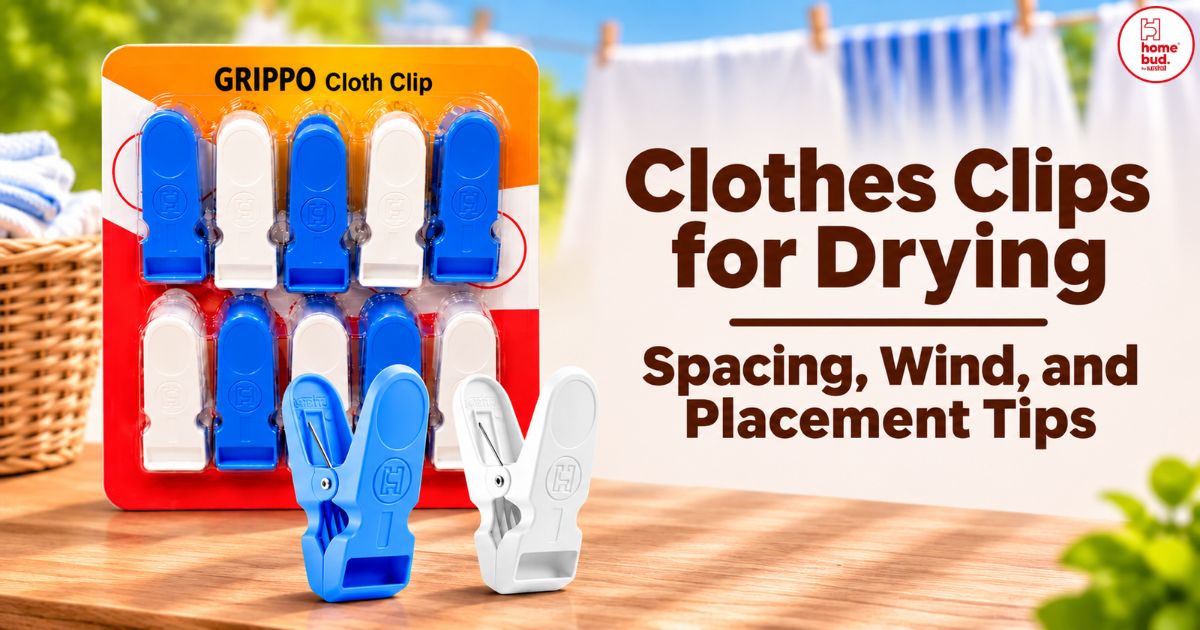
A worn-out set of clothes clips for drying causes a specific, often overlooked problem: clips that no longer snap shut firmly let heavier or windier garments slip partway off the line without anyone noticing until the item is back on the ground. Replacing a tired set before it fails mid-wash saves more time than it costs. The Grippo Cloth Clip is built for exactly this kind of everyday reliability, with a firm grip designed to hold through windy conditions rather than loosening after a season of use.
Choosing clips suited to how you actually dry
A pack of ten clips covers a light load comfortably, but a household doing full wash loads regularly tends to run out mid-line and end up doubling up fabric under single clips, which slows drying in exactly the spots that need it least. Keeping a second pack on hand, such as the Jumbo Cloth Clip set, avoids that gap without needing to ration clips across a long line.
Pairing clips with the right hangers also rounds out a faster drying routine. Shirts and lighter garments that go straight from the wash onto a hanger rather than a flat line spot often dry with noticeably fewer wrinkles, since the garment keeps its shape the whole time instead of folding over a line.
Frequently asked questions
Yes, provided the plastic grade is meant for repeated outdoor use. Clips made from durable, long-lasting plastic resist the UV brittleness that causes cheap clips to crack, and reviewers commonly report clips holding firm through repeated daily use without loosening.
This usually comes down to the specific plastic blend rather than plastic as a material in general. Lower-grade or unspecified plastics lose flexibility faster under sun exposure, which makes them brittle and prone to snapping under the tension of gripping fabric.
A single bedsheet can need four to six clips alone, and a small household doing laundry every two to three days typically works through a pack of 20 faster than expected. Buying a little more than seems necessary avoids running short mid-laundry.
A well-made plastic clip with strong spring tension holds comparably to metal in most everyday wind conditions, though metal generally offers the strongest grip overall. The bigger factor is jaw design and spring strength rather than material alone.
They can, but constant direct sun exposure accelerates wear over time even on durable plastic. Clips built specifically for regular household and outdoor use hold up noticeably longer than generic alternatives, though occasional indoor storage during off-season stretches can extend their lifespan further.
Heavier items need a clip with a wider jaw span and stronger spring tension than what's needed for lightweight clothing. A compact clip meant for socks or handkerchiefs will usually slip off thicker, heavier fabric under its own weight.
Stainless steel generally lasts longer and resists UV and moisture damage more completely, but it costs more per clip and can occasionally mark fabric if the finish isn't smooth. Plastic offers a lower-cost, lightweight option that performs well for most everyday laundry when the grade is built for durability.