


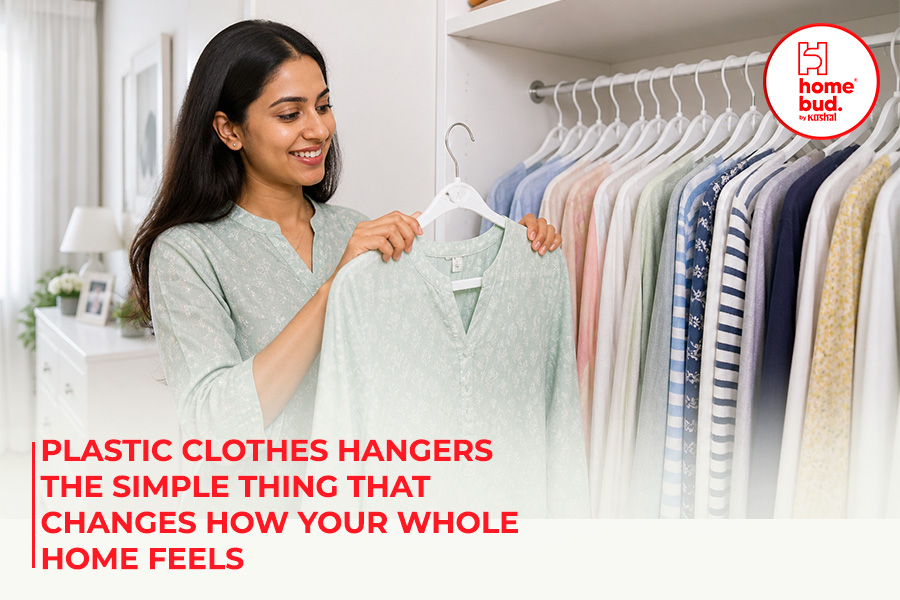
There is a moment most people have had at least once — you open the wardrobe, and something about the chaos inside it makes you feel slightly deflated before the day has even started. Clothes bunched together. Shirts that have slipped off the hanger and pooled at the bottom. A dress that has been crushed between two heavy items. It is such a small thing. And it affects your morning in ways that are difficult to fully articulate.
The right plastic clothes hanger is not a luxury purchase. It is not something that requires research or a significant budget. But it is something that, when you get it right, quietly transforms how organised, calm, and in control your wardrobe feels every single day. This guide covers everything you need to know to get it right the first time.
Why the Type of Hanger You Use Actually Matters
Most people think a hanger is a hanger. You hang a shirt on it. The shirt stays up. That is the whole job. But here is what happens when the wrong hanger meets the right garment — a silky blouse slips off a smooth plastic standard hanger and lands on the wardrobe floor. A knit sweater gets stretched at the shoulder where the hanger’s narrow tip digs into the fabric. Trousers develop a permanent crease across the leg from a hanging method not designed for that weight.
These are not dramatic disasters. They are the slow, small frustrations that accumulate in a home over time — clothes that do not hang right, wardrobes that never quite look tidy, and the subtle feeling that your home organisation is always slightly out of your control.
A plastic hanger for hanging clothes chosen specifically for the garment type eliminates most of these problems before they start. It is one of the lowest-cost, highest-impact wardrobe improvements available to any household.
The Different Types of Plastic Clothes Hangers and What Each One Does Best
Standard Shirt and Blouse Hanger
The most familiar design — a shoulder-shaped curved frame with a central hook. This is the plastic clothes hanger most people picture when they think of hangers generally, and it is the right choice for shirts, blouses, light kurtas, T-shirts, and any garment with shoulder seams that benefit from being supported in their natural position.
The key quality difference in standard hangers is the shoulder curve. A hanger with too-narrow shoulders creates pressure points at the outer tips that stretch fabric over time. A hanger with a well-contoured shoulder follows the natural curve of a garment and distributes the weight evenly across the entire shoulder seam. For daily-use clothing that you wash and rehang regularly, this difference adds up significantly over months of use.
Homebud’s Dashing Hanger 5-piece set is designed specifically with this contoured shoulder in mind — giving your everyday shirts and blouses the support they need without the fabric stress that poorly designed standard hangers create.
Clip Hanger for Trousers and Skirts
A clip hanger has two adjustable clips at the bottom of the frame for hanging trousers, skirts, and palazzos by the waistband or hem. This design keeps lower-body garments fully extended without folding, which means no permanent fold creases across the leg of your best trousers and no awkward folding situation with flared or long skirts.
For households where formal trousers are part of the daily work wardrobe, a good set of clip plastic hangers for clothes in this category is the single most practical wardrobe investment. Properly hung trousers crease correctly at the front pleat if applicable and lie flat otherwise — which means they are genuinely ready to wear without ironing as often.
Multi-Tier Space-Saving Hanger
A multi-tier or cascading hanger allows multiple garments to hang vertically from a single hook — with each tier holding one garment and the tiers connected to stack downward. These designs can typically hold four to six garments in the vertical space that a single standard hanger normally occupies.
For smaller wardrobes, shared bedroom spaces, and any home where wardrobe space is genuinely limited, a set of multi-tier wardrobe plastic clothes hangers multiplies storage capacity without requiring any additional furniture or closet expansion. They are particularly useful for organising seasonal items, duplicates of the same category, or the overflow clothing that tends to end up draped over chairs when the wardrobe feels full.
Kids Hanger
Children’s clothes need smaller hangers sized for smaller shoulders — adult hangers leave children’s garments bunched and misshapen because the shoulder width far exceeds the width of the clothing. A kids hanger sized correctly for children’s clothing keeps school uniforms, casual clothes, and occasion wear neatly maintained rather than slipping and distorting on adult-sized frames.
Homebud’s Kids Hanger is sized and shaped specifically for children’s clothing — which means it actually does the job of keeping small garments organised and maintained rather than creating the slipping and bunching problem that adult hangers create in children’s wardrobes.
Non-Slip and Anti-Scratch Hanger
For delicate fabrics — silk, satin, chiffon, georgette, synthetic blends — a standard smooth plastic hanger is often not enough. The surface is too smooth for delicate fabrics to grip, and lightweight garments slip off repeatedly. A non-slip plastic hanger with a textured or rubberised surface edge provides the friction that keeps delicate garments in place without requiring clips or additional accessories.
Anti-scratch construction matters for any hanger that will be used with embellished clothing — heavily embroidered kurtas, beaded occasion wear, or garments with surface decoration that a sharp hook edge could catch and damage. Rounded hook designs and smooth internal surfaces protect these garments during the time they spend hanging between wears.
Foldable Travel Hanger
For people who travel regularly — whether for work or personal trips — a foldable plastic closet hanger that collapses flat takes almost no space in luggage and provides a proper hanging solution in hotel rooms where built-in hangers are often inadequate in number or poorly designed. The ability to properly hang a work shirt or a dress in a hotel room overnight means it is genuinely wrinkle-free and ready to wear in the morning without hotel ironing services.
Choosing the Right Plastic Hanger for Each Person in Your Home
The right hanger clothes plastic selection looks different for different household members, and tailoring your choice to each person’s wardrobe composition saves both storage space and fabric quality over time.
For the working professional at home — a combination of standard shirt hangers for daily office wear, clip hangers for formal trousers and skirts, and non-slip hangers for any delicate formal fabrics. The goal is a wardrobe where every item hangs correctly and is genuinely ready to wear when needed, which reduces morning stress and the need for frequent ironing significantly.
For the homemaker managing the family’s clothing — the highest volume and most variety of any household wardrobe. A mix of standard, clip, and multi-tier space-saving hangers is the most practical combination. Multi-tier hangers help manage the volume by category — school uniforms for each child on their own set, casual wear grouped separately, seasonal items stored efficiently on multi-tier designs at the back of the wardrobe.
For a child’s wardrobe — properly sized kids hangers for all school and daily clothing. When children can actually hang and retrieve their own clothes from hangers that fit what they are wearing, it builds the habit of organisation in a natural, frictionless way. Properly fitted hangers for children are also significantly less likely to result in clothes being left on the floor because the child found the hanger too large or awkward to manage.
For the single-person household — efficiency and space optimisation are the priorities. A small well-organised wardrobe with the right hanger types means getting ready is fast and effortless rather than involving a search through a disorganised space. Multi-tier designs are particularly valuable when wardrobe space is limited to a single rail.
The Homebud Hanger Range What Makes It Worth Choosing
Homebud designs its hanger range with real household use in mind — the kind of use that happens every day, not just the version that looks good in a wardrobe styling video.
The Dashing Hanger 5-piece set is the everyday wardrobe staple — sturdy enough for regular daily use, well-contoured for natural shoulder support, and available in a set format that allows you to standardise an entire section of wardrobe at once. A wardrobe with uniformly matched hangers looks organised immediately regardless of how many garments it contains.
The Dynamic Hanger 5-piece set brings additional functionality to the core design — built for slightly more active daily use, for heavier garments, and for the households that need their hangers to perform reliably through high-rotation daily wardrobes. When you are washing and rehanging the same items multiple times a week, the durability and grip performance of the hanger matters more than in occasional-use contexts.
The Kids Hanger addresses the specific and frequently overlooked need for correctly proportioned children’s clothing storage. Every household with children has this problem — adult hangers in the kids’ wardrobe mean clothes that slip, fall, and never quite get hung back up after washing. Properly sized hangers solve this with zero effort required beyond switching.
Browse the complete Homebud hanger collection for the full range of plastic clothes hanger options across every wardrobe need.
How Many Hangers Does Each Household Actually Need
This is a question most people never ask until they are standing in a shop with a pack of six hangers wondering if that is enough. The practical answer varies by household size and wardrobe composition, but here are the baselines.
A single-person household typically needs 20 to 30 hangers across a main wardrobe to cover daily rotating clothing across all categories — shirts, trousers, dresses, and occasional formal wear.
A couple sharing a wardrobe space needs 40 to 60 hangers combined, with a split that reflects each person’s clothing volume and variety.
A family of four with children needs 80 to 100 hangers across all wardrobes — adult wardrobes plus correctly sized children’s hangers for each child’s clothing. This number seems large until you actually count the garments in a typical family home and realise that most households are storing clothing on too few hangers and using folding, chair draping, and floor storage to compensate.
The simplest way to assess your current situation — count the items in your wardrobe that are currently folded, stacked, or not hung because there are not enough hangers. That number, added to your current hanger count, is your actual hanger requirement.
Small Tips That Make a Big Difference to Your Wardrobe Organisation
Match your hangers. A wardrobe full of mismatched hangers in different colours, shapes, and sizes looks disorganised even when the clothing itself is perfectly arranged. Switching to a uniform set of matching hangers — even inexpensive ones — is the single fastest way to make a wardrobe look intentionally organised.
Assign hanger types by garment category. Shirts on standard hangers. Trousers on clip hangers. Delicate fabrics on non-slip hangers. This consistency means every garment always has the right support and every hanger is always used for its intended purpose.
Use the front-to-back principle. Place freshly washed clothes at the back of the wardrobe rail and move from the front. This naturally rotates your clothing so everything gets worn regularly and nothing sits unworn for months at the back.
Replace broken or bent hangers immediately. A broken hanger does not do its job — it creates awkward hanging, leaves garments at wrong angles, and eventually causes the damage to fabric that good hangers are designed to prevent. Keeping a small stock of replacement hangers so you can swap immediately rather than tolerating a broken one is a low-effort habit with consistent results.
Dedicate a section for children’s hangers. In a shared family wardrobe space or a children’s bedroom wardrobe, a dedicated section with correctly sized kids hangers makes it practical for children to manage their own clothing — hanging up school uniforms, accessing weekend clothes — which builds organisation habits and reduces the parental task of managing every item.
Frequently Asked Questions About Plastic Clothes Hangers
The best plastic hanger for hanging clothes depends on what you are hanging. Standard curved hangers for shirts, blouses, and kurtas. Clip hangers for trousers and skirts. Non-slip textured hangers for delicate and slippery fabrics. Multi-tier hangers for space-saving in smaller wardrobes. Correctly sized kids hangers for children's clothing. Using the right type for each garment category is more important than any single universal hanger choice.
Quality plastic hangers are durable for most everyday garments including denim, heavier cotton fabrics, and layered clothing. For very heavy items like winter coats or multiple layered garments hanging together, a reinforced plastic hanger designed for higher weight is the better choice. Most standard durable plastic clothes hangers handle the weight of typical daily wardrobe items reliably for years of regular use.
The most reliable solution is to use non-slip hangers with textured or rubberised edges specifically designed for delicate and lightweight fabrics. For standard smooth hangers, wrapping a rubber band around each shoulder tip creates effective friction at minimal cost. The most practical long-term solution is replacing smooth hangers with properly textured ones for any garment category that slips regularly.
A rough guide — 20 to 30 for a single-person wardrobe, 40 to 60 for a couple, and 80 to 100 across all wardrobes for a family of four including children. The most accurate assessment is to count currently unhung, folded, or stacked items in your wardrobe and add that number to your existing hanger count to find your true requirement.
Matching wardrobe plastic clothes hangers make a wardrobe look immediately more organised because visual uniformity reads as intentional structure. They also maximise rail space because matched hangers pack together more efficiently than mismatched shapes and sizes. The functional and aesthetic benefits of a standardised hanger set are disproportionately large relative to the simple decision of choosing one consistent design.
Yes, absolutely. Adult hangers in a children's wardrobe create clothing that slips, falls, and never gets properly rehung — because the hanger shoulders are too wide for the garment and the garment slides to the centre and off. Correctly sized kids hangers keep children's clothing organised and also make it practical for children to manage their own hanging independently, which is genuinely useful.
Shop Plastic Clothes Hangers at Homebud
The right hanger is a small decision that compounds into a noticeably better home every day. Browse the full Homebud hanger collection and find the right combination for every wardrobe in your home.
For daily workwear wardrobes, start with the Dashing Hanger 5-piece set. For high-rotation household use, the Dynamic Hanger 5-piece set brings the durability that daily family wardrobes need. And for every child in your home, Kids Hangers sized for what they actually wear.
Because a wardrobe that works quietly in the background is one less thing standing between you and a good start to your day.