


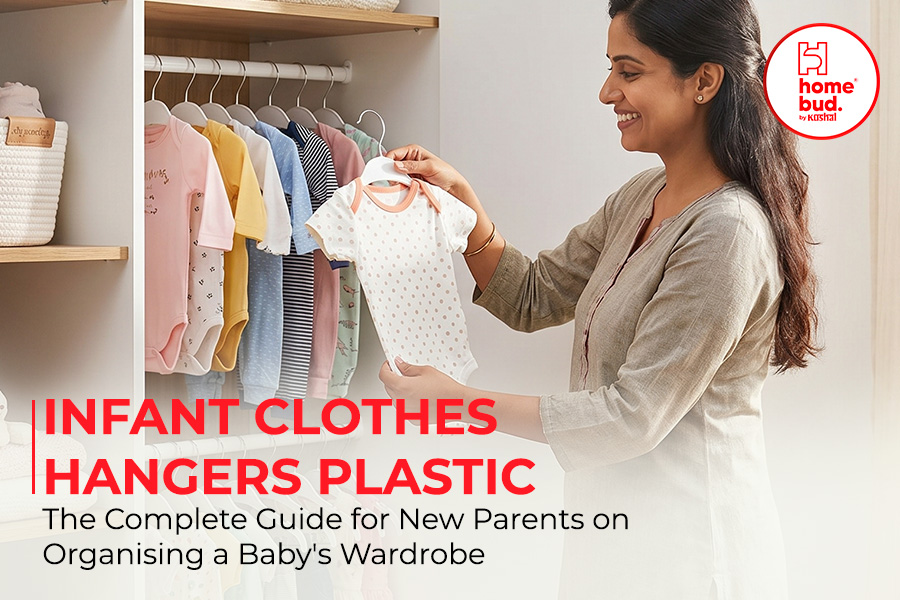
Bringing a newborn home means navigating a hundred small decisions you never thought about before. One of them — easily overlooked in the middle of bigger preparations — is how to store and organise your baby's clothes. And if you have ever tried hanging a tiny newborn onesie on a standard adult plastic hanger, you already know the problem. The garment slides off, the shoulders droop over the edges, the fabric stretches in ways it should not, and what should be a neatly hanging little outfit ends up in a crumpled heap at the bottom of the wardrobe.
Infant clothes hangers in the right size solve this completely. Small, lightweight, smooth-edged plastic hangers sized specifically for baby and infant clothing keep tiny garments in shape, make the baby's wardrobe easy to navigate, and turn the daily task of finding, selecting, and returning clothes into something quick and stress-free rather than a rummage through folded piles.
This guide covers everything new and expecting parents — and grandparents, aunts, uncles, and anyone setting up a baby's wardrobe for the first time — need to know about choosing the right infant clothes hangers, what to look for, what to avoid, and how to organise a baby's wardrobe in a way that actually works through the first two years of rapid growth and constant clothing changes.
Why Baby Clothes Need Their Own Hangers — Not Adult-Sized Ones
This is the question most first-time parents do not think to ask until they are standing in front of a wardrobe full of adult hangers and a pile of tiny baby clothes that clearly do not fit on any of them properly.
The shoulder width of a standard adult plastic hanger is typically between 42 and 48 centimetres. The shoulder width of a newborn’s onesie or infant kurta is closer to 18 to 22 centimetres. Hanging a garment that is 20 centimetres wide on a hanger that is 45 centimetres wide does not just look wrong — it actively damages the clothing over time. The fabric at the shoulders is pulled outward and held in a stretched position for hours or days at a time, distorting the garment’s shape permanently. Delicate baby fabrics — soft cotton, muslin, and jersey knit in particular — are especially vulnerable to this kind of stretching damage because they have very little structural resistance.
Beyond fabric damage, the practical problem is equally significant. A baby onesie draped over an adult hanger does not stay in place. It slides to one side, folds over, or falls off entirely. Finding a specific outfit in a wardrobe where everything slides and bunches is frustrating and time-consuming — the last thing a sleep-deprived parent needs at 6 AM during a morning feed and change routine.
Infant-sized plastic hangers — typically between 22 and 30 centimetres wide — solve both problems at once. The garment sits correctly on the hanger with its shoulder seams resting at the hanger’s shoulder tips, hangs straight, stays in place, and maintains its shape through extended wardrobe storage.
What to Look for in Infant Clothes Hangers Plastic — 6 Key Features
Not all small plastic hangers are created equally. A hanger sized for baby clothes still needs to be the right quality to protect delicate fabrics and hold up through the daily handling that a baby’s wardrobe demands. Here are the six features that matter most.
Correct Size for the Age and Garment
Size is the most fundamental feature of any infant clothes hanger, and it is the one most often overlooked when parents simply buy the smallest available hangers without checking actual dimensions against their baby’s clothing sizes.
Baby and infant clothing sizes in India are typically labelled by age range — newborn (0–3 months), infant (3–6 months), and baby (6–12 months and 12–24 months). Each age range has a different approximate shoulder width, and the right hanger should match that shoulder width as closely as possible.
General sizing guidance:
- Newborn to 3 months: 22–24 cm shoulder width — the smallest available infant hanger size
- 3 to 6 months: 24–26 cm shoulder width — a small step up but still significantly smaller than standard adult hangers
- 6 to 12 months: 26–28 cm shoulder width — as the baby grows, the hanger needs to grow with them
- 12 to 24 months: 28–32 cm shoulder width — by this stage, a kids-sized hanger handles most garments well
- 2 years and above: Standard kids hangers at 32–36 cm cover this range through early childhood
The practical implication for parents is that a single set of infant hangers will not last the full first two years. Plan to transition hanger sizes as your child grows — a small investment that protects the quality and shape of the clothing throughout.
Smooth Edges with No Sharp Points or Ridges
This feature is non-negotiable for baby clothing. Infant fabrics — the soft cottons, muslins, and jersey knits used in onesies, jhablas, and baby kurtas — have an open, delicate weave that snags on any rough surface or sharp edge it contacts. A hanger with moulding seams that were not properly finished, sharp hook base edges, or rough texture on the shoulder surface will snag and pull at baby fabric every time a garment is placed on or removed from it.
Quality infant plastic hangers are moulded smoothly with no sharp edges anywhere on the hanger body, hook, or shoulder tips. Run your hand across the full surface before using any hanger on baby clothing — if you feel any sharp edge or rough texture, that hanger is not appropriate for delicate infant fabrics.
- Smooth moulding finish: The plastic surface should feel uniformly smooth to the touch, with no raised seam lines from the moulding process that could catch on fabric
- Rounded shoulder tips: The outer ends of the hanger shoulders should be gently rounded, not pointed — pointed tips are particularly likely to snag at the shoulder seam of baby garments during removal
- No sharp hook base edge: The base where the hook joins the hanger body often has a moulding edge that is not always finished cleanly on cheap hangers — this edge contacts the inside of the garment’s neckline and can damage it with repeated use
Lightweight Construction
A baby’s wardrobe rod — whether it is a dedicated nursery rail, a section of a shared family almirah, or a portable wardrobe — is not built to hold the same weight as an adult’s full wardrobe rod. More importantly, lightweight hangers are simply easier to handle when you are managing a baby’s clothing with one hand while holding or feeding the baby with the other. A heavy hanger that requires two hands to place and retrieve garments from the rod adds unnecessary friction to an already demanding daily routine.
Quality infant plastic hangers are lightweight by design — they use the minimum material needed to maintain structural integrity and hold the small garments they are designed for, without the extra bulk and weight that adds nothing for this use case.
Non-Slip Surface for Lightweight Fabrics
Ironically, lightweight baby fabrics are among the most likely to slip off hangers because they have so little weight to keep them in contact with the hanger surface. A smooth bare plastic hanger and a lightweight muslin onesie is an almost guaranteed combination for clothes ending up on the wardrobe floor overnight.
Non-slip surface treatment — whether a textured plastic surface, a rubberised strip, or a velvet-style coating — is an important feature on infant hangers specifically because of this lightweight fabric problem. It keeps tiny garments in place through all the normal air movement, door opening vibration, and rod shifting that happens in a daily-use wardrobe.
Durable Enough for Daily Handling
A baby’s wardrobe gets opened and accessed multiple times a day — for every outfit change, every sleep time, every outing. The hangers in it are handled constantly. A cheap infant hanger that cracks or snaps after two weeks of this kind of daily use is not a bargain — it is a recurring cost and inconvenience. Quality plastic hangers for infants are built to withstand this daily handling without cracking at the hook joint or snapping at the shoulder tips under normal use.
Pack Size Appropriate for a Full Baby Wardrobe
A baby’s wardrobe contains more individual garments than most parents expect before they experience the reality of infant clothing changes. Between feeding messes, nappy leaks, and the general rate of soiling that comes with a newborn, a single baby can go through three to five outfit changes per day. A well-stocked baby wardrobe needs fifteen to twenty-five garments in rotation at any given time — which means fifteen to twenty-five hangers as a minimum.
Buying infant hangers in multi-packs is significantly more economical than buying individual hangers, and it ensures the entire baby wardrobe is hung uniformly rather than a mix of different hanger sizes and styles that creates the disorganised look and uneven rod height that makes finding specific items harder than it needs to be.
How to Organise a Baby's Wardrobe with Plastic Hangers — A Practical System
Having the right hangers is the foundation. Building an organisation system around them is what makes daily life with a newborn or infant meaningfully easier. Here is a practical approach that works through the first two years.
Organise by Garment Type, Not by Size
Babies grow fast — often faster than their clothing categories change. Rather than organising a baby wardrobe by size label (which quickly becomes confusing as sizes overlap and vary by brand), organise by garment type. All onesies together, all sleeping suits together, all day outfits together, all occasion wear separate.
This system means you always know where to find what you need without reading size labels in the dark during a 3 AM change. It also makes it immediately obvious when a category is running low and needs washing or restocking.
Keep the Current Size at the Front
Babies move through sizes quickly, and it is common for a baby wardrobe to contain clothing in two or three different sizes simultaneously — the current size in active use, the next size up waiting, and possibly some items from the previous size that still fit. Keep the current active size at the front of the wardrobe rod and the next size up at the back. This prevents accidentally dressing the baby in a too-small garment in a hurry and makes the daily outfit selection faster.
Dedicate a Section for Night Clothes and Day Clothes
Separating sleeping suits, night jhablas, and swaddle wraps from daytime clothes eliminates the moment of standing in front of the wardrobe at bedtime trying to remember where the night clothes are. A simple left-side day clothes and right-side night clothes division requires zero maintenance and saves meaningful time during the evening routine.
Use a Separate Set of Hangers for Occasion Wear
Every baby accumulates occasion wear — gifts from relatives, special outfits for naming ceremonies, family events, and festival celebrations. These garments are typically more delicate, more embellished, and more expensive than everyday wear. Hanging them on a separate dedicated section of the wardrobe on their own hangers prevents them from getting lost among the daily-use clothes and reduces the risk of damage from constant pushing and pulling past them during routine wardrobe access.
Plan Your Hanger Quantity Before You Buy
A practical formula for new parents planning a baby wardrobe: count the number of garments you expect to have in active rotation (typically 15–25 for a newborn), add 20% for growth purchases and gift additions, and buy that number of hangers in a single matching set. A uniform wardrobe of matching infant hangers is both more functional and more visually organised than one assembled hanger by hanger over time.
Safety Considerations for Infant Clothes Hangers
Baby wardrobes are not just storage — they are environments that babies are near every day, and as babies become mobile, they become environments that babies can reach, grab, and pull at. A few safety considerations are worth keeping in mind when choosing and setting up infant clothes hangers.
Choose hangers without detachable parts. Some decorative or novelty baby hangers have small accessories or decorative elements that can detach. Once a baby is mobile and curious — typically from around four to five months — anything detachable within reach becomes a potential choking hazard. Standard smooth plastic hangers with no attachable parts are the safest choice for a baby’s wardrobe.
Keep the wardrobe rod at an appropriate height. As babies become toddlers, they will attempt to reach and pull at wardrobe contents. A rod positioned too low is both a safety risk and a guaranteed source of clothes being pulled off hangers and onto the floor. Position the baby’s wardrobe rod high enough to be out of easy toddler reach.
Avoid wire hangers entirely for baby clothing. Wire hangers have sharp exposed ends, can rust, and have no surface treatment to protect delicate fabrics. They are not appropriate for baby clothing at any stage and should not be in a baby’s wardrobe section regardless of what other clothing they are currently used for in the household.
Check hangers regularly for cracking. Plastic hangers that develop cracks can create sharp edges. Make a habit of quickly running your hand across baby hangers during wardrobe organisation — any cracked hanger should be removed and replaced immediately.
Growing from Infant to Kids Hangers — When to Make the Transition
One of the practical realities of managing a growing child’s wardrobe is that infant-sized hangers are eventually outgrown. The transition point is when you notice garment shoulders beginning to overhang the hanger tips — the reverse of the new parent’s original problem, where the hanger was too wide. When garments are wider than the hanger holding them, it is time to move up a size.
For most children, the transition from infant to kids hangers happens somewhere between twelve and twenty-four months, depending on the child’s size and the specific garment types in their wardrobe. The Kids Hanger from Homebud is designed for exactly this next stage — sized correctly for toddler and young child clothing, with the same smooth-edge, lightweight construction that makes it safe and practical for young children’s garments.
Planning this transition in advance — buying a set of kids hangers ready before you need them rather than scrambling when you notice the infant hangers are no longer fitting — keeps the wardrobe organisation system running smoothly without a gap period of mismatched hangers.
The Homebud Kids Hanger — Built for the Growing Child's Wardrobe
Once your child moves past the infant stage, the Kids Hanger from Homebud provides the right-sized, right-quality hanging solution for toddler and children’s clothing through the early school years. Correctly proportioned for children’s garment shoulder widths, lightweight enough for easy daily handling, and built with the smooth-edge finish that keeps young children’s fabrics safe and snag-free.
For families managing multiple children’s wardrobes, or planning ahead for a growing baby’s future wardrobe needs, the Homebud hanger range covers every stage from infant through adult — a single brand and consistent quality standard across the full family wardrobe.
Browse the complete hanger collection for every age and garment type: Homebud Hanger Collection
Frequently Asked Questions About Infant Clothes Hangers Plastic
Newborn clothing typically needs a hanger with a shoulder width of 22–24 centimetres. Standard adult hangers at 42–48 cm are far too wide and will distort and damage tiny newborn garments. Always check the actual hanger shoulder width measurement, not just the age label, when buying infant hangers.
Yes, provided they are the right type. Choose smooth-edged plastic hangers with no sharp points, no detachable parts, and no rough surface texture that could snag delicate baby fabrics. Avoid wire hangers and decorative hangers with small attachable accessories entirely for baby clothing storage.
Plan for a minimum of fifteen to twenty hangers to cover a well-stocked newborn wardrobe in active rotation. Adding five to ten extra accounts for growth and gift additions without requiring a separate purchase order every few weeks.
Transition when you notice garment shoulders beginning to overhang the hanger tips — typically between twelve and twenty-four months depending on the child's growth rate. The Kids Hanger from Homebud is the right next step, sized correctly for toddler and young children's clothing.
For the first six to twelve months, a single correctly sized infant hanger set handles most baby garments well. As the child grows into toddler sizing, transitioning to a kids-sized hanger maintains the correct fit and prevents the shoulder distortion that comes from garments outgrowing their hangers.
Always. Multi-packs give you a uniform wardrobe, consistent rod height, and better per-unit value. A matching set of infant hangers across the full baby wardrobe is both more functional and more visually organised than a mixed collection assembled over time.
Final Thoughts
Setting up a baby’s wardrobe the right way from the start makes every day a little easier. Find the right hangers for every stage of your child’s growth at Homebud — from infant to kids to the full family wardrobe.