

Blog

How to Use a Floor Wiper the Right Way So Every Stroke Leaves Your Floor Clean

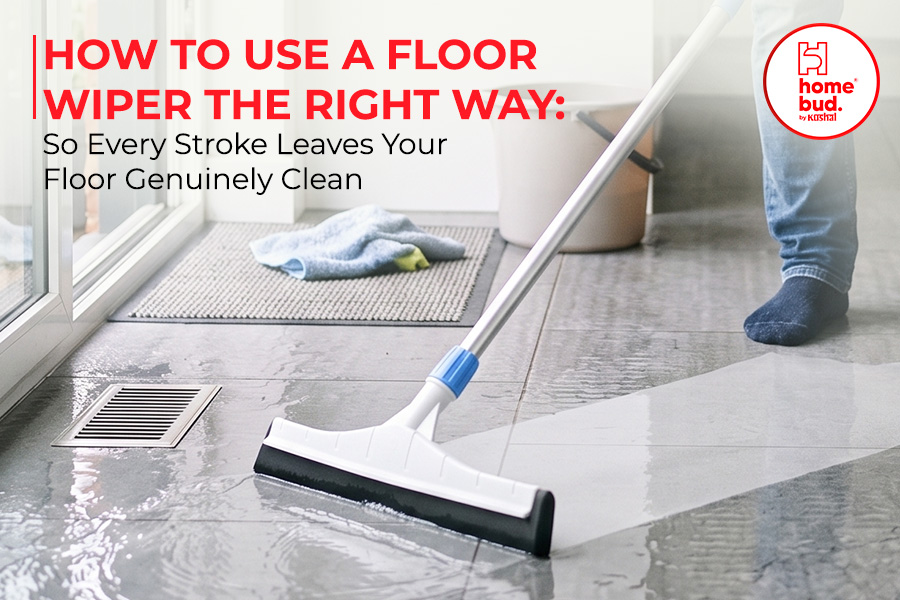
How to Use a Floor Wiper the Right Way

If there is one tool that every Indian bathroom genuinely needs and most bathrooms still do not have, it is a good bathroom floor wiper. Not a mop. Not a towel tossed on the floor. A proper rubber or silicone blade wiper designed specifically to push standing water off the bathroom floor and toward the drain in clean, efficient strokes.

The bathroom floor is the wettest surface in any Indian home. After every shower, every bucket bath, every splash during washing, the floor is completely covered in water. Most households wait for this water to air dry on its own, which means the floor stays wet for fifteen to thirty minutes or more after every use. A wet bathroom floor is a slip hazard for every family member who walks in during that time. It is a mold and mildew risk in the grout lines between tiles. And it creates the persistent damp smell that builds up in poorly ventilated bathrooms over time.

A bathroom floor wiper used for thirty seconds after every shower changes all of this. The floor is dry immediately. The slip risk is eliminated. The grout stays significantly cleaner. The bathroom smells fresher. It is one of those changes that once you make it, you cannot imagine how you managed without it.

This guide covers exactly what makes a bathroom floor wiper different from a standard floor wiper, how to choose between rubber and silicone blades for your specific bathroom tiles, what blade width is right for your bathroom size, and which Homebud wipers are the best choice for bathroom floor use.

Why Most People Use a Floor Wiper Without Getting the Best Out of It

There is a reason the floor wiper is one of the most used and most misused cleaning tools in Indian homes. It looks simple enough that most people never feel the need to think about how they are using it. Pick it up, push it across the floor, done. Except it is not done. Because the water is still there in the corners. The far edge of the bathroom tile is still wet. The area near the wall is still damp.

The floor wiper is a precision tool. It works by creating a seal between the rubber blade and the floor surface and using that seal to push water forward rather than just nudging it around. The moment that seal breaks even slightly, water slips back under the blade and the stroke delivers only a fraction of its potential result. That seal is controlled entirely by technique and how you hold, angle, and move the wiper.

Once you understand how the seal works, every part of the correct technique makes immediate sense. And once you apply it, you will wonder how you ever cleaned a floor without thinking about it this way.

What You Need Before You Start Using a Floor Wiper

Good technique begins before the first stroke. Setting up correctly takes thirty seconds and determines how effective the entire cleaning session will be.

Clear the floor of everything that does not belong there during cleaning. Bathroom mugs, buckets, bath mats, soap dishes, slippers, and anything else sitting on the floor should be moved before you start. This is not just about convenience. Cleaning around objects means you are constantly lifting and repositioning the wiper rather than working in smooth continuous strokes. Every time you lift the wiper to navigate around something, you lose the momentum of the stroke and the water you were pushing scatters rather than collecting in a controlled stream.

Check your wiper blade before each use. A blade with visible cracks, thinning at the edge, or a section that has curled upward will not create a consistent seal with the floor surface. A damaged blade means water consistently slips back under the blade in the weak area, no matter how good your technique is. If the blade is damaged, replace it before cleaning.

If you are using the wiper after mopping, allow the cleaning solution to sit on the floor for the time recommended by the product before you start wiping. The wiper is most effective when the cleaning solution has had time to loosen dirt and residue from the tile surface. Starting the wipe too early means you are pushing a liquid that has not yet done its cleaning work and that will leave a soapy residue film as it dries.

Step by Step Guide on How to Use a Floor Wiper Correctly

Start From the Farthest Corner and Work Toward the Drain or Exit

This is the single most important rule of floor wiper technique and the one most people get wrong. Always begin at the point farthest from the drain or the room exit and work toward it. Never start near the drain and push water away from it.

The reason is simple but has a big impact on the result. When you push water toward a fixed destination like a floor drain or a doorway, every stroke you make gathers the water that is already there and adds to it, progressively concentrating the water into a smaller and smaller area until it reaches the drain. This is efficient and complete.

When you push water away from the drain, every stroke sends water into areas you have already cleared. You end up doing the same floor area multiple times and never actually concentrating the water anywhere useful.

In the bathroom, position yourself at the wall opposite the drain and push water toward the drain in long, smooth strokes. In the kitchen, position yourself at the wall farthest from the doorway or the kitchen drain and work toward it. In the living room or bedroom where you are wiping residual mop water rather than standing water, work from the far wall toward the room exit so you leave on a dry floor rather than stepping back over wet areas.

Hold the Wiper at a Slight Forward Angle Not Straight Up

The angle at which you hold the wiper handle determines how well the blade seals against the floor. This is the technique detail that makes the biggest immediate difference and the one no one explains.

A wiper held perfectly vertical, straight up and down, means the blade is pressing against the floor with its full flat surface. This feels firm but actually reduces the effectiveness of the push because the blade tends to ride up slightly at the leading edge when pushed forward. Water slips under this lifted leading edge and is not captured by the stroke.

Hold the handle at a slight forward tilt of approximately 15 to 20 degrees from vertical, with the top of the handle leaning slightly away from you as you push. This angle presses the leading edge of the blade down firmly into the floor while the trailing edge rises slightly. The result is a leading edge that bites into the water and pushes it cleanly forward with every stroke. The seal is tighter, the water is captured more completely, and the stroke is more effective with less physical effort.

This forward angle is the same principle used by professional window cleaners with squeegees and by commercial floor cleaning teams. It is the single adjustment that most dramatically improves the result of every stroke.

Use the Straight Push Stroke for Open Areas and the S Stroke for Larger Rooms

For most bathroom cleaning and for any compact area, the straight push stroke is the correct technique. Position the wiper blade perpendicular to the direction you are moving, push the wiper forward in a long straight stroke from one side of the room to the other while maintaining the forward angle, then reposition and make the next stroke overlapping with the previous one by 5 to 10 cm.

The overlap is essential. The outer edge of each stroke gathers less water than the centre of the blade because the end of the blade loses some of its seal with the floor. A 5 to 10 cm overlap means the stronger centre portion of the next stroke covers the weaker edge area of the previous stroke. Without overlap, you consistently leave thin strips of water between strokes that are still wet when you finish and that you have to go back and re-do.

For larger rooms like big kitchens, open living areas, or large bathroom floors, the S stroke is more efficient. Begin the stroke on one side of the room, push forward while gradually curving the wiper to one side, then at the end of the stroke turn and sweep back in the opposite direction while curving back the other way. The S pattern means you cover more floor area per stroke without lifting the wiper and repositioning. The water collects along the inner curves of the S and is progressively gathered toward the drain with each pass.

The S stroke takes a little practice to feel natural but becomes intuitive quickly and significantly reduces the number of strokes needed to clear a large floor.

Maintain Even Pressure Throughout the Full Length of Every Stroke

One of the most common technique errors is applying strong pressure at the beginning of a stroke and then lightening up as the stroke continues. This happens naturally because pushing water requires some initial effort and the temptation is to ease off once the stroke is underway.

The problem is that lightening pressure mid-stroke allows the blade to lift slightly from the floor surface. Water immediately runs back under the lifted blade in the area where the pressure decreased. The result is a wet stripe along the middle section of the stroke that was not there at the start of the push.

Commit to even, consistent pressure throughout the complete length of every stroke from start to finish. The pressure does not need to be heavy. A firm, steady downward lean on the handle while pushing forward is sufficient. What matters is that it is consistent rather than varying. Practice this conscious consistency for one or two cleaning sessions and it will become an automatic part of your motion.

Clean the Blade Between Strokes When Cleaning a Heavily Soiled Floor

When using the wiper after mopping a floor with a cleaning solution, the blade picks up a combination of water, detergent, loosened dirt, and floor residue with each stroke. If this is not cleared from the blade before the next stroke, you are effectively redistributing this mixture across the floor rather than collecting and removing it.

After every two to three strokes on a heavily soiled floor, pause and clean the blade. The simplest method is to pull the wiper toward you at the end of a stroke so the collected water and residue gathers at the blade edge, then push it into the drain, a bucket, or to the floor edge for collection. For bathroom cleaning where the drain is nearby, a single final push-to-drain at the end of every stroke is sufficient.

For daily bathroom use after a shower where the floor is simply wet from clean water rather than soiled from cleaning products, you do not need to clean the blade between strokes. The water you are pushing is clean and redistributing it briefly during the stroke does not reduce cleanliness. Simply push continuously toward the drain in overlapping strokes and the floor clears efficiently.

Address Corners and Wall Edges with a Separate Angled Stroke

The corners of the bathroom and the space directly along the base of walls are where most floor wipers fail to deliver a clean result because straight push strokes cannot reach fully into these areas. Water consistently remains in the corners after a full straight-stroke cleaning pass and dries into the mineral deposits and mold-friendly damp patches that make bathroom grout darken over time.

After completing the main floor area with your standard straight or S strokes, do a dedicated corner pass for each corner of the bathroom. Angle the wiper head so one end of the blade points directly into the corner and push the water out from the corner into the open floor area in a short, firm stroke. Then collect this water with your next main stroke toward the drain.

Along wall edges, angle the wiper so the blade runs parallel to the wall and push water away from the base of the wall and toward the open floor. A single angled pass along each wall base after the main floor area is done ensures the entire floor including the edges is cleared rather than just the open centre area.

How to Use a Floor Wiper in Different Rooms

The technique principles above apply in every room but the specific approach adapts to each room’s layout and water type.

In the bathroom, you are always working with clean water from the shower or bucket bath. The drain position is fixed and the floor is completely wet after every use. Use straight overlapping strokes from the far wall toward the drain after every single shower. Thirty seconds of consistent technique every time you finish bathing is all it takes to keep the bathroom floor genuinely dry and safe. The Homebud WipeExpert Bathroom Wiper is designed for this exact daily routine in compact Indian bathroom layouts.

In the kitchen, you are working with a mix of water and cleaning solution after mopping. Clean the blade more frequently because the kitchen floor residue is heavier with cooking oil and food particles. Work from the far end of the kitchen toward the doorway or drain in overlapping straight strokes, collecting all the mopping solution residue and pushing it out rather than allowing it to air dry and leave a soapy film. The Homebud Double Blade Wiper covers the kitchen floor more efficiently per stroke and is the better choice for larger kitchen areas.

In the living room and bedroom, you are not dealing with standing water but with the residual dampness after mopping. Here the technique is lighter and the primary goal is collecting this residual moisture before it can leave water marks on marble or vitrified tile as it dries. Use slow, deliberate strokes with lighter pressure so the blade does not push cleaning solution into grout lines but instead collects the surface moisture cleanly. The Homebud Heavy Duty 2 Blade Wiper covers large living room floor areas quickly and leaves these premium surfaces genuinely dry rather than just visually clean.

For households that want a single tool that handles both the dry sweep before mopping and the wet wipe after, the Homebud Wroom Wiper Broom is the combination solution. Sweep with the broom function, mop, then wipe with the wiper function without switching tools.

Browse the complete Homebud wiper range at homebud.in/product-category/wiper/ to find the right option for your home.

How to Care for Your Floor Wiper After Every Use

A floor wiper that is not maintained between uses delivers worse results session by session as the blade degrades and the accumulated residue on the blade reduces its ability to seal with the floor. The maintenance routine is simple and takes less than a minute.

Rinse the blade under running water after every use. This removes cleaning solution, loosened dirt, and floor residue that would otherwise dry onto the blade surface and harden there. A dried residue layer on the blade edge prevents it from forming a clean seal with the floor on the next use.

Shake or tap the excess water from the blade after rinsing and store the wiper in a position where the blade does not rest on any surface. Hanging on a hook or standing with the handle on the floor and the blade pointing upward are both correct storage positions. A blade that rests on a flat surface while wet gradually deforms at the contact point and loses its straight edge which is what makes each stroke effective.

Once a week, wash the blade with a small amount of mild liquid soap, rinse thoroughly, and allow it to air dry fully before the next use. This removes any accumulated film on the blade surface that regular rinsing does not fully clear.

Common Floor Wiper Mistakes and How to Fix Them

Understanding what goes wrong is as useful as understanding what should go right.

Starting from the drain and pushing water away from it means every stroke works against the cleaning goal and forces you to cover the same floor area multiple times. Always start from the far corner and push toward the drain.

Using too much pressure does not push water better. It actually causes the blade to flex in the middle, which creates a gap at the centre of the blade where water slips through. Firm, steady pressure rather than maximum force is what creates an effective seal.

Skipping the corner and wall edge passes leaves the most moisture-prone areas of the floor wet after every cleaning session. These are the areas where mold develops in grout and where mineral deposits from hard water build up into the chalky patches that make bathroom tiles look dirty even after cleaning.

Using the wiper on a floor that has not been swept first means the blade is pushing loose debris along with water. Debris scratches tile surfaces and also breaks the blade seal in the areas where it passes under the blade. Always sweep or dry dust the floor before mopping and wiping.

Letting the floor air dry instead of wiping after mopping is the reason most floors have water marks and cleaning solution residue after drying. The mop distributes cleaning solution across the floor and the wiper removes it. Skipping the wiper means the cleaning solution dries on the tile surface and leaves a dull, streaky film that requires additional cleaning to remove.

FAQ on How to Use a Floor Wiper

Why does my floor wiper leave water behind even after I wipe the whole floor?

The most common cause is either a damaged blade that cannot seal fully against the floor or incorrect technique where the blade angle allows water to slip under the leading edge. Check the blade for cracks or deformation first. Then try adjusting your hold angle to a slight 15 to 20 degree forward tilt and ensure you are using overlapping strokes with consistent pressure throughout each stroke. These two adjustments solve the majority of residual water problems.

Is it better to push or pull a floor wiper across the floor?

Pushing is the more effective motion for the large majority of floor wiping situations. Pushing allows you to apply your body weight behind the stroke, maintains the forward blade angle that creates the best seal, and lets you see the water you are collecting in front of the blade. Pulling can be useful in specific corner situations where the layout does not allow a push stroke, but pushing is the standard and more effective technique for open floor areas.

How many strokes does it take to clear a standard Indian bathroom floor?

For a compact bathroom of 25 to 40 square feet with proper overlapping straight strokes starting from the far wall, four to six strokes is typically sufficient to clear the main floor area. The corner passes add two to four additional short strokes. A complete bathroom floor wipe done correctly takes approximately thirty seconds in a standard Indian apartment bathroom.

Should I use a floor wiper before or after mopping?

After mopping. The mop applies water and cleaning solution to loosen and collect dirt from the floor. The wiper then removes this solution and the dirt it has lifted, leaving the floor clean and dry. Using the wiper before mopping removes the water that the mop needs to do its cleaning work. The correct sequence is always sweep, mop, then wipe.

How do I wipe water out of corners properly?

Angle the wiper head so one end of the blade points directly into the corner. Push with a short, firm inward-to-outward stroke to drive the water out of the corner and into the open floor area. Then collect this displaced water with your next main stroke toward the drain. This two-stroke approach for each corner takes an extra ten seconds per bathroom and makes a significant difference to how completely dry the floor is when you finish.

How often should I use a floor wiper in the bathroom?

After every shower, every single time without exception. This is the habit that keeps the bathroom floor dry, safe, and genuinely clean between full cleaning sessions. The thirty seconds it takes after every shower prevents the accumulation of mineral deposits, reduces mold risk in the grout, eliminates the slip hazard of a wet tile floor, and means your bathroom always feels fresh rather than perpetually damp.

Final Thoughts

A floor wiper does not need to be better. You just need to use the one you have correctly. Apply the blade angle, work from the farthest corner toward the drain, overlap every stroke, do the corner passes, and rinse the blade after every use. The floor you get with this technique is a genuinely dry floor every single time, and that feeling of a home that is truly clean from the ground up is something that once you have it, you will protect every day.

Find the right Homebud floor wiper for your home and your floors at homebud.in/product-category/wiper/ and start getting the result your effort actually deserves.

Leave a Reply

Your email address will not be published. Required fields are marked *