
Clothes Pegs What Actually Determines Grip, Durability, and Which Type to Buy
-
Posted by
homebud
A pack of clothes pegs looks like the simplest purchase in a home store, until half of them snap within a season or let a wet towel slide straight off the line on a windy afternoon. What separates a peg that holds for years from one that’s back in the bin by summer comes down to three things most shoppers never compare: the mechanism, the material, and whether the peg was ever built for the weight it’s actually holding.
What a clothes peg is actually being asked to hold
A peg clamping a single sock faces almost no load. The same peg clamping a soaked bath towel, a heavy bedsheet, or a laundry bag carries real strain, both from the weight itself and from wind pulling against a larger surface area. Most peg failures trace back to this mismatch: someone presses a peg built for light fabric into service for something several times heavier than its design ever accounted for.
Spring pegs vs clip-style pegs
Traditional spring pegs lightweight, fine for everyday fabric
The classic two-piece spring peg works well for shirts, socks, and underwear, anything light enough that a modest spring tension holds it securely. Its main weakness shows up under load: a heavy or wet item stretches the jaw wider than the spring can comfortably handle, and grip drops off quickly right when the fabric needs it most. You’ll notice this most often on a breezy day, when a lightly clamped sheet corner works itself loose within minutes.
Clip-style pegs the better fit for towels, heavy bags, and windy days
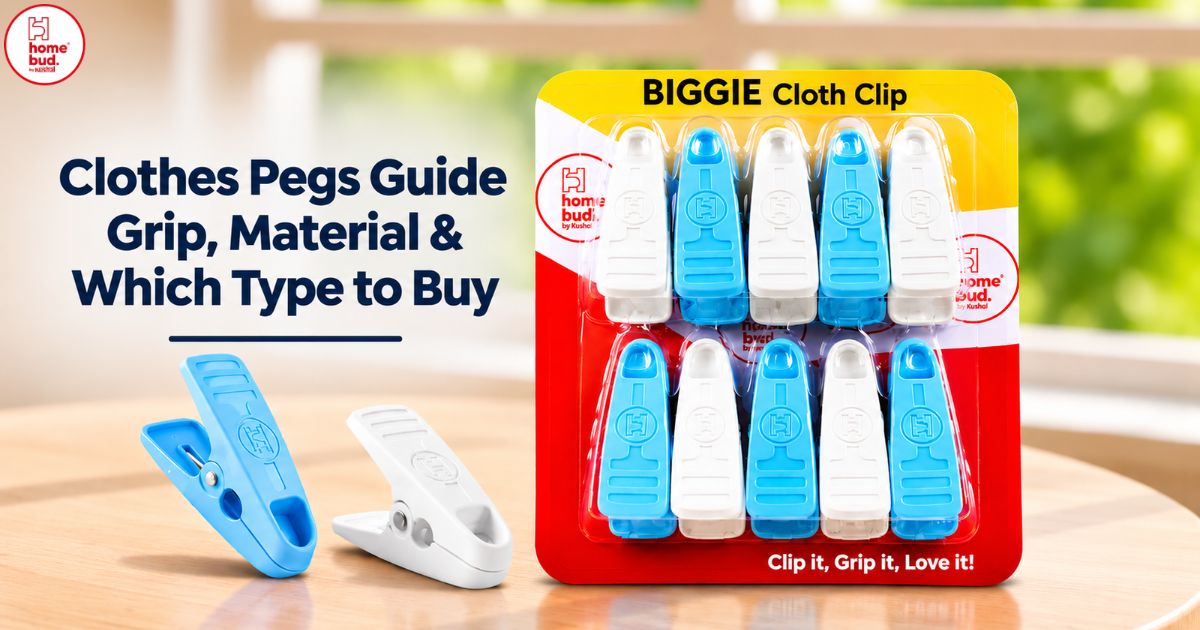
A wider clip-style peg spreads clamping force across a bigger jaw and generally grips heavier or bulkier items more securely, wet towels, bath mats, laundry bags, or anything with enough surface area for wind to catch. The Biggie Cloth Clip targets exactly this gap: a clip sized to hold wet towels and heavier bags securely while staying light enough to use one-handed, a combination a standard spring peg usually can’t manage. Reviewers of this particular clip mention a strong, dependable grip even in windy conditions, which is the one scenario where a weaker clip almost always fails first.
Material matters more than shape
Plastic cheap, light, but UV takes its toll
Plastic pegs are the most affordable option and perfectly serviceable for pegs that live indoors or come off the line right after use. Left outside permanently, though, UV exposure gradually makes many plastics brittle, and a peg that’s gone brittle cracks under load rather than flexing, often at the exact moment it’s holding something heavy.
Stainless steel the trade-off most people don’t expect
Stainless steel pegs resist the weathering that breaks down plastic, since they don’t turn brittle under UV the way plastic does, and well-made ones hold their spring tension for years of outdoor use rather than months. The trade-off is upfront cost: steel pegs typically cost more per piece than plastic, which is why they make the most sense for a line or rack left outdoors permanently rather than for occasional indoor drying.
Grade matters within steel too, much like it does for stainless steel cookware. A higher-grade steel resists corrosion and pitting for longer in humid or coastal conditions, while a cheaper, lower-grade steel peg can still develop faint rust spots over time, especially once the surface finish wears thin at the hinge point. If you’re buying steel pegs specifically for a balcony or terrace line that never comes indoors, paying slightly more for the better-graded option usually pays for itself within the first year or two.
How many pegs you actually need, and where they go missing
Most households underestimate how many pegs a full laundry load actually needs, especially for anything hung flat rather than folded over a single clip point. A bedsheet or a large towel often needs two or three pegs rather than one to stay put in any real wind, and skimping here just means re-hanging the same item twice. Pegs also disappear more than people expect: they fall behind machines, stay clipped to clothes that someone puts straight into a drawer without noticing, or settle to the bottom of a laundry basket under everything else. Buying in packs rather than loose pieces, and keeping a small reserve beyond what one load needs, avoids the mid-wash scramble of running short halfway through hanging a line.
Where this fits with the rest of your laundry setup
A good clip is only half the job if what it’s clipping onto isn’t up to the same standard. Pairing sturdy clips with a reliable hanger setup means wet laundry actually stays put from the moment it goes up to the moment it’s dry, rather than slipping loose partway through. A hanger that bends under a heavy wet shirt, or a line that sags under a full load, undoes the benefit of a strong clip just as surely as a weak clip would, so it’s worth treating the two purchases as one decision rather than two separate ones.
For the broader cleanup that usually follows laundry day, floor spills, drips near the washing area, a Double Blade Wiper handles the wet floor pass quickly, and if you’re setting up a fuller laundry-and-cleaning station, bundled combo options covering both wiping and sweeping in one purchase tend to work out cheaper than buying each piece separately. Keeping these basics in one spot near the washing area, rather than scattered across the house, is a small habit that saves more time over a year than it looks like it would at first.
Frequently asked questions
Spring pegs use a simple two-piece hinge and modest spring tension, which works well for light fabric but loses grip under heavier loads. Clip-style pegs spread clamping force across a wider jaw, which generally holds more securely on heavier or bulkier items like towels and bags, especially in windy conditions.
For pegs that stay outdoors permanently, usually yes. Stainless steel resists the UV-driven brittleness that eventually cracks plastic pegs, and it holds spring tension for longer with regular outdoor exposure. For pegs used only briefly indoors or brought in after each wash, the extra durability matters less, so plastic is often the more practical, cheaper choice there.
This is almost always UV damage if the pegs are plastic. Sun exposure gradually breaks down many plastics at a molecular level, making them brittle rather than flexible, so they crack under load instead of bending. If pegs live outside permanently, a UV-stabilized plastic or a stainless steel peg holds up considerably longer.
More than most people assume. A single light item like a sock or a pair of underwear needs just one peg, but a sheet, a large towel, or anything hung flat usually needs two to three pegs to stay secure, especially outdoors where wind pulls at the fabric. Keeping a small reserve pack beyond your usual load size avoids running short mid-wash.
A well-designed clip distributes pressure across a wider surface rather than pinching at one point, which is generally gentler on fabric than a narrow spring peg pinching the same spot repeatedly. That said, very delicate or stretchy fabric is still best hung flat on a rack rather than clipped at all, regardless of which peg style you use.
A standard light-duty spring peg often struggles with a fully soaked towel, since the combined weight and wind resistance can overwhelm what its spring tension can handle. A wider clip-style peg built for heavier loads holds considerably more securely in exactly this situation, which is the gap that style of clip exists to fill.
Pegs commonly disappear behind washing machines, stay clipped to clothes that go into a drawer with nobody noticing, or settle to the bottom of a laundry basket under everything else. Keeping a dedicated small container near the drying area, rather than leaving pegs loose in a basket, cuts down on this considerably over time.