
Choosing the Right Duster for Cleaning Floor for Indian Homes
-
Posted by
homebud
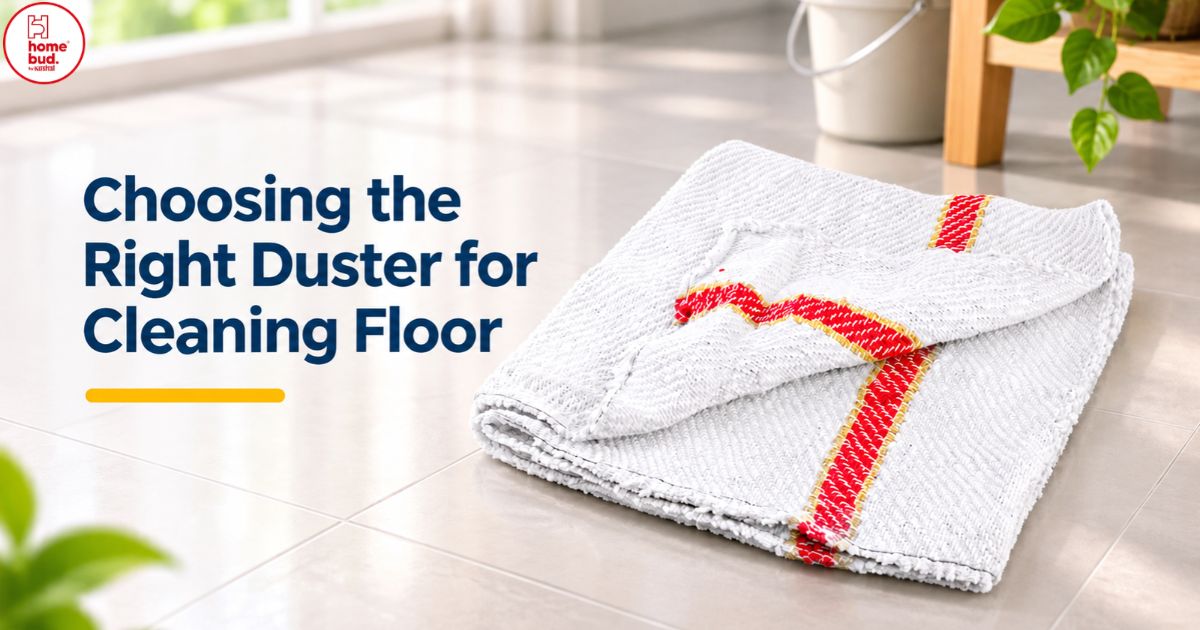
Most Indian homes don’t own a mop in the Western sense. They own a pochha: a cloth you wet, wring and push across the floor by hand. A duster for cleaning floor is really that cloth, sometimes paired with a broom or a wiper, and picking the wrong one means either pushing dust around or soaking your floor when you only want to dust it.
That distinction, dry versus wet, is the one thing worth sorting out before you buy anything. Everything else follows from it.
What a duster for cleaning floor is actually doing
A cotton pocha is a simple absorbent cloth for wiping floors, while a microfibre cloth uses finer fibres that trap dust and need less water, and the second tends to work better on larger or more delicate surfaces. In commercial cleaning, the same split shows up: a cotton mop tends to push dirt and debris around rather than lift it, while a microfibre mop keeps even pressure across the floor and absorbs more water and dirt in one pass.
None of this means cotton is the weaker option. It slides easily across most floor types and handles corners well, which is why institutions like schools and offices still use it for routine maintenance, saving microfibre for places where hygiene matters more, such as hospitals and nursing homes. For a home, the choice is less about hygiene standards and more about what you’re cleaning that day. Dry dust and crumbs want microfibre. A properly dirty floor, the kind that needs scrubbing after a monsoon week, wants a cotton cloth with real absorbing power.
There’s also a naming gap worth closing. A jhadu handles the morning sweep, a pochha handles the floor once it’s swept, and a duster or wiper reaches what a cloth can’t: skirting boards, grills, the gap behind the fridge. A floor duster is one part of a routine that usually needs a broom on the other side of it.
The range and who each piece suits
HomeBud sells four pieces built around that routine rather than one do-everything product.
|
Product |
What it’s for |
Price |
|
Floor Duster |
A single cotton-style cloth for everyday wiping |
₹110 |
|
Superior Cleaning Advanced Floor Cloth (2 Pcs) |
A finer, faster-drying cloth for daily dusting |
₹150 |
|
2 Pcs Broom + Floor Cloth Combo |
Sweeping and wiping in one purchase |
₹330 (from ₹440) |
|
WipeExpert Bathroom Wiper + Floor Cloth Combo |
Bathroom floors plus the rest of the house |
₹295 (from ₹370) |
The plain Floor Duster is described as a soft, thick fabric that wipes up both dirt and water, is easy to wash and holds up to reuse, which is the cotton cloth’s job description almost word for word. The Superior Cleaning Advanced Floor Cloth, sold as a two-piece set, is pitched on smaller pores for higher absorption and a quicker dry, the two things that usually separate a microfibre cloth from a plain one.
The combos are where the thinking shows. The broom-and-cloth combo pairs a wide-coverage broom for sweeping with absorbent cloths for the wipe that follows, which is the jhadu-then-pochha routine sold as a single box rather than two separate aisles. The WipeExpert combo swaps the broom for a bathroom wiper, aimed at the one room in most Indian homes where a floor duster alone doesn’t quite cut it: tile that stays wet, soap scum, and water that needs pushing toward a drain rather than just soaked up.
If you already own a broom you’re happy with, buying the plain cloth or the two-piece set and skipping the combo is the cheaper route. The combos earn their price mainly for a first-time buyer setting up a kitchen or a new flat from scratch.
Cotton or microfiber picking by what’s on your floor
If your home is mostly vitrified tiles or marble, lean microfibre. It dusts without leaving lint, and because it needs less water, it won’t dull a polished stone floor the way a soaking-wet cotton cloth can over months of use. If you’ve got a mix of surfaces, or a kitchen floor that takes oil spills and masala stains, cotton’s higher water-holding capacity is worth the extra wringing.
Most households are better off keeping both. A microfibre cloth for the daily five-minute pass and a cotton cloth kept aside for the heavier weekend clean costs under ₹300 total and covers every floor type in a typical flat.
Buying only one forces a compromise on whichever job the cloth wasn’t built for.
Getting more life out of your duster
A duster that’s never washed properly stops cleaning and starts redistributing dirt, which defeats the point of owning one. Rinse it after every single use, not just when it looks visibly dirty. For a proper clean, cloth dusters and microfibre cloths alike should go through a wash, by hand or machine, roughly every few weeks, since a mop or duster left damp and unwashed can carry a surprising amount of bacteria. A pre-wash in warm water before the main wash lifts out trapped grime and cuts down on that buildup before it starts.
Two habits make the biggest difference. First, never leave a wet cloth bunched up in a corner or inside a bucket; wring it out and hang it to dry flat, since damp cloth left folded is exactly where smell and mould start. Second, keep a separate cloth for the floor and one for kitchen counters or dishes. A floor cloth picks up far more grit than a counter ever does, so using the wrong one on the wrong surface can spread bacteria instead of removing it.
A simple two-duster routine that covers most homes
For a one or two person flat, the plain Floor Duster plus a broom you already own gets you through most weeks. For a family kitchen that sees daily spills, add the Superior Cleaning two-piece set for quick dry wipes between the heavier cotton cleans. And if the bathroom floor is the one spot that never quite feels done, the WipeExpert combo is built specifically for that job rather than asking a floor cloth to do double duty.
Buy for the rooms you actually have, not for a single cloth that claims to do everything. A ₹110 cotton duster and a ₹150 microfibre set, bought together, will outlast and outperform one expensive all-rounder on almost every floor in an Indian home.
Frequently asked questions
A jhadu is the broom used for the morning sweep. A pochha is the cloth used to wipe the floor after sweeping. A duster, in the Indian retail sense, usually means that same cloth, though the word can also cover a wiper used for reaching skirting boards, grills and spots a cloth can’t manage by hand.
Rarely well. A cotton cloth can do light dry wiping in a pinch, but it’s built for absorbing water. A microfibre cloth can handle a damp wipe, but it’s built to work dry. Keeping one of each is more reliable than asking a single cloth to switch jobs.
Two is a practical minimum: one for daily dry dusting and one heavier cloth for the weekly wet clean. A separate bathroom wiper is worth adding if that floor stays wet through the day.
Microfibre, generally. It needs less water to work, which matters on stone that can dull or stain with repeated heavy wetting, and it won’t leave lint behind the way a worn cotton cloth sometimes does.
Rinse it after every use. Give it a proper hand or machine wash roughly every few weeks, sooner if it starts to smell or feel stiff. A duster that’s never washed properly is pushing dirt around rather than removing it.
It’s better not to. A floor cloth picks up far more dirt and grit than a counter does, and using it on a food surface risks spreading that bacteria rather than cleaning the counter.
The plain Floor Duster and the Superior Cleaning cloth set can both be used in a bathroom, but the WipeExpert combo is built specifically for that room, pairing a bathroom wiper with the same absorbent floor cloths for water and everyday grime.