
Foil Paper Uses Every Indian Kitchen Should Know
-
Posted by
homebud
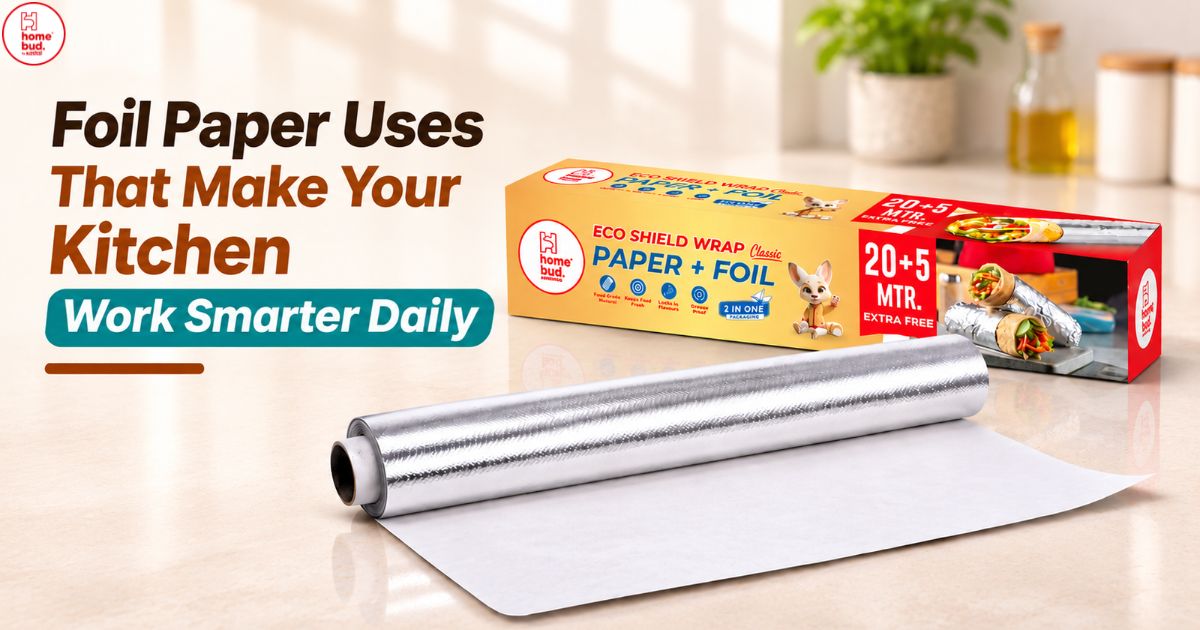
Most Indian homes keep a roll of foil paper in the kitchen drawer, and most of us use it for exactly one thing. We wrap rotis for the tiffin and put the roll back. That roll can do a lot more. Used correctly, foil paper keeps food warm for hours, stops leftovers from drying out in the fridge, saves you from scrubbing greasy baking trays, and even helps with a few cleaning jobs around the house.
This guide covers the practical foil paper uses that actually matter in an Indian household, from packing lunch boxes to cooking, storing and cleaning. You will also learn which uses to avoid, which side of the foil should face your food, and how a paper and foil wrap differs from the plain aluminium roll you grew up with. If you want to see the rolls we make for everyday kitchens, you can browse the HomeBud foil paper range while you read.
What Foil Paper Actually Is
Foil paper is the everyday name for thin aluminium sheet rolled out to a fraction of a millimetre and sold in kitchen rolls. In India the word is used loosely, so a shopkeeper may hand you plain aluminium foil, a paper and foil laminate, or even a silver coated paper when you ask for it. Plain aluminium foil is a single metal layer. A paper and foil wrap bonds a food grade paper layer to an aluminium layer, so the paper touches the food while the foil outside holds in heat and blocks moisture.
Aluminium works for food because it is a barrier. It blocks light, air, moisture and smells, it can be folded into almost any shape, and it handles oven and tawa temperatures without melting.
Foil Paper Uses for Packing Food
Packing is where foil earns its place in most Indian kitchens. A good wrap keeps food warm, soft and leak free until lunchtime, which plastic boxes alone often fail to do.
Keeping Rotis Soft in the Tiffin
Rotis go hard because they lose steam as they cool. Wrap them in foil while they are still warm and the steam stays trapped inside, so they remain soft four to five hours later. Stack the rotis first, then wrap the whole stack tightly instead of wrapping each one separately. This uses less foil and keeps more warmth inside. If your rotis carry ghee, a paper and foil wrap is the better choice because the paper layer absorbs extra oil instead of letting it pool against the metal.
Packing Parathas and Sandwiches for Travel
Train journeys and road trips are a big part of Indian family life, and foil is the traditional travel companion for good reason. Aloo parathas, theplas and grilled sandwiches stay intact and warm in a foil parcel, and the parcel can be opened, eaten from and closed again. Fold the edges twice to seal them so oil does not seep into your bag.
Foil Paper Uses for Storing Food
Foil is one of the simplest ways to keep stored food fresher, as long as you match it to the right kind of food.
Keeping Leftovers Fresh in the Fridge
Wrapping leftover rotis, cut onions, paneer blocks or cooked rice in foil keeps moisture in and odours out. A tight wrap keeps dry foods fresh noticeably longer than an open plate.
Covering Bowls Without Cling Film
You do not need to buy cling film just to cover a bowl of dough or batter. A sheet of foil pressed around the rim of the bowl does the same job and can be reused for the next batch. Leave a little gap at the top of the idli and dosa batter so it has room to rise.
Foil Paper Uses in Cooking
Foil also helps directly at the stove, in the oven and in the air fryer, where it saves both time and cleaning effort.
Lining Baking Trays and Air Fryer Baskets
Baking cakes, roasting vegetables or making tikka in an oven leaves trays coated in burnt oil and masala. Lining the tray with foil before you start means the mess goes in the bin, not into your sink. In an air fryer, line only the bottom of the basket and leave space around the edges so hot air can still circulate. Never cover the whole basket, because blocked airflow leaves food undercooked and can strain the appliance.
Grilling Paneer and Vegetables on a Tawa
Not every home has an oven or tandoor, but a foil parcel on a hot tawa gives you a very close result. Place marinated paneer, mushrooms or capsicum on a sheet of foil, fold it into a closed pouch, and cook it on a covered tawa on medium flame. The food steams in its own marinade and gets lightly charred where it touches the hot metal.
Keeping Food Warm Before Serving
When you are cooking for guests, the first dishes are often cold by the time the last one is ready. Cover finished dishes with foil and tuck the edges around the vessel. The foil reflects heat back into the food and slows cooling significantly.
Foil Paper Uses in Cleaning and Around the House
Foil is not only a kitchen wrap. A few household uses make good sense, especially for jobs that would otherwise need special products.
Scrubbing a Grill Grate or Barbecue Rack
A ball of crumpled foil makes a decent emergency scrubber for cast iron grill grates and barbecue racks with burnt residue. Use it only on sturdy metal surfaces. For daily dishwashing, a proper tool lasts longer and works better, so keep a stainless steel scrubber for steel kadhais and burnt deposits, and a soft kitchen scrub sponge for non-stick pans, which foil would scratch. For tough pans, see our guide on how to clean burnt utensils.
Cleaning Tarnished Silver at Home
Many Indian homes have silver puja items, coins and payal that turn black over time. Line a steel bowl with foil, place the silver pieces on it, add a spoon of baking soda and pour in hot water so the pieces are covered. Leave them for a few minutes and the tarnish lifts off through a simple chemical reaction between the silver, the aluminium and the soda. Rinse, dry with a soft cloth and the shine returns without harsh rubbing. Skip this for pieces with stones.
Protecting the Stove Area from Spills
Some homes place foil around the base of the burners to catch drips during heavy frying. If you do this, keep the foil well away from the burner holes and the flame itself so gas flow and air supply are never blocked. For a deeper clean of the stove itself, follow our steps on cleaning gas stove burners at home, and use a compact kitchen wiper to clear water and spills from the platform afterwards.
Aluminium Foil Paper Uses You Should Avoid
These are the mistakes we see most often in Indian kitchens.
Do not put foil in a microwave unless your appliance manual clearly allows it. Metal reflects microwaves and can cause sparks that damage the oven. Avoid long contact between plain foil and sour or salty foods such as tamarind chutney, tomato gravy, lemon rice and pickles. Acids and salt can react with aluminium, leave tiny pits in the foil and give food a metallic taste. For these foods, use glass or steel containers, or choose a wrap where a paper layer sits between the food and the metal.
Do not use foil to scrub non-stick cookware, because it will scratch the coating. Do not line the floor of an electric oven with foil, since it can trap heat and damage the heating element. And avoid wrapping piping hot, very oily food in plain foil for long storage, since a butter paper layer or a paper and foil wrap handles grease much better.
Shiny Side or Dull Side Which One Faces the Food
The shiny and dull sides exist only because of how the foil is rolled during manufacturing. Two sheets pass through the final rollers together, and the sides touching the polished rollers come out shiny. For everyday cooking and packing, the difference in heat reflection is very small, so you can use either side.
The exception is paper and foil wrap. Here the side matters a great deal, because the paper side is designed to touch the food and the foil side is meant to face outward. Always check which side is which before wrapping.
Plain Foil Versus Paper and Foil Wrap
Plain foil is good at blocking heat and air, but it does nothing to manage grease and it lets food sit directly against metal. Butter paper handles grease well but does not hold heat or seal moisture. A paper and foil wrap combines the strengths of both. Here is how they compare.
|
Kitchen Job |
Plain Aluminium Foil |
Butter Paper |
Paper and Foil Wrap |
|
Keeping rotis warm in a tiffin |
Good |
Poor |
Very good |
|
Wrapping oily parathas |
Average, oil pools |
Good |
Very good, paper absorbs oil |
|
Sour or salty food contact |
Avoid |
Good |
Good, paper sits between food and foil |
|
Lining baking trays |
Very good |
Good |
Good |
|
Fridge storage |
Very good |
Average |
Very good |
The HomeBud Eco Shield Wrap Paper and Foil is built on this two-layer idea. It has a food grade paper layer bonded to foil, so it holds heat and aroma, resists leaks and grease, and controls moisture for packed food. It comes in 25 metre and 72 metre rolls priced between ₹450 and ₹1,000, and the value pack adds 5 metres free on top of 20. If you also need a sponge for daily dishwashing, the Sandwich Sponge Scrub and Eco Shield Wrap combo is currently available at ₹330 instead of ₹510 and is rated 4.75 out of 5 by buyers.
How to Choose the Right Foil Paper Roll
Start with how you cook. If you mostly pack tiffins with rotis and parathas, a paper and foil wrap gives you softer, less greasy food. If you bake or line air fryer baskets often, a plain foil roll works well. Families that pack several lunch boxes every day should pick the longer roll, since it costs less per metre and saves frequent repurchasing.
Next, check that the product is labelled food grade and look at the thickness. Very thin foil tears at the folds and forces you to use double sheets.
Wrap Smarter Every Day
A roll of foil paper is one of the most hardworking items in an Indian kitchen when you use it with a little thought. Match the wrap to the food, keep sour dishes away from bare metal, keep foil out of the microwave, and let it handle the packing, storing and tray lining that would otherwise mean extra washing. When you are ready to restock, explore the HomeBud foil paper collection and pick the roll that fits how your family cooks and packs every day.
Frequently Asked Questions
The most common foil paper uses in Indian homes are wrapping rotis and parathas for tiffins, covering leftovers in the fridge, lining baking trays and air fryer baskets, and keeping cooked food warm before serving. Many homes also use it for cleaning silver and protecting the stove area from spills.
Yes, wrapping hot rotis in foil paper is safe and is the best way to keep them soft. Rotis are neither acidic nor very salty, so they do not react with aluminium. If the rotis carry a lot of ghee, a paper and foil wrap keeps them less greasy.
Avoid putting foil paper in a microwave unless your appliance manual specifically allows it. Metal reflects microwaves and can cause sparking. Transfer the food to a microwave safe glass or ceramic dish before heating.
For plain aluminium foil, either side can touch the food because the difference between the shiny and dull side is very small. For a paper and foil wrap, the paper side should always face the food and the foil side should face outward.
Foil that held only dry food, such as rotis or biscuits, can be wiped clean and reused a few times. Foil that touched oily, wet or sour food should be thrown away, since it is hard to clean properly and may carry smells into the next use.
Foil paper is made of aluminium and is best for holding heat, blocking air and storing food. Butter paper is a grease resistant paper that is better for wrapping oily snacks and lining cake tins but does not keep food warm. A paper and foil wrap combines both qualities in one sheet.