
How to Dry Bathroom Floor Surfaces Properly And Why It Actually Matters
-
Posted by
homebud
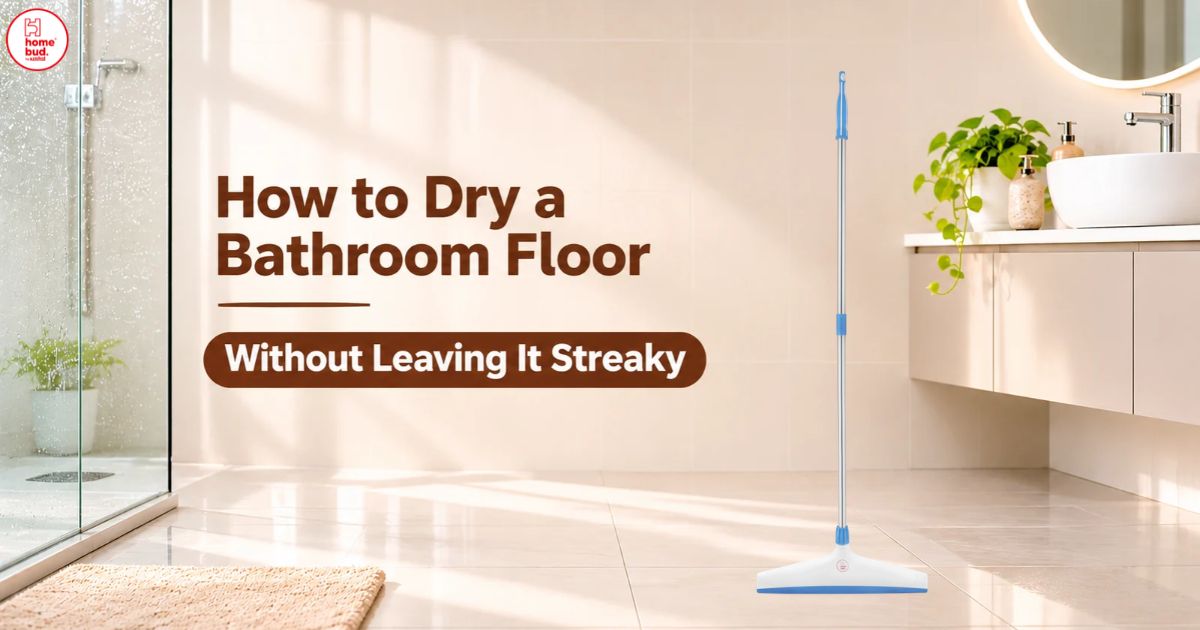
Most people treat a wet bathroom floor as a minor annoyance, something to mop up before someone slips on the way to brush their teeth. The CDC’s own data on bathroom injuries suggests that instinct undersells the risk by a wide margin. Learning how to dry bathroom floor surfaces properly is really about removing the one condition, standing water on a hard surface, that causes most of the injuries that happen in that room, not about tidiness.
Why a wet bathroom floor is riskier than it looks
The scale of this is easy to underestimate until you see the numbers. More than 235,000 people over the age of 15 visit a U.S. emergency room every year because of injuries suffered in a bathroom, and roughly 14% of those visits end in hospitalization. Slipping on a wet floor is one of the leading causes behind that count, right alongside injuries from getting in and out of the tub.
None of that requires a dramatic spill to happen. A normal shower leaves a thin sheen of water on tile that’s often invisible until someone’s foot finds it. That’s the part most households get wrong: they wait for a visible puddle before reaching for a mop, when the floor was already dangerous the moment it stopped looking dry to the eye but hadn’t actually dried.
How to dry bathroom floor tiles, step by step
Drying a bathroom floor well is less about effort and more about sequence. Doing the steps in the wrong order means re-wetting a section you already cleared, which is the most common reason people feel like they’re “always mopping” the same bathroom.
Squeegee or wipe first, mop second
Pushing standing water toward the drain with a wiper or squeegee before you ever touch a mop removes the bulk of the volume in seconds, rather than trying to soak it all up with absorbent material from the start. A mop or cloth used on a floor that’s still holding a layer of standing water just gets saturated and starts smearing water around instead of removing it.
Work from the corners outward
Corners and the base of the wall collect water that a straight sweep misses, since most people wipe in broad strokes down the middle of the floor and never angle into the edges. Starting at the corners and pushing outward toward the drain means you’re not pushing dirty, soapy runoff back across a section you just cleared.
Finish at the drain, not the door
The last stroke of any bathroom floor cleaning should send water toward the drain, not toward the doorway. It sounds obvious written down, but it’s the single most common mistake in how people actually move a wiper, since the natural motion is to clear a path toward the exit rather than toward where the water is actually meant to go.
Choosing the right bathroom wiper blade material
The blade doing the actual drying matters more than most buyers realize, and the material changes both how well it dries and how long it lasts.
Rubber blades
Rubber is the standard choice for a reason: it flexes against an uneven tile surface and grips water effectively without scratching the finish. HomeBud’s WipeExpert Bathroom Wiper, priced at ₹220 with a 4.60 rating, uses a curved rubber edge built specifically for wet bathroom surfaces, and it’s a reasonable default for standard ceramic or porcelain tile.
Silicone blades
Silicone holds up better than rubber on marble and textured or embossed tiles, where a stiffer rubber edge can skip over grooves and leave thin streaks of water behind. If your bathroom floor has any texture to it rather than a flat glazed finish, silicone is worth the extra look even if it isn’t the cheapest option on the shelf.
Stainless steel wipers
A stainless steel blade resists rust far better than a plastic-bodied wiper that sits in a damp bathroom corner day after day. HomeBud’s Wroom, at ₹485, pairs a stainless steel body with a dual-blade design, which matters most in a household where the wiper rarely gets a chance to fully dry out between uses.
Single blade vs double blade does it dry faster
A double-bladed wiper clears water in both directions of a single stroke, rather than only on the push and not the pull. HomeBud’s Double Blade Wiper, at ₹285 with a 4.60 rating, is built around exactly that advantage, and it measurably cuts down the number of strokes needed for a full-sized bathroom floor compared to a single curved-edge wiper like the standard WipeExpert.
That said, a single-blade wiper isn’t a worse product, just a different trade-off. It’s usually narrower and easier to maneuver into a small or oddly shaped bathroom, where a wider double-blade head spends more time bumping into the base of a toilet or a cabinet than it saves in stroke count. A compact bathroom suits the single blade; an open, larger bathroom floor is where the double blade earns its keep.
Wiper and broom combos solving two jobs with one purchase
A bathroom floor rarely needs drying without also needing a quick sweep first, hair, lint, and the odd stray bit of debris collect on bathroom tile just as much as anywhere else in the house. That’s the logic behind HomeBud’s combo listings: the 2 Pcs Broom + WipeExpert Bathroom Wiper, at ₹385 down from ₹510, and the single Broom + WipeExpert Bathroom Wiper combo, at ₹350 down from ₹460 and currently the highest-rated listing in the category at a perfect 5.00, both bundle a broom for the dry debris with a wiper built for the water that follows.
Buying the combo only makes sense if you don’t already own a decent broom. If your sweeping tool is already fine and it’s specifically the water-drying side that’s failing you, a standalone wiper like the Double Blade or WipeExpert models does the same job without paying for a broom you don’t need.
Building a bathroom-drying routine that actually sticks
The households that stop worrying about wet bathroom floors are usually the ones who keep the wiper somewhere they’ll actually reach for it, hung on a hook right by the shower rather than stored in a cupboard three steps away. A routine that depends on walking to fetch a tool rarely survives more than a week, however good the wiper itself is.
If dust and dry debris on the rest of the house’s floors is a bigger issue than the bathroom specifically, HomeBud’s Floor Duster collection and Broom category cover that side of the job on their own. And for anyone setting up a full cleaning kit at once rather than buying piece by piece, the Combo page lists every bundled broom-and-wiper pairing side by side, which usually works out cheaper than assembling the same set one item at a time.
Frequently asked questions
Use a rubber or silicone wiper to push standing water toward the drain immediately after showering, rather than waiting for it to air-dry or soaking it up with a towel. A quick 20-second wipe right after the shower prevents the thin film of water that causes most slips.
Usually because a mop was used on a floor that still had standing water on it, which just spreads the water thinner instead of removing it. Clearing the bulk of the water with a wiper before mopping lets the floor actually dry rather than staying in a damp, semi-wet state.
Rubber works well on standard flat ceramic or porcelain tile. Silicone holds up better on marble or textured, embossed tiles, where a stiffer rubber edge can skip over grooves and leave thin streaks of water behind.
Replace it once the blade edge becomes stiff, cracked, or stops sitting flush against the tile, since a worn edge leaves thin trails of water behind instead of clearing them fully. For daily use, that typically happens somewhere between eight months and a year.
Yes, specifically because a bathroom wiper rarely gets a chance to fully dry out between uses. Stainless steel resists the rust and corrosion that a plastic-bodied wiper’s metal fittings eventually develop in that kind of constant damp environment.
It’s worth it for larger, open bathroom floors, since a double blade clears water in both directions of a single stroke and reduces the total number of passes needed. In a small or oddly shaped bathroom, a narrower single-blade wiper maneuvers more easily around fixtures.
Because standing water on a hard floor is one of the leading causes of the slips and falls responsible for the roughly 235,000 bathroom-related emergency room visits recorded each year in the U.S. alone. A dry floor removes the exact condition behind most of those injuries.