


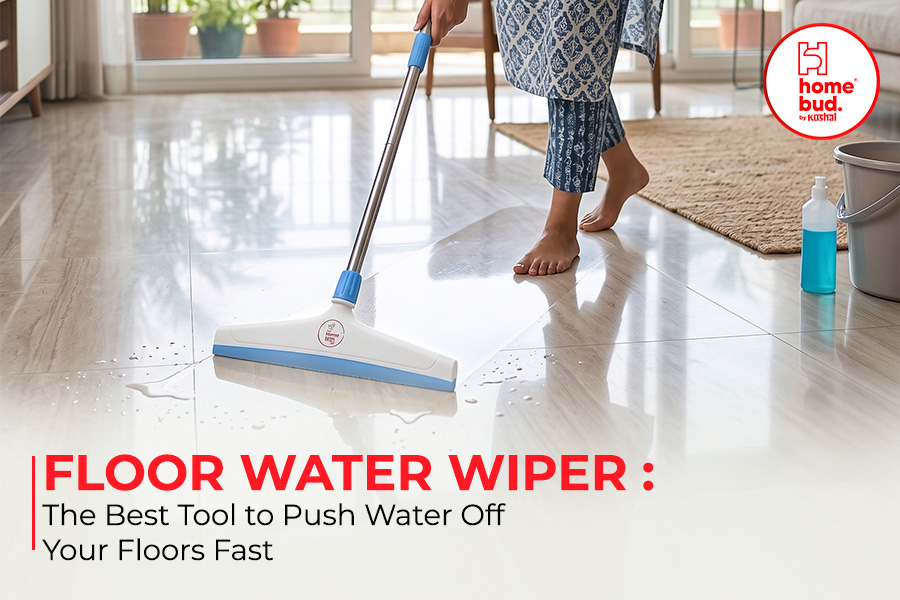
You just finished mopping the kitchen or stepped out of a shower and the floor is still covered in water. You wait for it to dry on its own, or you toss a towel down and hope for the best. Sound familiar? If it does, you are not using the right tool for the job, and this guide is going to change that for good.
A floor water wiper is exactly what it sounds like. It is a cleaning tool designed specifically to push standing water off your floor quickly, cleanly, and without any effort beyond a few smooth strokes. It is also called a floor squeegee, water squeegee, wet floor cleaner, or simply a pocha stick in many Indian households. Whatever you call it, the function is the same. A firm rubber or silicone blade attached to a long handle lets you glide across a wet surface and guide water toward a drain or corner, leaving your floor nearly dry in seconds.
If you have been searching for the best water wiper for floor cleaning and are not sure where to start, this article covers everything you need to know, including what makes one wiper better than another, which blade material works best for water removal, how handle length affects your comfort, and which rooms in your home benefit most from a dedicated floor water wiper.
What a Floor Water Wiper Actually Does and Why You Need One
A floor water wiper works differently from a mop. A mop absorbs water into its fibres and needs to be wrung out repeatedly. A floor water wiper does not absorb anything. Instead, its blade creates a firm seal against the floor surface and pushes the water forward with each stroke, directing it toward a drain, a doorway, or a corner where it can be collected or allowed to drain away.
This pushing action is what makes a floor water wiper so effective at water removal. It clears the floor surface much faster than waiting for natural air drying, much more completely than a mop, and without leaving the residual dampness that a towel or cloth tends to leave behind. In a bathroom that sees daily shower use, a single pass with a good rubber blade wiper can remove almost all the standing water in under a minute. That means a dry floor immediately after every shower, which is safer, cleaner, and far more hygienic than a floor that stays wet for twenty minutes or more.
For Indian homes in particular, where bathrooms and kitchens tend to have tiled floors with a slight slope toward a floor drain, a floor water wiper is the single most effective tool you can own. It works with the slope of the floor, channelling water exactly where it needs to go, every single time.
Why Wet Floors Are a Bigger Problem Than Most People Realise
Standing water on bathroom and kitchen floors is not just inconvenient. It is a genuine safety and hygiene issue that most households underestimate until something goes wrong.
Wet tile floors are among the most common causes of slips and falls at home, particularly for children and older family members. A bathroom floor that stays wet for an extended period after a shower is a slip hazard every single time someone walks in. A kitchen floor with water puddles near the sink or stove area is equally dangerous.
Beyond safety, persistent moisture on floors creates conditions where mold and mildew can develop, particularly in grout lines and the gaps between tiles. Mold is not just unsightly. It is a health concern, especially for households with young children, elderly members, or anyone with respiratory sensitivities. Bathrooms that stay wet longer than necessary are far more prone to developing that persistent musty smell that is so difficult to get rid of once it sets in.
A floor water wiper that is used consistently after every mopping session and every shower solves all of these problems at once. The floor dries faster, the mold risk is dramatically reduced, and the home is simply safer and more pleasant to live in.
How a Rubber Blade Pushes Water Better Than Any Other Method
The rubber blade is the core of what makes a floor water wiper so effective, and understanding how it works helps you appreciate why it outperforms towels, mops, and even high-end spin mops when it comes to actual water removal from a floor surface.
A rubber blade is firm enough to create a continuous seal along the floor as you push it forward, but flexible enough to conform slightly to minor imperfections in the tile surface. This combination of firmness and flex is what allows the blade to push water rather than just gliding over it. The blade does not absorb the water. It physically displaces it, moving it forward with each stroke until it reaches a drain or edge.
The thicker and higher quality the rubber, the better this seal is, and the more water the blade pushes with each pass. This is why a heavy grade rubber blade on a good quality floor wiper clears water in fewer strokes than a thin, budget blade. The budget blade may slip over the surface or allow water to slide back under it, forcing you to repeat strokes and putting more physical effort into what should be a quick and easy task.
For water removal specifically, a firm rubber blade is the preferred choice for most Indian home floors, particularly tiled bathrooms and kitchens with floor drains. If your bathroom has a standard slope toward the drain, a rubber blade wiper will channel every puddle directly to that drain with minimal effort on your part.
Rubber vs Silicone for Water Removal — Which One Actually Works Better
Both rubber and silicone blades remove water effectively, but they do it slightly differently, and the right choice depends on your floor type and cleaning priorities.
A rubber blade is firmer and denser. It applies more consistent pressure against the floor and is excellent at pushing large volumes of water quickly. If your bathroom floor gets completely wet after every shower and you need a tool that clears that water fast, a rubber blade wiper is your best option. It is also the more affordable choice and is widely available in a variety of sizes.
A silicone blade is softer and more flexible. It forms a tighter seal against very smooth surfaces like polished marble or vitrified tiles and tends to leave a cleaner, almost streak-free finish after each pass. If your priority is not just removing water but also making sure your expensive marble or polished tile floor looks immaculate after cleaning, a silicone blade delivers that result better than rubber.
For standard bathrooms with ceramic tile floors and a floor drain, a rubber blade wiper is the practical everyday choice. For living rooms and bedrooms with premium polished flooring, a silicone floor squeegee wiper gives the better finish. Many households keep both, using a rubber wiper in the bathroom and kitchen and a silicone wiper in the living and dining areas.
Why Handle Length Matters So Much for a Wet Floor Wiper
One of the most overlooked features when people buy a floor water wiper is handle length, and it is genuinely one of the most important factors that determines how comfortable and effective your daily cleaning routine becomes.
A short handle forces you to bend your back to reach the floor. If you are cleaning the bathroom every morning after a shower, or the kitchen after every meal, repeated bending adds up to real physical strain on your lower back over time. A floor water wiper with long handle, ideally between 100 cm and 130 cm, lets you clean in an upright posture with your back straight and your full body weight behind each stroke.
An upright posture also makes your strokes more powerful and more controlled. When you are bent over a short handle, you tend to make short, rushed strokes because the position is uncomfortable. With a long handle that fits your height, you naturally make longer, smoother strokes that cover more floor per pass and do a much better job of pushing water toward the drain.
Extendable handles are an excellent option because they allow you to adjust the length based on your height and the room you are cleaning. A single extendable wiper can be used comfortably in a compact bathroom as well as a larger kitchen or living room simply by adjusting the length of the pole.
For grip quality in wet conditions, look for handles with a textured or rubberised grip section near the top. A wet floor wiper is used in a wet environment, and your hands will often be damp while you use it. A non-slip grip is a practical safety feature, not a luxury.
Room by Room Guide to Using a Floor Water Wiper at Home
Every room in your home that sees wet floors benefits from a floor water wiper, but the right technique and tool size varies by room. Here is how to use your water pushing wiper effectively in each space.
In the bathroom, start from the farthest corner or wall and use long, overlapping strokes to push all water toward the floor drain. Work systematically from one side to the other, like mowing a lawn, so you do not miss any puddles or push water back over areas you have already cleared. A blade width of 30 to 40 cm is ideal for most Indian bathroom sizes. Use the wiper after every shower, not just after mopping, and your floor will stay significantly drier and cleaner with far less effort.
In the kitchen, the challenge is not just water but also a mix of water and cooking residue that can make the floor slippery. Use your wet floor wiper after mopping to push all the residual liquid toward the kitchen drain or doorway. A slightly wider blade of 40 to 50 cm covers the kitchen floor faster. Always do one final pass with a slightly dry blade to collect any remaining thin film of soapy water from the tile surface.
On the balcony, after rain or after washing the space down, a floor water wiper is the fastest way to clear pooling water. Use a wide blade of 50 cm or more and push water toward the balcony drain with firm, sweeping strokes. A long handle is especially useful here because balcony floors often require reaching across a wider area.
In the living room, after mopping a marble or vitrified tile floor, a silicone floor squeegee wiper helps collect the residual mop water and leaves the surface clean and streak-free. This is particularly useful for households that mop the living room daily and want the floor to dry quickly before furniture is placed back or family members walk back in.
The Correct Technique for Pushing Water Off Your Floor
Using a floor water wiper correctly makes a noticeable difference in how effectively and quickly it clears water. Many people use the tool without thinking about technique, which results in extra effort and incomplete results.
Always begin at the wall or the far end of the room and work toward the drain or exit point. This ensures you are always pushing water forward rather than spreading it back over areas you have already cleaned. Think of it as gathering the water into a progressively smaller area until it reaches the drain.
Use overlapping strokes so that each pass covers a portion of the area cleared by the previous stroke. This prevents thin strips of water from being left behind between strokes. An overlap of about 5 to 10 cm per pass is sufficient.
Apply firm, steady pressure as you push rather than lifting and placing the wiper repeatedly. The blade needs to maintain contact with the floor surface throughout each stroke to create the seal that pushes water effectively. Lifting and placing breaks the seal and allows water to slip back under the blade.
On tiled floors with grout lines, use slightly slower strokes. The grout lines are slightly lower than the tile surface, which means thin pools of water sit in them. A slower, firmer stroke allows the blade time to push this water out of the grout lines rather than gliding over them.
Homebud Products Built for Floor Water Removal
If you are ready to invest in a proper floor water wiper that does the job right every single time, Homebud has options built for real Indian home conditions.
The Homebud Double Blade Wiper uses a dual rubber blade design that pushes more water per stroke than a single blade. If your bathroom or kitchen floor sees a lot of water daily, this is the tool that gets it clear fastest.
The Homebud Heavy Duty 2 Blade Wiper is the reinforced version for households that need a wiper that holds up under frequent heavy use. The blade is built to maintain its edge and seal quality over many months of daily use.
For bathrooms specifically, the Homebud WipeExpert Bathroom Wiper is designed with bathroom dimensions and drainage in mind, making it one of the most practical bathroom drying tools available for Indian homes.
If you want a single tool that handles both sweeping and water wiping, the Homebud Wroom Wiper Broom is a smart combination that sweeps dry debris and pushes wet water, reducing the number of tools you need for your daily cleaning routine.
Browse the full range at homebud.in/product-category/broom/ to find the right floor water wiper for your home.
How to Keep Your Floor Water Wiper Clean and Long Lasting
A floor water wiper works in wet, sometimes soapy conditions every day, which means it needs regular care to stay hygienic and perform well over time.
Rinse the blade under running water after every single use. Soap residue, floor cleaner, and dirt particles cling to rubber and silicone and degrade the material over time if left on the blade. A quick rinse takes only seconds and adds months to your blade’s useful life.
Once a week, wash the blade with a small amount of mild liquid soap and a soft cloth. Rinse it thoroughly and stand the wiper upright or hang it on a hook to allow it to air dry completely. Never store a wet wiper with the blade pressed against a surface. This deforms the blade edge over time and reduces its water-pushing effectiveness.
Check the blade monthly for signs of wear. A blade that has thinned, cracked, or developed a curved or uneven edge will no longer seal properly against the floor. When this happens, replace the blade rather than continuing to use an ineffective wiper that requires double the strokes to do the same job.
If the handle connects to the wiper head via a threaded or snap joint, check that connection regularly for loosening. A wobbly head reduces the force you can apply to the blade and makes the wiper harder to control. Tighten it as soon as you notice any movement.
Signs That You Are Using the Wrong Floor Water Wiper
Many households are using a wiper that does not match their floor type or cleaning needs without realising it. Here are the signs that it is time to switch.
If you find yourself making five or six strokes across the same area and still seeing water left behind, your blade has lost its edge or is too thin to create a proper seal. A good floor water wiper should clear most surfaces in one or two firm passes.
If the handle feels uncomfortable and your back aches after cleaning, the handle is too short for your height. This is a common problem with budget wipers that use a fixed short rod. Upgrading to a long handle floor water wiper will immediately reduce the physical strain of your daily cleaning routine.
If the blade is leaving streaks rather than a clean, dry finish on your marble or vitrified tile floor, you are likely using a rubber blade where a silicone blade would perform better. The rubber is slightly dragging residue rather than gliding cleanly over the polished surface.
If the wiper head wobbles or twists during use, the joint connecting the head to the rod has failed. This is irreparable in most budget models and means it is time to replace the wiper with a better-built option that has a solid, stable connection.
FAQ on Floor Water Wipers
For most adults, a handle length between 110 cm and 130 cm allows comfortable upright cleaning without bending. If you are above average height, look for extendable handles that go up to 145 cm. The right length keeps your back straight and lets you apply even pressure across the full blade width.
For a tiled bathroom with a standard floor drain, a rubber blade wiper with a blade width of 30 to 40 cm and a handle of 100 cm or more is ideal. The rubber blade pushes water efficiently toward the drain, and the long handle lets you clean comfortably without bending.
Yes, but use a silicone blade rather than rubber on marble. Silicone is gentler on polished stone surfaces, does not risk micro-scratching, and leaves a cleaner finish on high-sheen floors like marble and polished granite.
Use it after every shower and after every mopping session. The more consistently you use it, the drier your bathroom floor stays, which reduces mold risk, prevents slipping hazards, and keeps your tiles and grout cleaner for longer.
Yes, for floors with significant standing water, a double blade wiper removes more water per stroke because the two blades trap and push water between them. For standard light water removal after a shower, a good quality single blade wiper is perfectly effective.
A stainless steel rod is the best choice for a floor water wiper used in wet environments. It does not rust or corrode with daily moisture exposure and maintains its rigidity over years of use. Aluminium is a lighter alternative that is also rust-resistant. Avoid plastic rods for daily bathroom use as they degrade in humid conditions and tend to wobble at the joint within months.
Final Thoughts — The Right Floor Water Wiper Changes Your Entire Cleaning Routine
A good floor water wiper is one of the simplest upgrades you can make to your daily home cleaning routine, and the results are immediately obvious. A bathroom floor that dries in seconds instead of minutes. A kitchen that is safe to walk on right after mopping. A marble living room floor that looks clean and streak-free after every wipe.
The right tool for the job makes all the difference. Choose a rubber blade for efficient daily water pushing in bathrooms and kitchens. Choose silicone for premium flooring where scratch protection and a streak-free finish matter. Always opt for a long handle that lets you clean upright, and invest in a stainless steel rod that will not rust or weaken with daily moisture exposure.
Explore Homebud’s range of floor water wipers at homebud.in/product-category/broom/ and find the one that matches your floor, your home, and your daily routine perfectly.