


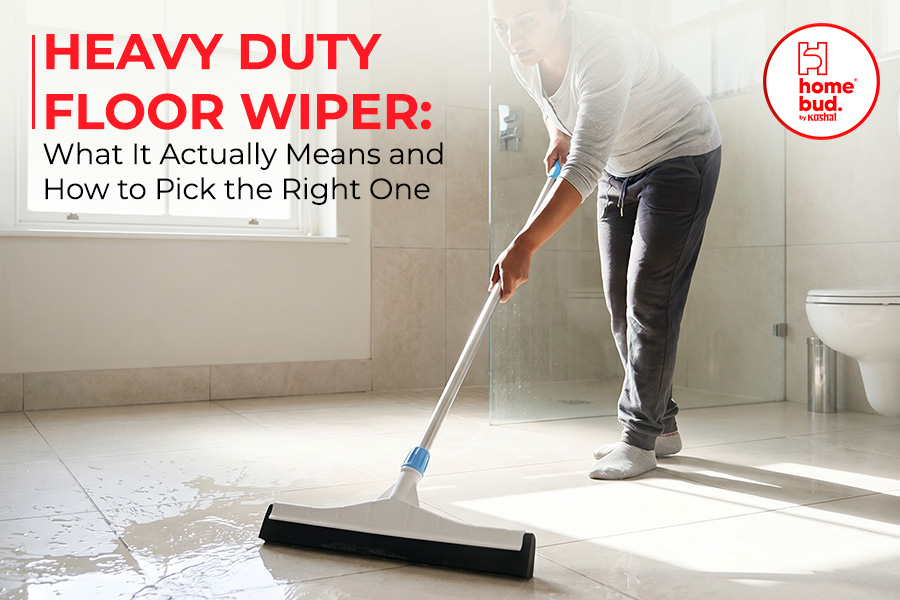
If your floor wiper breaks within a few weeks, leaves water streaks no matter how many times you go over the same spot, or simply cannot keep up with the amount of water your bathroom or kitchen generates every day, the problem is not your cleaning routine. The problem is that you have been using a standard wiper for a job that demands something far more capable.
A heavy duty floor wiper is not just a marketing label. It describes a specific category of floor cleaning tool built with reinforced materials, thicker blades, stronger rods, and wider coverage than your everyday bathroom wiper. Understanding what separates a heavy duty floor wiper from a regular one is the first step toward making a purchase you will not regret in three months.
This guide is written specifically for homemakers managing large homes, families with high-traffic floors, professionals setting up offices or guesthouses, and anyone who has grown frustrated watching regular wipers bend, crack, or simply fail to do the job. Let us break it all down.
What Makes a Floor Wiper Truly Heavy Duty
The term heavy duty gets used loosely in product listings, which is why buyers often end up confused. A genuine heavy duty floor wiper has a specific set of structural characteristics that set it apart from a standard wiper.
The first differentiator is blade thickness and material quality. A heavy duty wiper uses a thicker rubber or silicone blade, often described as heavy-grade rubber, that does not flex or collapse under pressure. Regular wipers have thinner blades that bend when you push them against the floor, which reduces their ability to form a proper seal and results in water slipping underneath rather than being pushed forward. A reinforced blade stays flat and firm against the floor surface, which is what makes the cleaning stroke actually effective.
The second differentiator is the rod or handle material. Standard wipers often use lightweight plastic rods that bend, snap, or loosen over time. Heavy duty floor wipers use stainless steel rods or powder-coated metal handles that hold their shape and withstand force without flexing. A stainless steel rod handle does not rust in a wet bathroom environment and does not weaken after months of daily use the way plastic does.
The third differentiator is blade width. Heavy duty wipers typically come in wider sizes, ranging from 45 cm to 60 cm or more, which allows you to clear larger floor areas in fewer strokes. The wider the blade, the more coverage per pass, and the faster you finish cleaning a big room or corridor.
Put all three together and you get a wiper that works harder, lasts longer, and delivers results that a standard wiper simply cannot match.
Why Regular Wipers Keep Failing You
Most people do not start looking for a heavy duty floor wiper until their third or fourth regular wiper has either broken or stopped performing. If this sounds familiar, here is exactly what is going wrong.
Standard wipers are designed for occasional light use in compact bathrooms. When you use them every day in a large kitchen, a family bathroom used by four or five people, a balcony exposed to heavy rain, or a commercial space like a salon or office, you are pushing them well beyond what they were built for. The plastic rod starts to loosen at the joint, the rubber blade thins out and loses its edge, and the wiper head eventually wobbles and skips rather than gliding smoothly across the floor.
The result is a cleaning tool that takes more effort to use and delivers worse results the longer you own it. Switching to a heavy duty floor wiper with long handle solves this at the root. You get a wiper built to handle daily heavy use, and it holds up reliably for far longer than any standard option.
Double Rubber Blade vs Single Blade: What the Difference Means for Your Cleaning
One of the most talked-about features in heavy duty floor wipers is the double rubber blade or double-blade wiper design. Understanding what this actually does helps you decide whether it is the right choice for your home.
A single blade wiper has one rubber or silicone edge that pushes water forward with each stroke. It works well for standard use but can leave behind a thin trail of water along the back edge of the blade, especially on very wet floors.
A double rubber floor wiper has two parallel blades that trap water between them as you push the wiper forward. The front blade breaks the water and guides it inward, and the rear blade collects and pushes it forward as a concentrated stream. The result is a far more efficient water removal per stroke, less residual moisture on the floor, and faster drying time overall.
For families with large bathrooms, open kitchens, or anyone who mops frequently and needs the floor to dry quickly, a double blade wiper is a meaningful upgrade. It covers more water per pass and leaves the floor significantly drier after a single round.
If you want to experience this difference firsthand, the Homebud Double Blade Wiper is a great starting point built specifically for home use, and the Homebud Heavy Duty 2 Blade Wiper takes it further with reinforced construction for more demanding daily use.
Handle Length and Rod Material: The Features That Define Daily Comfort
A heavy duty floor wiper with long handle is not just about reach. The handle length and rod material directly affect how efficiently you clean, how tired you feel afterward, and how long the wiper itself lasts.
A long handle, ideally between 110 cm and 145 cm, lets you clean the entire floor without bending your back. This matters enormously when you are cleaning a large kitchen, a bathroom used multiple times a day, or a corridor. Repeatedly bending at the waist to push a short wiper across a big floor adds up to genuine physical fatigue over time. A long handle wiper keeps your back straight and lets you put your body weight behind each stroke, which actually makes the cleaning more effective.
Stainless steel rods are the gold standard for heavy duty use. They are rust-proof, which matters in a bathroom environment where the rod will be exposed to water and humidity every single day. They are rigid and do not develop the wobble that plastic rods eventually get. And they transfer the force of your push directly to the blade without flexing, which means every stroke delivers the full cleaning power it should.
Powder-coated metal handles offer similar strength at a slightly lower price point. The coating protects the metal from corrosion and gives you a non-slip grip even when your hands are wet. For most homes, a powder-coated metal rod is a solid choice that balances durability and cost.
Aluminium rods are lightweight and rust-resistant, which makes them comfortable for extended cleaning sessions. They are not quite as rigid as stainless steel but are significantly better than plastic for daily heavy use.
Best Uses for a Heavy Duty Floor Wiper in Indian Homes
Heavy duty floor wipers are not just for commercial spaces. Many Indian home setups genuinely benefit from a heavier, more robust wiper. Here are the specific situations where upgrading makes the biggest difference.
Large families sharing a single bathroom or two create a very high-frequency cleaning environment. If the bathroom floor needs to be wiped multiple times a day, a standard wiper will wear out within months. A heavy duty wiper with a reinforced blade and stainless steel rod handles that kind of repetitive use without degrading.
Joint family homes or homes with domestic help benefit from industrial-strength construction because the wiper is used by multiple people with different techniques and pressure levels. A robust wiper stands up to varied use without the blade slipping out of its holder or the rod bending at the joint.
Large open kitchens with stone or vitrified tile floors accumulate significant water during cooking and cleaning. A wide double blade wiper clears this water much faster than a standard wiper and leaves the floor dry enough to be safe to walk on immediately.
Terraces and covered balconies collect rainwater during monsoon season and need a wiper that can handle significant water volume and heavier debris like leaves and grit. A heavy duty floor wiper with a wide blade handles this easily.
Guesthouses, home offices, salons run from home, and small commercial setups like tuition centres or boutiques see much higher foot traffic than a standard residence. For these spaces, a commercial floor wiper with a metal handle and wide reinforced blade is the right tool.
Blade Width Guide: Choosing the Right Size for Your Space
Blade width is one of the most practical decisions when choosing a heavy duty floor cleaning wiper. Here is a simple guide.
For bathrooms up to 50 square feet, a blade width of 30 to 40 cm is adequate. It is easier to manoeuvre in a compact space and still covers the floor efficiently.
For larger bathrooms, kitchens, or family bathrooms above 50 square feet, a blade width of 45 to 55 cm is the right choice. It reduces the number of strokes needed and cleans the area faster.
For large open areas like living rooms, corridors, terraces, or small commercial spaces, a blade width of 55 to 65 cm is ideal. This size moves a significantly larger volume of water per stroke and is much faster than narrower options.
For very large commercial or semi-commercial spaces, blades of 65 cm and above are available and designed for industrial use where speed of floor clearing is the priority.
How to Identify a Genuine Heavy Duty Floor Wiper Before Buying
The market is full of products that call themselves heavy duty without actually delivering on that promise. Here is what to look for so you are not misled by packaging.
Check the blade thickness. A genuine heavy grade rubber blade should feel firm and dense when you press it. If the blade is thin and flimsy enough to fold easily between your fingers, it is not a heavy duty blade. It is a standard blade with a marketing upgrade on the label.
Check the rod at the joint where it connects to the wiper head. This is the most common failure point in budget wipers. In a well-built heavy duty wiper, the joint should be tight with no wobble. Give it a gentle twist. If it moves loosely, it will get worse over time and eventually cause the head to spin rather than wipe.
Look at the rod material. Stainless steel has a bright, slightly reflective surface. Powder-coated metal has an even matte finish. Plastic rods, even when painted silver, tend to have slight seams or texture that gives them away. Do not pay a heavy duty price for a plastic rod.
Check the blade width and ensure it matches what is stated. A wiper sold as 45 cm should actually measure 45 cm. Some budget products cut corners on actual blade size while listing the maximum specification.
Homebud Products Built for Heavy Duty Floor Cleaning
If you are ready to move beyond regular wipers and invest in something that holds up to daily serious use, Homebud has options built specifically for this purpose.
The Homebud Double Blade Wiper is designed for homes that need efficient water removal with every stroke. The double rubber blade construction pushes more water per pass and is suitable for large bathrooms and kitchens.
The Homebud Heavy Duty 2 Blade Wiper is the reinforced version, built for tougher daily use and heavier water volumes. This is the one to choose if your floors take a real beating every day.
For bathrooms specifically, the Homebud WipeExpert Bathroom Wiper is purpose-built for the bathroom environment with a design that handles wet floor cleaning with precision and comfort.
If you want something that does double duty as both a broom and a wiper, the Homebud Wroom Wiper Broom is an excellent combination tool that sweeps dry debris and wipes wet surfaces, making it one of the most versatile floor cleaning tools available.
Browse the full collection at homebud.in/product-category/broom/ to find the right option for your home.
Maintenance Tips to Get Maximum Life from Your Heavy Duty Floor Wiper
A heavy duty wiper is an investment, and proper care extends its life significantly. Here is how to maintain yours so it keeps performing at its best.
Rinse the blade thoroughly after every single use. Even if the floor was just wet from a shower, cleaning solution residue and floor dirt cling to the rubber and degrade it over time. A quick rinse under tap water takes ten seconds and adds months to your blade’s life.
Once a week, wash the blade with a mild liquid soap and a soft cloth or sponge. Rinse it completely and allow it to dry fully before storing. This prevents bacterial buildup on the rubber surface, which can cause odours and also weakens the blade material gradually.
Never leave your wiper lying flat on the floor with the blade pressed down. This deforms the blade edge over time and reduces its ability to seal flat against the floor. Always store the wiper standing upright or hanging on a wall hook or clip.
Inspect the rod-to-head joint monthly. If you notice any loosening, tighten it before it becomes a wobble problem. A slightly loose joint that is caught early is easy to fix. One that has been loose for months is a structural failure waiting to happen.
Replace the blade, not the entire wiper, when the blade shows signs of wear such as cracks, thinning, or a rounded edge that no longer seals well against the floor. Many heavy duty wipers have replaceable blade heads, which is one of the features worth looking for when you buy.
Heavy Duty Floor Wiper vs Regular Wiper: A Clear Comparison
Understanding the practical difference between the two types helps you make a more confident buying decision.
A regular wiper typically has a thin rubber or foam blade, a plastic rod between 80 and 100 cm in length, a blade width of 25 to 35 cm, and is designed for light daily use in compact spaces. It works well for a standard bathroom that sees two to three users a day and costs the least upfront. However, it also needs to be replaced most frequently, which means the long-term cost is higher than it appears.
A heavy duty floor wiper has a thick reinforced rubber or silicone blade, a stainless steel or powder-coated metal rod between 110 and 145 cm, a blade width of 45 to 65 cm, and is designed for heavy daily use in large or high-traffic spaces. It costs more upfront but lasts significantly longer, performs better under demanding conditions, and reduces the physical effort required to clean large areas.
The decision comes down to your home’s actual cleaning demands. If you clean a single compact bathroom once a day, a regular wiper may be sufficient. If you clean multiple rooms, deal with large water volumes, have a family that uses the bathroom frequently, or run any kind of small business from home, a heavy duty floor wiper is the smarter and ultimately more economical choice.
FAQ: Heavy Duty Floor Wiper
For most adults, a handle length between 110 cm and 130 cm allows comfortable upright cleaning without bending. If you are above average height, look for extendable handles that go up to 145 cm. The right length keeps your back straight and lets you apply even pressure across the full blade width.
Yes, but you should choose one with a silicone blade rather than a standard rubber blade for marble surfaces. Silicone is softer than rubber and does not risk scratching polished marble. A heavy duty silicone blade wiper with a long stainless steel handle is a great choice for large marble-floored rooms.
A double rubber floor wiper collects significantly more water per stroke because the two blades trap water between them and push it forward as a concentrated stream. On a very wet floor, a single blade often leaves a thin residual film while a double blade wipes the surface much closer to dry in a single pass.
Absolutely. Commercial floor wipers with metal handles and wide reinforced blades are used in offices, salons, clinics, small hotels, and guesthouses across India. They are built for exactly this kind of repeated use. The key is choosing a blade width that matches the size of the space you are cleaning.
With regular maintenance including rinsing after each use and weekly cleaning, a heavy duty rubber blade lasts 9 to 12 months under daily use. A silicone blade can last 12 to 18 months. Watch for signs like a blade that has lost its flat edge, visible cracks, or water consistently slipping under the blade during use.
The best choice depends on your specific use case. For large home bathrooms and kitchens, a double blade wiper with a stainless steel handle and a blade width of 45 to 55 cm covers most needs perfectly. For commercial or semi-commercial spaces, a wider 55 to 65 cm blade with a long powder-coated metal rod is the right specification. Homebud's range of heavy duty wipers is designed with Indian home and lifestyle needs in mind and worth exploring as your starting point.
Final Thoughts: Make the Upgrade That Your Floors Deserve
If you have been replacing the same standard wiper every few months and wondering why your floors never feel properly dry, it is time to stop settling for less. A heavy duty floor wiper is not an expensive luxury. It is the right tool matched to the actual demands of your home.
The combination of a reinforced double rubber blade, a stainless steel rod handle of the right length, and the correct blade width for your space will transform how you clean your floors. Less effort per session, better results with every stroke, and a wiper that lasts for well over a year rather than wearing out in three months.
Explore Homebud’s range of heavy duty floor wipers at homebud.in/product-category/broom/ and find the one that fits your home, your floors, and your daily cleaning routine perfectly.