
Floor Cleaning Mop That Makes Mopping Easy Spin Mop vs Regular Mop for Home
-
Posted by
homebud
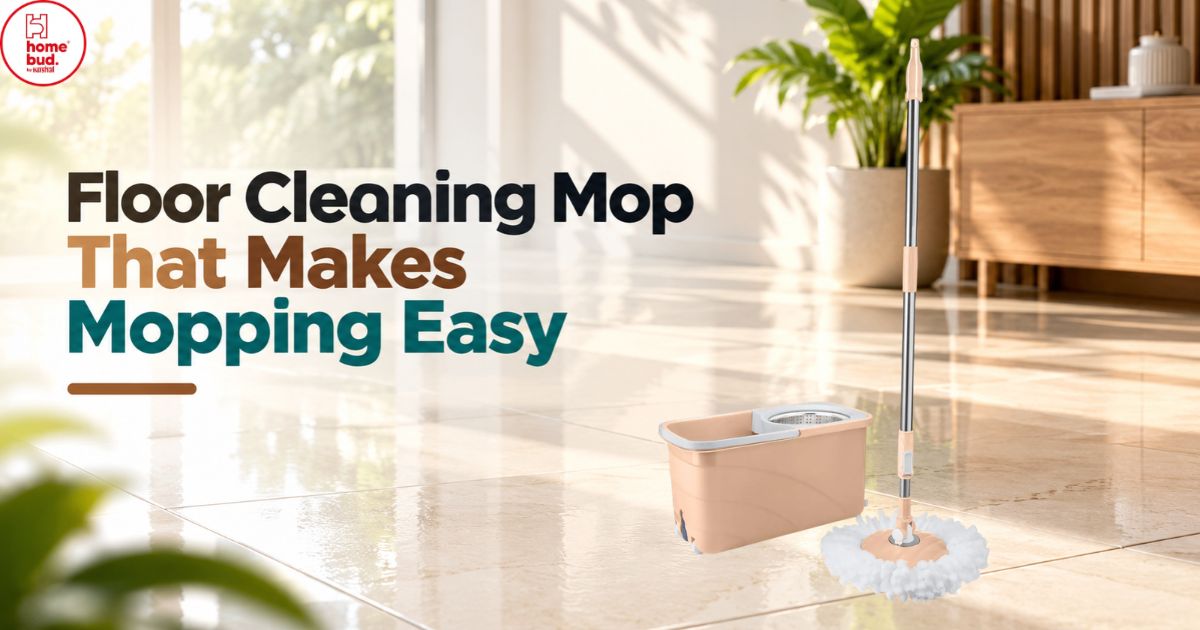
Keeping floors clean is part of almost every household routine. Dust, footprints, food spills, pet hair, and everyday dirt can quickly make tiles and other hard floors look dull. While sweeping removes loose debris, wet mopping is often needed to clean the surface more thoroughly.
Choosing the right floor cleaning mop can make this task faster, easier, and more comfortable.
Traditional mops are simple and familiar, while modern spin mops add features such as microfiber heads, rotating movement, and wringing systems that can reduce the need to handle a wet mop directly.
The best option depends on your floor type, home size, cleaning routine, storage space, and how much effort you want to put into wringing and rinsing.
What Is a Floor Cleaning Mop?
A floor cleaning mop is a household cleaning tool used to wipe dirt, spills, and residue from hard flooring with water or an appropriate cleaning solution.
A typical mop includes:
- A handle
- A cleaning head
- Absorbent or microfiber material
- A mechanism for reaching the floor comfortably
Modern versions may also include:
- 360-degree rotating heads
- Spin wringing systems
- Buckets
- Replaceable microfiber heads
- Adjustable or durable handles
- Corner-reaching designs
Floor mops are commonly used on surfaces such as tiles, marble, granite, and other compatible hard flooring.
Always follow the manufacturer’s care recommendations for your specific floor material.
What Is a Spin Mop?
A spin mop is a wet-mopping system designed to make rinsing and wringing more convenient.
The mop head usually rotates, while many spin mop sets include a bucket or wringing mechanism that helps remove excess water from the mop head.
The main advantage is that users can reduce the amount of manual squeezing needed during cleaning.
A typical spin mop may include:
- Microfiber mop head
- Rotating mop movement
- Long handle
- Wringer mechanism
- Mop bucket, depending on the set
- Flexible head for corners
This makes spin mops popular for regular household floor cleaning.
How Does a Spin Mop Work?
A spin mop combines a flexible cleaning head with a rotating mechanism.
During cleaning, the microfiber head moves across the floor and collects moisture, dust, and loosened dirt.
When the mop becomes dirty or too wet, it is rinsed and placed into the wringer section of the system.
The spinning action helps remove excess water from the mop head.
This process can make wet mopping more convenient than manually squeezing a traditional cloth mop.
The exact mechanism varies between products, so always check how the specific spin mop is designed to operate.
Spin Mop vs Regular Mop: Which Is Better?
Both options can clean floors effectively, but they offer different levels of convenience.
|
Feature |
Spin Mop |
Regular Mop |
|
Wringing |
Uses spinning or wringer system |
Often manual |
|
Mop head movement |
Flexible and rotating |
Depends on design |
|
Corner access |
Often easier |
Varies |
|
Water control |
Easier with wringer |
Depends on manual squeezing |
|
Cleaning head |
Often microfiber |
Cotton, fabric, microfiber or other |
|
Setup |
May require a wringer or bucket |
Usually simple |
|
Storage |
May require more space |
Usually compact |
|
Best for |
Regular wet mopping |
Simple everyday cleaning |
A regular mop may be enough for small areas and occasional cleaning.
A spin mop can be more convenient for larger homes or people who prefer easier rinsing and wringing.
Why Choose a Microfiber Mop Head?
Microfiber is widely used in modern cleaning tools because its fine fibres can collect dust and moisture effectively.
Better Surface Contact
Microfiber heads can spread across the floor and maintain contact with a larger surface area.
Absorbs Water
The material can hold moisture during wet cleaning and help remove leftover water when properly wrung.
Collects Fine Dirt
Fine fibres can help pick up dust and smaller particles that may remain after sweeping.
Useful Around Corners
Flexible microfiber strands can reach edges and areas around furniture more easily than rigid cleaning heads.
Reusable
Many microfiber mop heads can be cleaned and reused.
Always follow the product’s washing and maintenance instructions.
Why Is 360-Degree Mop Movement Useful?
A rotating mop head helps the cleaning tool change direction without requiring the user to move the entire handle awkwardly.
This can be especially useful when cleaning:
- Around table legs
- Under furniture
- Near walls
- Around kitchen cabinets
- In bathroom corners
- Around beds and sofas
The flexible movement can make the mop easier to guide through narrow spaces.
It does not mean every area will be cleaned automatically, but it can improve manoeuvrability.
Is a Mop with Bucket Better?
A mop with bucket can be convenient because it keeps the rinsing and wringing process together.
This can reduce the need to carry a separate bucket or manually squeeze the mop.
Advantages may include:
- Dedicated rinsing area
- Easier water management
- More organised mopping
- Convenient wringing
- Reduced direct contact with dirty mop water
However, bucket systems also require additional storage space.
For very small homes or occasional cleaning, a simple mop may be easier to store.
Which Floor Cleaning Mop Is Best for Tiles?
Tiles are among the most common flooring materials in Indian homes.
A microfiber spin mop can be practical for smooth ceramic or vitrified tiles because the mop head can move easily across the surface.
When cleaning tiled floors:
- Sweep or vacuum loose dust first.
- Use an appropriate cleaning solution.
- Avoid making the mop excessively wet.
- Work across the room in sections.
- Rinse the mop head as dirt builds up.
- Allow the floor to dry properly.
A flexible mop head is particularly useful around tile edges and furniture.
For dirty grout lines, however, a separate brush may be necessary because a mop is not designed for deep grout scrubbing.
Can a Spin Mop Be Used on Marble?
A suitably soft microfiber mop can generally be used on marble when the floor-care instructions permit it.
However, marble can be sensitive to certain cleaning chemicals.
Use a cleaner specifically suitable for marble and avoid excessive water.
The mop head should also be clean so grit or abrasive debris is not dragged across the polished surface.
Can a Floor Mop Be Used in the Bathroom?
Yes. A floor mop can be used for general bathroom floor cleaning where appropriate.
However, the bathroom may require additional tools.
For example:
- Use a brush for stubborn stains.
- Use a mop for washing the floor.
- Use a floor wiper to remove excess standing water.
This combination can provide more effective cleaning than expecting one mop to perform every task.
What Makes a Good Floor Cleaning Mop?
Several features can affect daily convenience.
1. Flexible Mop Head
A flexible head makes it easier to clean corners and move around furniture.
2. Good Microfiber Quality
The cleaning material should absorb moisture and maintain proper floor contact.
3. Strong Handle
A mop handle should remain stable while pushing and pulling across the floor.
Stainless steel handles are commonly used because of their durability.
4. Smooth Movement
The mop should rotate and move without excessive resistance.
5. Convenient Wringing
A spin or wringer system should remove enough water to make the mop suitable for the floor being cleaned.
6. Easy Storage
If space is limited, consider whether the mop can be hung or stored vertically.
7. Replaceable or Washable Mop Head
Reusable cleaning heads can make long-term maintenance easier.
How to Use a Spin Mop Properly
A few simple steps can improve your cleaning routine.
Step 1: Remove Loose Debris
Sweep or vacuum the floor before wet mopping.
This prevents dust from turning into muddy residue.
Step 2: Prepare Cleaning Water
Use clean water and an appropriate floor-cleaning product according to the label instructions.
Avoid using excessive detergent.
Step 3: Wet the Mop
Dip or rinse the microfiber head according to the mop system.
Step 4: Remove Excess Water
Use the wringing mechanism so the mop is damp rather than dripping wet.
Step 5: Clean in Sections
Start at the far end of the room and work towards the exit.
Use smooth overlapping strokes.
Step 6: Rinse Regularly
Do not continue cleaning the entire home with a heavily soiled mop head.
Rinse it when necessary.
Step 7: Clean the Mop After Use
Wash the mop head, empty dirty water, and allow all parts to dry properly.
How Often Should You Mop Floors?
There is no single schedule that works for every home.
Mopping frequency depends on:
- Family size
- Children or pets
- Outdoor dust
- Foot traffic
- Floor colour
- Weather
- Cooking activity
High-traffic areas such as kitchens and entrances may need cleaning more frequently.
Bedrooms or low-traffic rooms may require less frequent wet mopping.
Daily sweeping combined with scheduled mopping is often sufficient for general household maintenance.
Why Consider a Turbo Spin Mop?
A modern spin mop can make regular floor cleaning more convenient by combining flexible movement with a microfiber cleaning head.
HomeBud's Turbo Spin Mop is designed with 360-degree mop movement, a flexible microfiber mop head, and a durable stainless steel handle. The product is intended to move smoothly across different surfaces and reach corners more easily.
HomeBud also lists plastic and steel wringer options, along with a convenient hang-up design for storage.
For households looking for a practical spin-style cleaning tool, you can explore the floor cleaning mop for everyday wet mopping.
Conclusion
A good floor cleaning mop can make regular wet cleaning easier, faster, and more comfortable.
Traditional mops remain useful for simple cleaning, while spin mops add features such as rotating movement, microfiber cleaning heads, and convenient wringing systems.
When choosing a mop, consider your floor type, home size, storage space, handle quality, mop-head material, and how easily excess water can be removed.
For homes with tiled or other suitable hard flooring, a flexible microfiber spin mop can be especially useful for reaching corners and cleaning around furniture.
The best choice is not necessarily the most complicated mop. It is the one that fits your cleaning routine and helps you keep floors clean with less unnecessary effort.
Frequently Asked Questions
A good home mop should have an absorbent and washable cleaning head, comfortable handle, smooth movement, and a wringing system that suits your cleaning routine. The best choice depends on floor type and home size.
A spin mop can make rinsing, wringing, and corner cleaning more convenient. A regular mop may still be suitable for smaller homes or users who prefer a simpler cleaning tool.
Yes. Microfiber mops are commonly suitable for smooth tiled floors and can help collect surface dust and moisture during wet cleaning.
It allows the mop head to change direction more easily, helping users clean around furniture, edges, and corners.
A suitable clean microfiber mop can generally be used on marble when the floor-care instructions allow it. Use an appropriate cleaning solution and avoid excess water.
Rinse it after every cleaning session and wash it more thoroughly whenever dirt or residue builds up. Follow the manufacturer's care instructions.
It can be useful if you mop frequently, but consider storage space. A compact traditional mop may be more convenient where space is very limited.