
Clothes Clip Set for Drying Laundry How to Choose the Right Clips for Everyday Use
-
Posted by
homebud
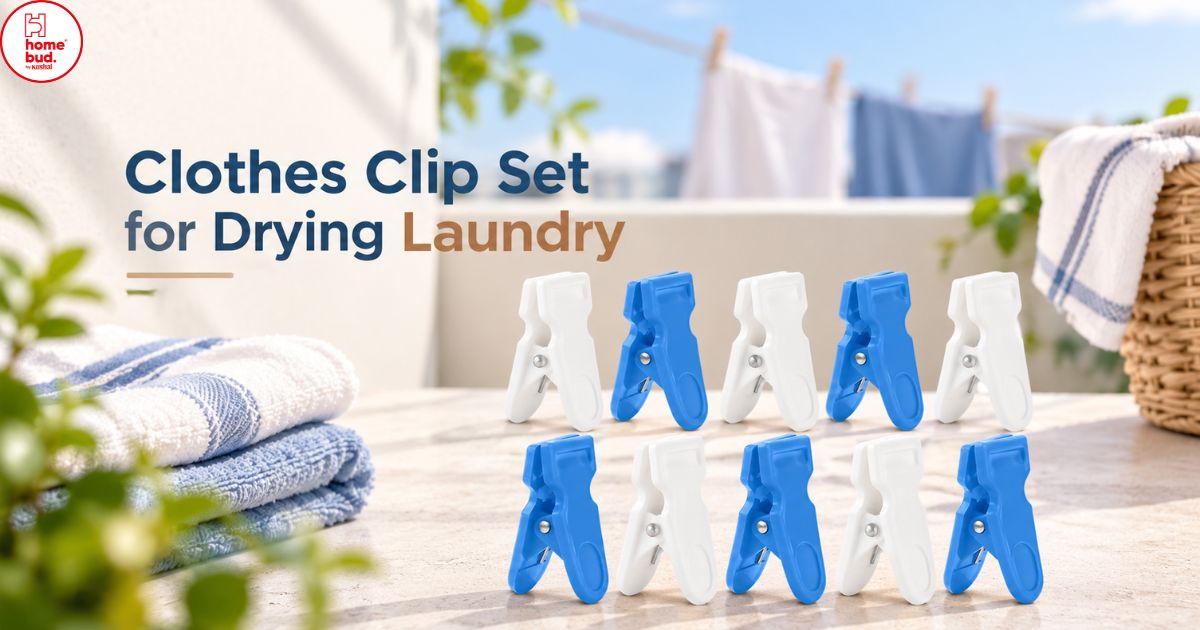
Drying clothes may be a simple household task, but keeping laundry securely attached to a drying line can become difficult on windy days or in open balconies. Lightweight garments can slip, towels can move out of position, and small clothing items may fall to the floor if they are not secured properly.
A reliable clothes clip provides a simple solution. Designed to hold garments firmly on a drying line, clothes clips help keep everyday laundry in place while it dries.
They are commonly used for shirts, T-shirts, socks, handkerchiefs, children’s clothes, lightweight towels, and many other household fabrics.
Clothes clips are available in different materials, sizes, grip strengths, and designs. Choosing the right type can make daily laundry drying easier while helping prevent clothes from slipping off the line.
What Is a Clothes Clip?
A clothes clip is a small household accessory designed to secure clothing or fabric to a drying line, clothes rack, hanger, or similar support.
The clip usually works through a spring or pressure mechanism. When the sides are pressed, the jaws open. Once released, the clip closes around the fabric and drying line.
Clothes clips are also commonly known as:
- Clothes pegs
- Cloth clips
- Laundry clips
- Clothes pins
- Laundry pegs
- Drying pegs
- Hanging clips
Although the names are often used interchangeably, designs can vary considerably.
Some clips are small and intended for lightweight garments, while larger designs may be suitable for thicker fabrics.
What Are Clothes Clips Used For?
Bathroom cleaning requires tools that can reach difficult surfaces and remove accumulated dirt effectively.
Here are some important advantages of using a hockey-style brush.
1. Angled Design for Better Reach
The angled head is one of the most useful features of a hockey brush.
Traditional brushes may struggle to reach narrow spaces or the underside of toilet rims.
A hockey-shaped head allows the bristles to contact these areas more directly.
This makes it practical for cleaning around curves and edges.
2. Strong Bristles for Effective Scrubbing
Bathroom surfaces often accumulate soap residue, dirt, and mineral deposits.
A brush with suitably stiff bristles provides friction that helps loosen these deposits when combined with the correct cleaning solution.
The bristles should be strong enough to scrub effectively without damaging the surface.
3. Convenient Handle Design
A well-designed handle makes cleaning more comfortable.
It allows users to apply controlled pressure while maintaining a suitable distance from the surface being cleaned.
An ergonomic grip may also reduce slipping during wet cleaning.
4. Suitable for Regular Bathroom Maintenance
Bathroom cleaning is easier when dirt is removed before it becomes heavily accumulated.
A durable hockey brush can be included in a regular cleaning routine for toilet bowls and other surfaces approved by the manufacturer.
5. Helps Clean Difficult Corners
Corners and narrow spaces are common areas where dirt collects.
The angled head of a hockey brush helps reach these spots more effectively than some straight-head brush designs.
This makes the brush a useful addition to a bathroom cleaning kit.
Clothes Clips vs Clothes Pegs: Is There a Difference?
The terms clothes clips and clothes pegs are often used to describe the same type of laundry accessory.
Traditionally, a clothes peg referred to a simple wooden peg or spring-operated wooden design.
Today, plastic and other synthetic clips are widely used, so the term “clothes clip” has become common.
The practical differences usually depend more on the design than the name.
|
Feature |
Clothes Clips |
Traditional Wooden Pegs |
|
Common material |
Plastic or mixed materials |
Wood |
|
Grip mechanism |
Usually spring-based |
Spring or slot design |
|
Weight |
Generally lightweight |
Varies |
|
Colours |
Many options available |
Usually natural wood |
|
Water exposure |
Depends on construction |
Wood may absorb moisture |
|
Everyday use |
Widely used |
Widely used |
Both designs can work well when made properly.
The best option depends on grip strength, durability, fabric type, and drying conditions.
Why Grip Strength Matters in Laundry Clips
Grip strength is one of the most important factors when selecting clothes clips.
A clip that is too loose may allow laundry to slide off the line.
However, extremely tight clips can be uncomfortable to use or may leave pressure marks on delicate fabrics.
A good everyday clip should provide enough pressure to hold lightweight garments securely while remaining easy to open.
HomeBud’s Cloth Clip 10 Pcs Set, for example, is specifically described as offering a firm grip for everyday clothing and light fabrics without leaving marks.
When comparing sets, consider both holding strength and ease of use.
What Makes a Good Clothes Clip?
A small design difference can significantly affect everyday usability.
Here are some features worth checking before buying.
1. Strong and Consistent Grip
The clip should close firmly around both the garment and drying line.
Consistent grip across every piece in a set is particularly useful when drying several garments together.
2. Comfortable Opening Mechanism
Clothes clips are opened repeatedly during laundry tasks.
A clip that requires excessive pressure can become uncomfortable when dozens of pieces need to be attached.
Look for a smooth opening mechanism that provides enough resistance without being difficult to operate.
3. Fabric-Friendly Contact
The gripping area should hold the garment without unnecessarily damaging or marking it.
For delicate fabrics, avoid overly aggressive teeth or sharp edges.
4. Durable Construction
Clothes clips are regularly exposed to water, sunlight, movement, and repeated opening and closing.
A durable construction is useful for frequent household laundry routines.
5. Compact Design
Compact clips are easy to store in a basket or container when not in use.
They also take up less space along the drying line.
6. Suitable Size
Different laundry items may require different clip sizes.
Small clips are convenient for socks and lightweight clothing, while heavier garments may require larger or stronger clips.
Plastic Clothes Clips vs Wooden Clothes Pegs
Many households choose between plastic and wooden drying pegs.
Each type offers different advantages.
Plastic Clothes Clips
Plastic clips are widely available and often come in colourful multipiece sets.
They are lightweight and generally easy to handle.
Possible advantages include:
- Lightweight construction
- Easy storage
- Wide variety of shapes
- Convenient everyday handling
- Suitable for many lightweight fabrics
However, quality matters. Low-quality plastic may become brittle after prolonged exposure to strong sunlight.
Wooden Clothes Pegs
Traditional wooden pegs offer a simple appearance and are widely used for laundry.
They can provide good grip, but repeated moisture exposure may affect some types of wood over time.
Wooden pegs should be allowed to dry properly after use.
Which One Should You Choose?
For regular household washing, a well-made plastic cloth clips set can be convenient because the clips are lightweight and easy to use.
Wooden pegs may appeal to users who prefer traditional materials.
The better option ultimately depends on construction quality and how the clips will be used.
How Many Clothes Clips Does a Family Need?
There is no fixed number that suits every household.
The number depends on family size, washing frequency, garment type, and how much laundry is dried at once.
A useful starting estimate may be:
One or Two People
Around 10 to 20 clips may be enough for light daily laundry.
Small Family
A household of three or four people may find 20 to 40 clips more practical, particularly when multiple garments are washed together.
Larger Family
Larger households may require 40 or more clips if several loads are dried simultaneously.
The actual number can vary greatly because not every garment requires clips.
For example, shirts placed on hangers may require fewer clips, while several pairs of socks can use many.
Starting with a 10 pcs set makes it easy to assess your household's requirements before purchasing additional sets.
How to Use Clothes Clips Correctly
Using clips properly can improve grip and reduce unnecessary fabric marks.
Step 1: Shake Out the Garment
Straighten the garment before placing it on the drying line.
This helps reduce folds and improves airflow.
Step 2: Position the Fabric
Place a suitable edge of the garment over the line.
For shirts and tops, users often attach clips near stronger seams rather than directly on highly visible areas.
Step 3: Attach the Clip
Open the clip and secure both the fabric and drying line inside its gripping area.
Step 4: Check the Grip
Give the garment a gentle pull to confirm that the clip is holding properly.
Step 5: Use Extra Clips When Necessary
Larger or wider items may require two or more clips.
Avoid relying on one small clip for a garment that is too heavy for its intended use.
Best Ways to Clip Different Types of Laundry
Different fabrics and garments may require slightly different drying methods.
Shirts and T-Shirts
Attach clips near the lower hem or stronger seam areas when appropriate.
This may help reduce visible marks around shoulders.
Socks
Socks are lightweight and usually require only one clip each.
Clip them individually to support airflow.
Handkerchiefs
One or two clips are generally sufficient depending on wind conditions.
Children's Clothes
Lightweight children's garments are well suited to compact laundry clips.
Towels
Small lightweight towels may work with ordinary clips, but large or heavy wet towels may require stronger pegs or a different drying arrangement.
Always use a clip appropriate for the weight of the wet fabric.
Clothes Clips for Balcony Drying
Balconies are common laundry drying spaces in apartments.
However, airflow can make unsecured garments move or fall.
Using laundry clips on lightweight clothes can help keep them attached to the line.
For balcony drying:
- Secure loose corners.
- Use two clips on wider garments where needed.
- Avoid overloading individual clips.
- Ensure the drying line itself is securely installed.
- Keep laundry away from unsafe balcony edges.
- Bring clips indoors after use if prolonged sun exposure may affect them.
These simple habits can make balcony drying more organised.
How to Care for Laundry Clips
Basic maintenance can help keep clips working properly.
Keep Them Clean
Dust and detergent residue can collect around the gripping area.
Wipe or rinse the clips when required.
Allow Wet Clips to Dry
Do not store wet clips immediately inside a sealed container.
Allow them to dry first.
Avoid Excessive Weight
Using small clips to hold heavy wet fabrics can weaken or damage the gripping mechanism.
Store Away from Constant Sunlight
When laundry is dry, storing clips indoors may help limit unnecessary long-term exposure to strong sunlight.
Check for Damage
Replace clips with cracked bodies, damaged springs, sharp edges, or weak grip.
A damaged clip may not hold laundry securely.
Choosing a Clothes Clip Set for Everyday Laundry
When purchasing a set, focus on practical usability rather than only price or appearance.
Ask the following questions:
- Does the clip offer a firm grip?
- Is it comfortable to open?
- Is it suitable for the clothes I usually dry?
- Does the gripping area feel smooth?
- How many pieces are included?
- Is the construction durable enough for regular use?
- Is the set easy to store?
For daily lightweight laundry, compact clips with a reliable grip can be especially convenient.
The HomeBud Cloth Clip set contains 10 pieces and is intended for everyday clothing and light fabrics. HomeBud describes the clips as compact and practical, with a firm grip designed to keep clothes in place without leaving marks.
You can explore the clothes clip set for regular household laundry drying.
Common Mistakes to Avoid When Using Clothes Clips
Using Weak Clips in Windy Conditions
A worn-out clip may not hold clothes securely.
Replace clips when the gripping mechanism becomes loose.
Overloading Small Clips
Do not expect one compact clip to support a heavy wet towel or blanket.
Use suitable heavy-duty laundry pegs when necessary.
Clipping Delicate Fabric Too Aggressively
Delicate fabrics can develop visible pressure marks.
Attach clips to stronger seams or less visible areas where possible.
Leaving Damaged Clips in Use
Cracked or rough clips can catch fabric.
Discard damaged pieces.
Storing Clips While Wet
Allow clips to dry before storing them to keep the laundry basket or storage container clean and dry.
Conclusion
A good clothes clip may be a small household accessory, but it can make everyday laundry drying more convenient.
The right clip should provide a firm and consistent grip while remaining easy to open and gentle enough for regular fabrics. Material quality, size, construction, grip strength, and the number of pieces in a set are all worth considering before buying.
For smaller households, a 10-piece set can be a convenient starting point. Larger families may prefer keeping multiple sets available for bigger laundry loads.
Whether you dry clothes on a balcony, rooftop, clothesline, or indoor drying rack, reliable laundry clips help keep lightweight garments securely in place while they dry.
Choosing a durable and comfortable set can turn a simple laundry accessory into a useful part of your everyday household routine.
Frequently Asked Questions
A clothes clip is primarily used to secure garments to a drying line, hanger, or drying rack. It helps prevent lightweight laundry from slipping or falling while drying.
The terms are commonly used interchangeably. Traditionally, clothes pegs were often wooden, while modern clothes clips frequently use spring-operated plastic designs.
A small household may start with 10 to 20 clips, while families doing larger laundry loads may need 20 to 40 or more. The exact number depends on washing frequency and how clothes are dried.
Good-quality plastic clips can be convenient for everyday laundry because they are lightweight and easy to handle. Their durability depends on material and construction quality.
Avoid placing clips on highly visible or delicate areas. Attach them near stronger seams where possible and choose clips designed to provide a secure grip without excessive pressure.
Compact clips may hold small lightweight towels, but large wet towels can require stronger clips because of their additional weight.
Keep clips clean and dry in a basket, container, or laundry organiser. Allow wet clips to dry before storing them.