
Double Blade Wiper for Faster Floor Drying How to Choose the Right Floor Wiper
-
Posted by
homebud
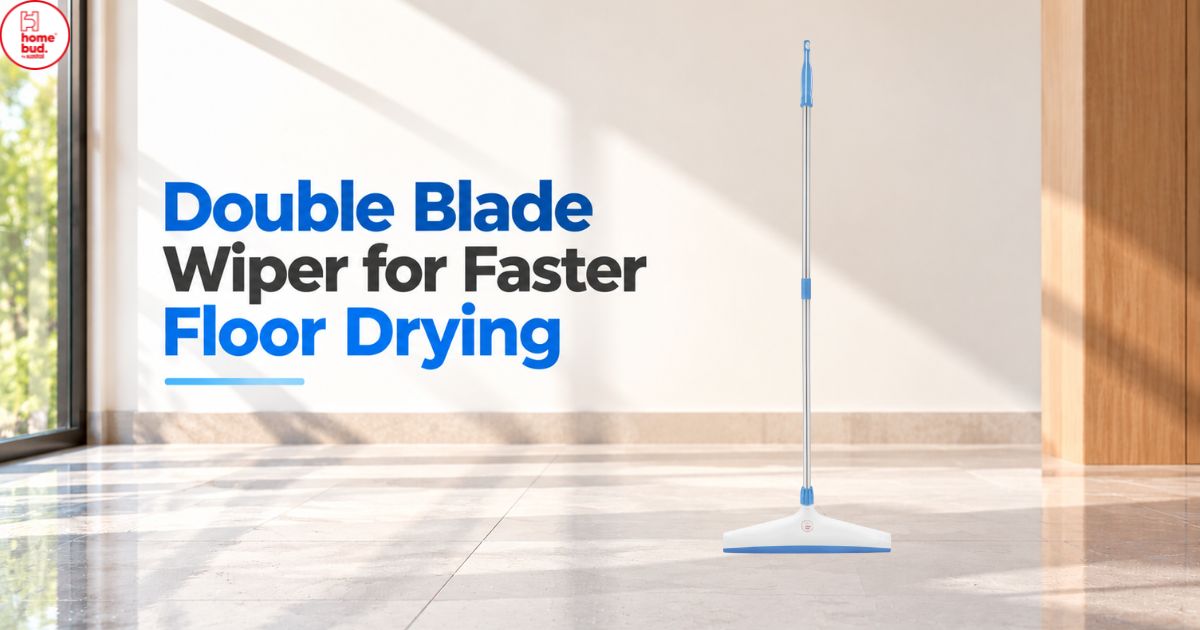
Wet bathroom and kitchen floors can be inconvenient and may take time to dry naturally. After mopping, bathing, washing a balcony, or cleaning tiled areas, excess water often remains across the surface. A good floor wiper makes it easier to push this water towards a drain and leave the floor ready to dry faster.
A double blade wiper is designed with two wiping edges rather than one. This construction can provide more contact while pushing water across smooth surfaces, depending on the blade shape, material, floor condition, and pressure applied.
For bathrooms, balconies, kitchens, utility areas, and other tiled spaces, a well-designed floor water wiper can make everyday cleaning more convenient.
What Is a Double Blade Wiper?
A double blade wiper is a floor-cleaning tool with two wiping blades positioned along its cleaning head.
The blades are generally made from rubber or another flexible material designed to stay in contact with the floor while water is pushed towards a drain or dry area.
A typical floor wiper may include:
- Double wiping blades
- Flexible rubber edges
- Long handle
- Wide cleaning head
- Comfortable grip
- Lightweight or sturdy frame
The main purpose of the tool is water removal rather than deep scrubbing.
It is commonly useful after:
- Bathroom cleaning
- Floor washing
- Wet mopping
- Balcony cleaning
- Kitchen floor washing
- Utility area cleaning
A floor wiper works best on relatively smooth surfaces where the blade can maintain consistent contact with the floor.
How Does a Double Blade Wiper Work?
The basic principle is simple.
As you push or pull the wiper across a wet floor, the flexible blade edges gather water and move it in the direction of the stroke.
With two blades, the second wiping edge can provide additional contact after the first blade passes over the surface.
The actual cleaning result depends on several factors:
- Blade flexibility
- Blade alignment
- Floor texture
- Pressure applied
- Amount of water
- Width of the cleaning head
- Condition of the rubber edges
A well-maintained twin blade squeegee can therefore make water removal more efficient on suitable floors.
However, two blades do not automatically make every wiper better than every single blade model. Overall construction quality is equally important.
Double Blade Wiper vs Single Blade Wiper
If you are choosing a new bathroom or floor wiper, you may wonder whether a dual blade design is worth considering.
Both types perform the same basic job but differ in their contact design.
|
Feature |
Double Blade Wiper |
Single Blade Wiper |
|
Wiping edges |
Two |
One |
|
Floor contact |
Two contact points |
One contact point |
|
Water removal |
Can provide an additional wiping action |
Depends on blade quality |
|
Design |
Slightly more structured |
Usually simpler |
|
Maintenance |
Two blades to clean |
One blade to clean |
|
Best choice |
Regular wet-floor cleaning |
General everyday wiping |
Is a Double Blade Wiper Better?
It can be useful when the two blades maintain proper contact with the surface.
The second blade can help collect water that may remain after the first edge passes.
However, performance also depends on blade quality.
A high-quality single blade can perform better than a poorly constructed dual blade wiper.
For this reason, buyers should consider the entire product rather than blade count alone.
Why Use a Double Blade Wiper for Bathroom Floors?
Bathrooms are one of the most common places where floor wipers are used.
Water can collect around the shower area, washbasin, toilet, and floor drain.
A bathroom wiper helps move this excess water towards the drain after bathing or cleaning.
Helps Clear Standing Water
Instead of waiting for pooled water to evaporate naturally, a floor wiper allows you to move it towards the drain.
Supports Faster Floor Drying
Removing excess surface water gives the remaining moisture less work to do before the floor becomes dry.
Actual drying time will still depend on ventilation, humidity, floor material, and room temperature.
Convenient for Daily Use
A wiper can be used quickly after a shower or bathroom wash without setting up larger cleaning equipment.
Helps Maintain a Neater Bathroom
Reducing standing water can make the bathroom appear cleaner and easier to maintain between deeper cleaning sessions.
Can You Use a Double Blade Wiper on Tiles?
Yes, suitable floor wipers are commonly used on tiled flooring.
They generally work best on smooth tiles where the rubber edge can maintain even contact.
Common surfaces may include:
- Ceramic tiles
- Vitrified tiles
- Marble
- Granite
- Smooth bathroom flooring
Performance may be reduced on highly uneven or heavily textured floors because the blade may not reach every recessed area.
Always follow the flooring manufacturer’s care instructions, particularly for delicate natural stone or specialised finishes.
What Makes a Good Double Blade Floor Wiper?
Several features affect how comfortable and effective a wiper is during everyday cleaning.
1. Flexible Rubber Blades
The blade should be flexible enough to follow the floor surface while remaining firm enough to move water.
An overly rigid blade may skip over slight variations in the floor.
An extremely soft blade may bend excessively under pressure.
Look for a balanced rubber edge that maintains contact during each stroke.
2. Proper Blade Alignment
Both wiping edges should sit evenly against the floor.
If one blade is raised or uneven, the expected benefit of a dual blade design may be reduced.
3. Comfortable Handle Length
A long handle floor wiper helps users clean without excessive bending.
The ideal length depends on the user's height and the cleaning area.
A handle should feel stable when pressure is applied.
4. Strong Handle Connection
The joint between the handle and wiper head experiences repeated force during cleaning.
A secure connection helps the tool feel more controlled.
Check for unnecessary movement or looseness when evaluating a wiper.
5. Suitable Head Width
A wide cleaning head can cover more floor area in each pass.
However, extremely wide wipers may be harder to use in narrow bathrooms or around fixtures.
Choose a width that matches the space you clean most frequently.
6. Easy-to-Clean Design
Soap residue, dirt, and hair can collect around the blades.
A simple head design is easier to rinse after cleaning.
How to Use a Double Blade Wiper Properly
Correct technique can improve water removal and reduce unnecessary effort.
Step 1: Remove Loose Dirt First
Before wiping water, remove hair, dust, and larger debris.
This prevents debris from collecting along the rubber blades.
Step 2: Start Away From the Drain
Begin at the farthest section of the wet floor.
Work progressively towards the drain.
Step 3: Use Long, Controlled Strokes
Apply moderate pressure and move the wiper in smooth strokes.
Avoid repeatedly moving water back into an area you have already cleared.
Step 4: Work in Sections
For larger bathrooms or balconies, divide the floor into smaller areas.
Push water from each section towards the main drainage path.
Step 5: Clean the Blades
After use, rinse the wiping edges to remove dirt or soap residue.
Step 6: Let the Wiper Dry
Store it where the blades and handle can dry between uses.
Where Can You Use a Floor Water Wiper?
A floor wiper is useful beyond the bathroom.
Kitchen Floors
After wet mopping or accidental spills, a suitable wiper can help move excess water away.
Balconies
Balconies often need water removal after washing or rain.
A long handle floor wiper can make clearing larger sections easier.
Utility Areas
Laundry and washing areas frequently become wet.
A floor squeegee can help direct excess water towards a drain.
Entrance Areas
During rainy weather, water can be carried indoors on footwear.
Where appropriate, a wiper can help clear wet tiled entrance areas.
Double Blade Wiper for Indian Bathrooms
Many Indian bathrooms combine shower, washbasin, and toilet areas within the same wet-floor space.
As a result, water removal is often part of the daily cleaning routine.
A practical bathroom wiper should therefore offer:
- Comfortable reach
- Good contact with tiles
- Flexible blades
- Durable construction
- Easy handling
- Simple storage
HomeBud's Double Blade Wiper is specifically designed for wet bathroom surfaces. Its current product listing describes a curved rubber edge for water removal and positions the wiper as durable and easy to handle for everyday use.
Users looking for a practical bathroom floor-cleaning tool can explore the double blade wiper for routine water removal.
How to Maintain a Dual Blade Floor Wiper
Basic maintenance can help keep the wiping edges working properly.
Rinse After Use
Soap, dust, hair, and cleaning solution can collect on rubber blades.
Rinse the head after cleaning.
Remove Hair and Debris
Check between and around the blades.
Hair can interfere with smooth floor contact.
Avoid Bending the Rubber Edges
Do not store the wiper with heavy objects pressing against its blades.
Long-term bending may affect blade alignment.
Allow It to Dry
Store the wiper in a ventilated area where excess moisture can drain.
Check the Handle Connection
If the handle becomes loose, address it before continuing heavy use.
Replace Worn Wipers
Rubber edges gradually wear down.
If the blade becomes cracked, uneven, permanently bent, or no longer makes good floor contact, replacement may be more effective than applying extra pressure.
Common Mistakes When Using a Floor Wiper
Using It as a Scrubbing Brush
A floor wiper is primarily designed to move water.
For stubborn stains, use an appropriate floor scrubber or brush first.
Applying Too Much Pressure
More pressure does not always improve results.
Excessive force can bend the blade unnecessarily or make cleaning tiring.
Ignoring Hair and Dirt
A rubber edge covered with hair may leave water behind.
Clean the blade whenever debris collects.
Wiping Without a Clear Direction
Moving water randomly across the floor creates extra work.
Plan your strokes so water consistently moves towards the drain.
Expecting Perfect Performance on Rough Floors
Floor squeegees depend on surface contact.
Deeply textured flooring may leave small amounts of water in recessed areas.
What to Check Before Buying a Double Blade Wiper
When comparing products, consider the following points:
Blade Material
Look for flexible and durable wiping edges suitable for regular floor contact.
Handle Quality
The handle should feel sturdy and comfortable during normal use.
Floor Compatibility
Consider whether your bathroom or kitchen floor is smooth or highly textured.
Size
Choose a cleaning head wide enough for efficient wiping but narrow enough to move around fixtures.
Weight
The wiper should feel easy to control during repeated strokes.
Storage
A design that is easy to hang or store can be more convenient in compact bathrooms.
Cleaning Requirements
Choose a model whose blades can be easily rinsed after use.
Conclusion
A double blade wiper is a practical cleaning tool for bathrooms, kitchens, balconies, and other areas where excess floor water needs to be removed.
Its dual wiping edges can provide additional floor contact compared with a basic single blade design, although overall performance depends on blade material, construction quality, floor texture, and cleaning technique.
When choosing a floor wiper, pay attention to the rubber blades, handle length, head width, durability, and ease of cleaning.
For best results, remove loose dirt first, work towards the drain using controlled strokes, and keep the blades clean after every use.
A well-designed floor water wiper can make routine wet-floor cleaning faster, simpler, and more manageable without adding unnecessary complexity to your cleaning routine.
Frequently Asked Questions
A double blade wiper is a floor-cleaning tool with two wiping edges designed to move water across smooth floors towards a drain or dry area.
A dual blade design can provide additional floor contact, but performance depends on blade quality, alignment, handle design, and the floor surface. A good single blade may still outperform a poorly made double blade model.
Yes. Floor wipers are commonly suitable for smooth bathroom tiles. Results may vary on rough or heavily textured surfaces.
A properly maintained rubber wiper can help minimise remaining water and streaks on suitable smooth surfaces. Results depend on blade condition and floor cleanliness.
Yes. It can be useful after wet mopping or for clearing suitable water spills from tiled kitchen floors.
Rinse them with clean water after use and remove trapped hair or debris. Use mild cleaning products when necessary and follow the manufacturer's care recommendations.
Consider replacing it when the rubber becomes cracked, permanently bent, uneven, or unable to maintain proper contact with the floor.