
Mini Wiper for Kitchen and Bathroom Use
-
Posted by
homebud
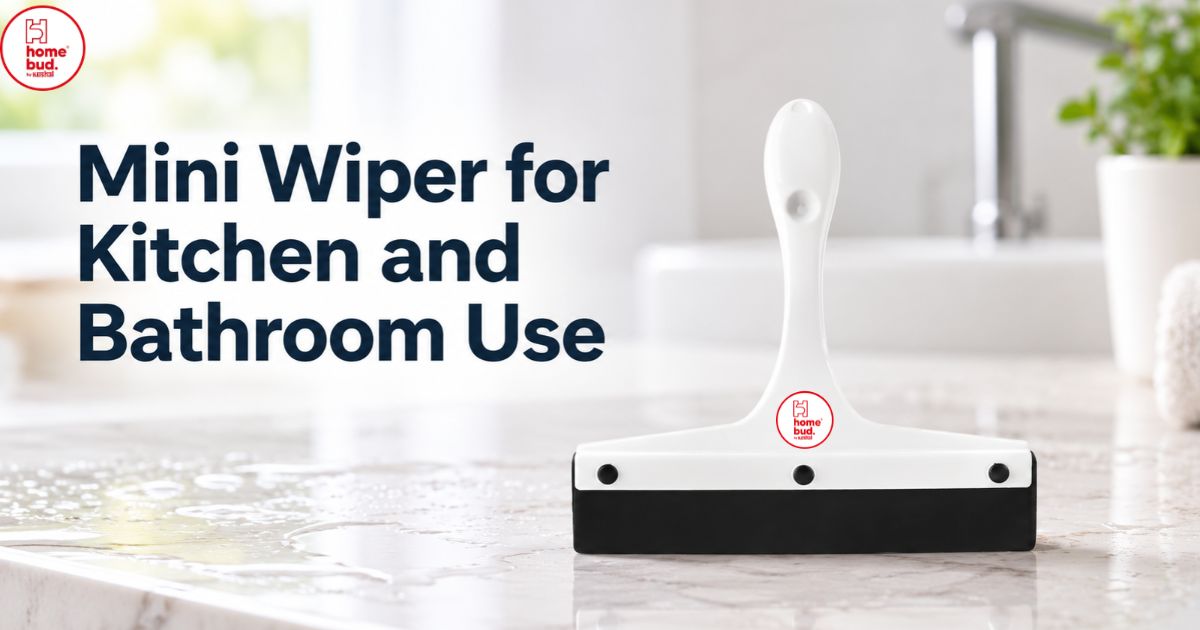
Water spills on a kitchen platform, droplets around the sink, and moisture on small bathroom surfaces are common parts of everyday cleaning. Using a full-sized floor wiper for these areas is often inconvenient because the head and handle are designed for much larger surfaces.
A mini wiper provides a compact alternative for quick water removal from smaller areas. Its handheld design gives better control around sinks, countertops, kitchen slabs, corners, and other tight spaces where a large cleaning tool may be difficult to use.
A good small wiper should have a flexible rubber blade, comfortable grip, compact shape, and an easy-to-clean design. It should remove surface water efficiently without taking up too much storage space.
What Is a Mini Wiper?
A mini wiper is a compact handheld cleaning tool designed primarily for removing water from small, smooth surfaces.
It works on the same basic principle as a floor squeegee. A flexible blade stays in contact with the surface and pushes water in the direction of the wiping stroke.
Unlike a full-sized floor wiper, a compact wiper generally has:
- A shorter handle
- A smaller cleaning head
- A lightweight body
- A rubber wiping edge
- A design suitable for handheld use
This makes it particularly convenient for areas where precision and manoeuvrability matter more than covering a large amount of floor space.
What Is a Mini Wiper Used For?
A small handheld wiper can be useful for several everyday cleaning tasks.
Common uses include:
- Clearing water from kitchen platforms
- Cleaning around sinks
- Removing water from countertops
- Clearing minor liquid spills
- Wiping suitable bathroom surfaces
- Removing water from small tiled areas
- Cleaning utility counters
- Managing water around washbasins
Its compact size is especially useful in modern kitchens and smaller homes where counters may already contain appliances, jars, utensils, and other items.
Instead of moving a large cleaning tool around these objects, a small wiper allows more controlled movements.
Why Is a Small Wiper Useful in the Kitchen?
Kitchen platforms frequently become wet while washing dishes, vegetables, fruits, and cooking utensils.
Water may collect around the sink or spread across the slab.
A kitchen platform wiper can help collect this water and direct it towards the sink.
Quick Water Removal
A handheld wiper can clear larger patches of water more quickly than repeatedly using a wet cloth.
Better Control
Its compact head is easier to move around:
- Taps
- Containers
- Appliances
- Chopping boards
- Sink edges
Less Cloth Saturation
A cloth absorbs water and eventually needs to be wrung.
A wiper pushes excess water away rather than storing it inside the cleaning material.
Easy Everyday Access
Because the tool is small, it can be stored near the kitchen sink and used whenever needed.
Can a Mini Wiper Be Used in the Bathroom?
A compact wiper can be useful for selected small bathroom surfaces, depending on the product’s intended use.
For example, a handheld squeegee may help clear water from:
- Washbasin counters
- Small tiled ledges
- Shower glass
- Smooth wall tiles
- Compact wet areas
However, a mini wiper is not necessarily the best choice for an entire bathroom floor.
For larger wet floor areas, a long-handle bathroom wiper usually provides better reach and coverage.
The ideal approach is to match the tool to the surface.
Use compact handheld wipers for small areas and a floor wiper for larger bathroom flooring.
Mini Wiper vs Regular Floor Wiper
Both tools move water, but they are designed for different spaces.
|
Feature |
Mini Wiper |
Regular Floor Wiper |
|
Handle |
Short and handheld |
Long |
|
Head size |
Compact |
Wider |
|
Best use |
Counters and small surfaces |
Floors and large areas |
|
Storage |
Requires little space |
Requires more vertical space |
|
Control |
High in tight spaces |
Better for broad floor areas |
|
Portability |
Very easy |
Less compact |
Neither option is universally better.
A floor wiper is more efficient for clearing a large bathroom floor, while a mini wiper is easier to handle on a kitchen platform.
Mini Wiper vs Cleaning Cloth
A cleaning cloth and a small squeegee also perform different functions.
Mini Wiper
Best for:
- Moving surface water
- Clearing larger wet patches
- Quick sink-side cleanup
- Smooth countertops
Cleaning Cloth
Best for:
- Absorbing remaining moisture
- Removing dirt
- Cleaning grease with suitable products
- Final surface wiping
For kitchen cleaning, the two can work well together.
Use the wiper first to remove excess water and then use a clean cloth for detailed wiping or drying.
Why Does the Rubber Blade Matter?
The rubber blade is one of the most important parts of a compact wiper.
It needs to maintain consistent contact with the surface.
A good wiping edge should be:
- Flexible
- Smooth
- Evenly aligned
- Easy to rinse
- Firm enough to move water
If the rubber becomes cracked, permanently bent, or uneven, it may start leaving water behind.
A good-quality rubber blade can also help reduce the number of passes needed during routine cleaning.
What Surfaces Can a Mini Wiper Be Used On?
A suitable small wiper can generally be used on smooth surfaces such as:
Kitchen Platforms
It can help clear water after washing utensils or cleaning the countertop.
Granite Slabs
A clean soft rubber edge can be useful for moving water across smooth granite, provided the surface-care instructions permit it.
Tiles
Smooth tiles are well suited to squeegee-style cleaning because the blade can maintain good contact.
Washbasin Counters
Compact size makes a handheld wiper convenient around sinks and taps.
Utility Platforms
Small washing and utility surfaces can also benefit from quick water removal.
Highly textured surfaces may be more difficult because water can remain inside grooves the blade cannot reach.
Is a Mini Wiper Good for Tight Corners?
Compact size is one of the biggest advantages of a mini wiper.
A smaller cleaning head can move through areas where full-sized tools may feel awkward.
This can include:
- Narrow countertop sections
- Areas beside the sink
- Spaces between appliances
- Small bathroom ledges
- Utility counters
However, the actual corner reach depends on the head shape.
A very wide handheld wiper may still struggle in extremely narrow spaces.
What Makes a Good Mini Wiper?
When comparing products, focus on functionality rather than appearance alone.
1. Compact Size
The tool should be small enough to move easily across kitchen platforms and other limited surfaces.
2. Quality Rubber Blade
Look for a smooth, flexible edge that stays in contact with the surface.
3. Comfortable Grip
Since the tool is handheld, grip comfort matters.
It should feel secure even when your hands are slightly wet.
4. Lightweight Design
A small wiper should be easy to pick up and use several times during the day.
5. Easy Cleaning
The blade and handle should be easy to rinse after use.
6. Convenient Storage
A compact tool should fit easily near the sink, in a cleaning basket, or inside a utility cabinet.
How to Use a Mini Wiper Correctly
Using the right technique can make water removal easier.
Step 1: Remove Solid Debris
Clear food crumbs, hair, or other loose particles before using the wiper.
Step 2: Create a Clear Path
Move small objects out of the way where possible.
Step 3: Start Away from the Sink or Drain
Begin from the outer edge of the wet area.
Step 4: Use Smooth Strokes
Move the blade towards the sink, drain, or collection point.
Step 5: Avoid Excessive Pressure
Moderate pressure is usually enough.
Too much force can bend the rubber unnecessarily.
Step 6: Finish with a Cloth if Needed
Use a clean cloth for remaining moisture or detailed surface cleaning.
Step 7: Rinse the Wiper
Clean the rubber edge before storing the tool.
Can a Small Wiper Remove Oil and Grease?
A wiper can move certain liquid spills, but it is not a degreasing tool.
Oil should not simply be pushed around the countertop because this can spread greasy residue.
For an oil spill:
- Remove or absorb excess oil.
- Apply a suitable kitchen cleaner where appropriate.
- Clean the surface properly.
- Use the wiper for remaining suitable liquid if needed.
- Finish with a clean cloth.
The main job of a compact wiper is water removal and quick surface cleanup.
Why Easy Storage Matters
Small kitchens often have limited space for cleaning products.
A compact wiper can be easier to store than a full-sized cleaning tool.
Possible storage locations include:
- Sink organisers
- Utility baskets
- Cleaning cabinets
- Under-sink storage
- Wall hooks, where supported
Allow the tool to dry before placing it inside a closed cabinet.
Keeping it accessible also makes quick cleanup more likely.
Why Consider a Compact HomeBud Wiper?
HomeBud's Mini Wiper category includes compact wiping tools designed for smaller cleaning areas. Its Kitchen Wiper, which sits within this category, is specifically intended for countertops and kitchen surfaces.
HomeBud describes the Kitchen Wiper as compact and efficient, with a premium rubber lip designed to support quick, streak-free everyday spill cleanup.
For households looking for a small cleaning tool rather than a full-sized floor squeegee, you can explore the mini wiper range for compact surface-cleaning options.
How to Maintain a Handheld Wiper
Basic maintenance helps keep the rubber edge effective.
Rinse After Use
Remove water residue, dirt, and cleaning products from the blade.
Keep the Blade Free from Debris
Small particles along the rubber edge can leave marks on smooth surfaces.
Allow It to Dry
Do not store the tool permanently wet inside a closed container.
Avoid Bending the Blade
Do not place heavy objects on the rubber edge.
Replace When Worn
If the rubber becomes cracked or badly deformed, the tool may no longer remove water effectively.
Common Mistakes to Avoid
Using It for Large Floors
A mini wiper is not designed to replace a long-handle floor wiper for large bathroom areas.
Wiping Over Food Debris
Crumbs and dirt can collect along the blade.
Clear them first.
Using the Same Tool for Kitchen and Bathroom Cleaning
Keeping separate tools for hygiene-sensitive areas is preferable.
Applying Too Much Pressure
A flexible blade normally works with moderate pressure.
Ignoring Blade Cleanliness
A dirty edge can spread residue instead of cleaning the surface.
How to Choose Between a Mini and Full-Size Wiper
Choose according to the surface you clean most often.
A mini wiper may be better when you primarily need to clean:
- Kitchen platforms
- Countertops
- Sink areas
- Small tiled surfaces
- Tight spaces
A full-size floor wiper may be better for:
- Bathroom floors
- Balconies
- Utility floors
- Large tiled areas
Many households can benefit from having both because they perform similar functions at different scales.
Conclusion
A mini wiper is a simple but useful cleaning tool for areas where a large floor wiper is unnecessarily bulky.
Its compact shape makes it particularly convenient for kitchen platforms, countertops, sink areas, utility surfaces, and other small spaces where water needs to be cleared quickly.
When choosing one, focus on blade quality, handle comfort, size, weight, ease of cleaning, and storage convenience.
A small wiper also works well alongside a cleaning cloth. Use the wiper to move excess water and the cloth for detailed cleaning or final drying.
For homes where kitchen counters and other compact surfaces become wet frequently, keeping a handheld wiper nearby can make everyday cleanup faster, simpler, and more organised.
Frequently Asked Questions
A mini wiper is mainly used to remove water and minor liquid spills from compact smooth surfaces such as kitchen platforms, countertops, sink areas, and suitable bathroom surfaces.
Yes. Its compact design makes it easy to move around taps, utensils, jars, appliances, and sink edges.
It can be useful for small bathroom surfaces and compact wet areas. A long-handle bathroom floor wiper is generally more convenient for large floor areas.
They serve different purposes. A wiper pushes larger amounts of water, while a cloth absorbs remaining moisture and can help with detailed cleaning.
A clean, suitable rubber wiper can generally be used to move water across smooth granite. Follow the countertop manufacturer's care instructions.
Rinse the rubber blade after use, remove trapped dirt, and let the tool dry before storage.
Look for a compact size, flexible rubber blade, comfortable grip, lightweight construction, easy-clean design, and convenient storage.