
Your Kitchen Deserves a Sandwich Sponge Scrub
-
Posted by
homebud
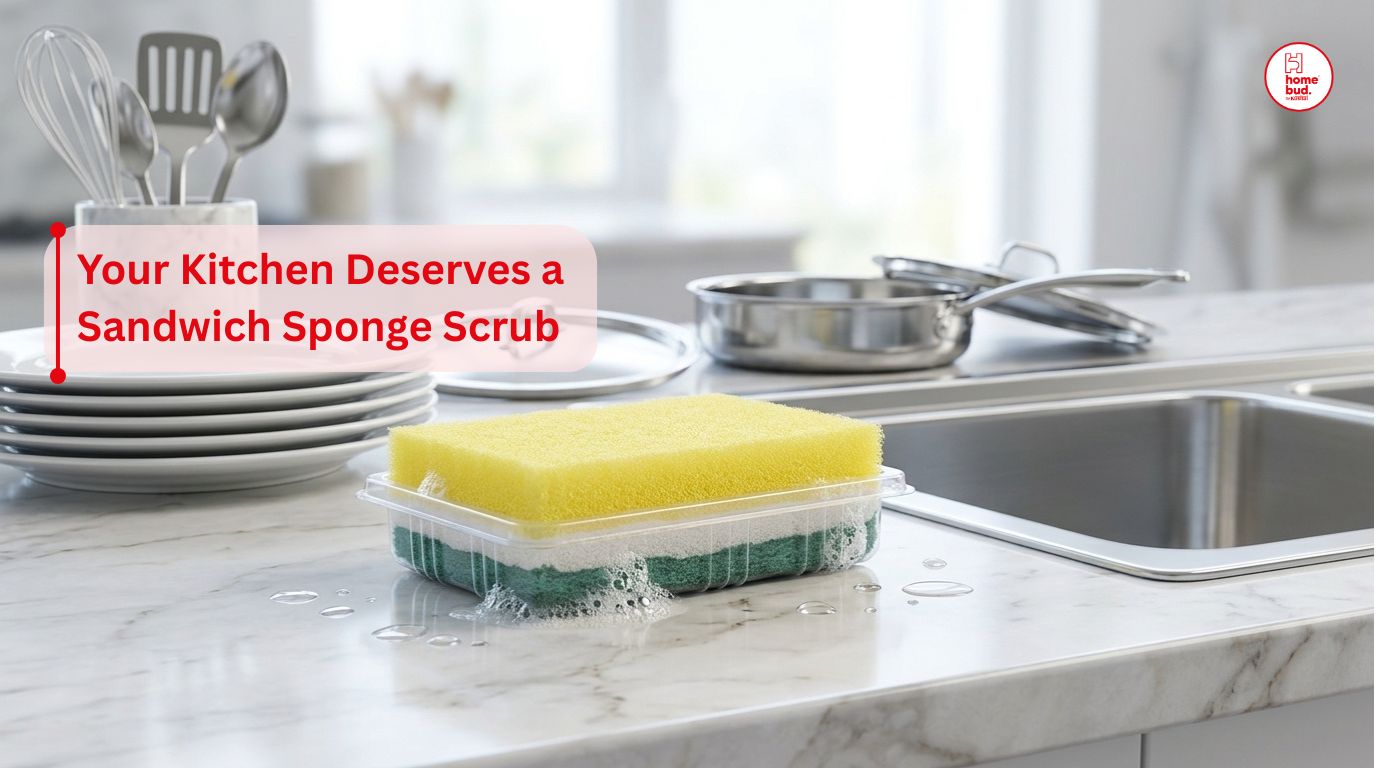
Think about what your kitchen sponge actually goes through in a single day. It starts with the morning chai cups and the greasy tadka pan from breakfast. It moves to the lunch vessels with the masala base that has dried slightly because it sat in the sink for two hours. Then the dinner dishes with the remaining dal and the non-stick tawa that absolutely cannot be scrubbed hard. And somewhere in between all of this, it wipes down the kitchen counter, cleans the sink, and handles whatever else the kitchen produces on a busy cooking day.
One tool. Every job. Every vessel type. Every residue level. This is the reality of how Indian households actually use a kitchen sponge, and it is the reason why a standard single-layer or basic two-sided sponge consistently leaves something to be desired. Either it is soft enough for the non-stick but useless on the steel kadai with the dried masala. Or it is abrasive enough for the steel but too rough to trust anywhere near the Teflon coating you paid good money for.
The sandwich sponge scrub solves this exactly. Three distinct layers, each doing a different job, combined into a single tool that covers every vessel type and every cleaning intensity in your kitchen without compromise. This guide explains what each layer actually does, why the three-layer construction outperforms single and dual-sided alternatives, which vessels benefit most from each side, and why the Homebud Sandwich Sponge Scrub at Rs. 60 is the most versatile kitchen cleaning investment available at that price.
What a Sandwich Sponge Scrub Actually Is and Why the Construction Matters
A sandwich sponge scrub is a multi-layer kitchen cleaning sponge where different materials are bonded together in a specific sequence to create a tool that combines soft absorption, deep lather generation, and controlled abrasion in a single compact form. The name comes from the layered construction — materials stacked in sequence the way ingredients sit between layers in a sandwich — with each layer contributing a specific cleaning function.
The standard single-layer kitchen sponge is just soft foam. It absorbs water and soap and wipes surfaces, but it has almost no scrubbing ability for food residue that has dried or baked onto a vessel. The standard two-sided sponge adds a rough scrub pad on one side of the foam, which gives abrasion for tougher residue but at the cost of a very thin foam core that does not generate much lather and that compresses flat under hand pressure within weeks of daily use.
The three-layer sandwich sponge construction solves both limitations simultaneously. The outer scrub layer handles abrasion. The inner foam core handles lather generation, soap retention, and structural integrity. And the second outer layer handles gentle wiping and surface contact for delicate vessels. Each layer is thicker and more purposeful in its construction than the thin single-function layers in a standard two-sided sponge.
This structural difference is not cosmetic. It translates directly into better cleaning performance across more vessel types, longer functional life under daily use, and a sponge that feels firm and capable in the hand for weeks rather than compressing into a thin flat pad after the first few washes.
The Three Layers of the Homebud Sandwich Sponge Scrub and What Each One Does
Understanding exactly what each layer contributes helps you use the sponge more deliberately and get the best result from every washing session.
The outer scrub layer is the abrasive surface on the tougher side of the sponge. It is made from a slightly rough, mesh-like material that generates friction against vessel surfaces to loosen dried food residue, baked-on masala, grease deposits, and light staining. The scrub layer is firm enough to handle everyday Indian cooking residue — the dried dal base in a steel pot, the oil ring inside a pressure cooker, the light masala residue on a steel plate — without requiring excessive hand pressure. It is calibrated to be effective on steel and hard aluminium surfaces without being so aggressive that it damages standard vessel surfaces under normal scrubbing pressure.
The scrub layer is not designed for non-stick surfaces. The friction that makes it effective on steel is exactly what scratches Teflon and ceramic coatings. Always use the soft side of the sandwich sponge scrub on non-stick cookware and reserve the scrub layer for steel, hard aluminium, and other uncoated metal surfaces.
The middle foam core is the most important layer from a practical performance perspective and the one that most distinguishes the sandwich construction from a standard two-sided sponge. The foam core does two things simultaneously. It retains soap and water within its structure during washing, which means it releases a consistent, rich lather throughout the scrubbing process rather than depleting the soap in the first ten seconds of contact with a vessel. It also provides the structural thickness that keeps the sponge firm and comfortable to grip throughout its life rather than compressing into a thin, floppy pad after a few weeks of use.
The Homebud Sandwich Sponge Scrub specifically features a foam core that holds froth inside, which means the soap you apply to the sponge generates a richer lather across more of the washing session and requires less soap per vessel than a thin sponge that depletes its soap retention quickly. In practical terms, this soap retention reduces your dishwashing liquid consumption over time — a secondary benefit that most buyers only notice once they have used the sponge for a few weeks.
The outer soft foam layer is the gentle side — the surface you use on non-stick tawas, Teflon-coated kadais, glass vessels, ceramic dishes, and any surface where abrasion is a risk. The soft foam generates good lather from the soap held in the middle core and cleans these delicate surfaces through a combination of soap chemistry and gentle mechanical contact without any abrasive friction. It is also the right surface for wiping kitchen counters, cleaning glasses, and any other task where you need cleaning action without any scratching risk.
Together, these three layers cover the full range of cleaning tasks that an Indian kitchen produces in a single daily use cycle — tough scrubbing on steel on one side, gentle cleaning on non-stick on the other, and consistent lather generation from the middle core throughout.
Why Indian Cooking Makes a Three-Layer Sponge More Necessary Than Anywhere Else
Standard dual-sided sponges were designed for western kitchen conditions — lighter cooking methods, less oil, fewer intensely pigmented spices, and a cooking style that leaves relatively straightforward residue on vessels. Indian cooking creates cleaning challenges at a different level of intensity, and understanding this explains why the sandwich sponge construction earns its place in an Indian kitchen more than any other cooking context.
Indian masala bases involve combining tomatoes, onions, and multiple ground spices in hot oil and cooking them down into a concentrated paste. This paste bonds to steel surfaces as it cooks and dries quickly into a reddish-brown residue that a soft sponge alone cannot clean without leaving a stain. The scrub layer of the sandwich sponge breaks through this masala residue efficiently without the extended soaking that would otherwise be needed.
Haldi is the most penetrating staining agent in the Indian kitchen. Turmeric’s intense yellow pigment bonds to both the vessel surface and to sponge material itself. A thin sponge that absorbs haldi-stained water quickly becomes yellow and transfers this pigment to other vessels in subsequent uses. The denser middle core of the sandwich sponge absorbs less staining liquid into its deep structure, and the thorough rinsing routine that the foam core’s soap retention supports clears residue more completely after each vessel.
Cooking oil at Indian cooking temperatures creates a sticky, semi-polymerised film on vessel surfaces over repeated use. This oil film does not dissolve in cold water and resists light scrubbing with a soft sponge. The scrub layer of the sandwich sponge with dish soap and the lather generated by the foam core penetrates and lifts this oil film from steel surfaces in a way that a soft-only sponge cannot match.
Pressure cooking residue concentrates cooking liquid proteins and minerals onto the interior walls of the cooker and the base. After multiple uses without deep scrubbing, this creates a layered dark deposit. The scrub layer with moderate pressure handles this deposit on the steel interior without the risk of damaging the pressure cooker body.
Vessel by Vessel Guide on Which Side of the Sandwich Sponge Scrub to Use
The most practical information for daily kitchen use is knowing which side of the sponge to apply to each vessel type. Using the wrong side wastes effort on some vessels and risks damage on others.
For steel plates, bowls, and glasses, use the scrub side for any dried food or masala residue and the soft side for a final rinse pass to remove soap. Steel is a hard surface that tolerates the scrub layer without any risk, and the scrub layer removes dried food from steel in fewer strokes than the soft side can manage.
For non-stick tawa, non-stick kadai, and any Teflon or ceramic-coated vessel, use the soft side only, without exception. The soft foam side with good lather from the foam core cleans cooked food from non-stick surfaces completely through the chemistry of the dish soap rather than through mechanical abrasion. Warm water and a good quality dish soap applied with the soft side removes all standard food residue from non-stick surfaces safely. Never use the scrub side on any coated surface.
For stainless steel pressure cookers, use the scrub side on the interior walls and base where cooking residue builds up, and the soft side on the exterior body and the lid. The interior handles scrubbing without damage. The exterior may have a polished finish that shows scratches from aggressive scrubbing if the scrub layer is used with heavy pressure against the grain of the finish.
For aluminium kadais and vessels, use the scrub side with moderate pressure for everyday food residue. Avoid heavy repeated scrubbing of aluminium surfaces because aluminium is a softer metal than steel and will show surface wear with very aggressive scrubbing over extended periods.
For glass vessels, serving dishes, and ceramic crockery, use the soft side only. Glass and glazed ceramic are smooth, non-porous surfaces that clean thoroughly with soft foam and good lather. The scrub layer on glass creates micro-scratches that accumulate into visible surface dulling over time.
For the kitchen sink, use the scrub side for the stainless steel basin and any mineral deposit or grease buildup around the drain area. The scrub side handles sink cleaning effectively and removes the hard water ring that develops around the waterline of most Indian kitchen sinks within weeks of installation.
For the kitchen counter and stovetop surroundings, use the soft side for regular daily wiping after cooking. For baked-on splatter around the gas burner area or at the back of the stovetop, the scrub side with a little dish soap lifts this residue without damaging the tile or stone counter surface.
The Homebud Sandwich Sponge Scrub at Rs. 60 Is the Complete Dish Cleaning Solution for Indian Kitchens
At Rs. 60 with free shipping and a surprise gift on every Homebud order, the Homebud Sandwich Sponge Scrub delivers genuine three-layer construction that handles every vessel type in an Indian kitchen — from the non-stick tawa that needs the softest possible touch to the steel pressure cooker with the week’s worth of built-up cooking residue that needs real scrubbing force.
Three powerful layers built specifically for Indian kitchen conditions. A foam core that holds froth inside to maximise detergent use and generate richer lather per drop of dish soap. A scrub layer tough enough for steel and a soft layer gentle enough for non-stick. And a structural thickness that maintains the sponge’s form and performance through weeks of daily heavy kitchen use rather than compressing flat within days.
For a kitchen that cooks three meals a day and needs one reliable tool that covers every dish cleaning task without compromise, the Homebud Sandwich Sponge Scrub is that tool.
Get the Homebud Sandwich Sponge Scrub at Rs. 60 with free shipping and bring the right tool to every vessel in your kitchen from today.
Browse the complete Homebud scrubber and sponge range at homebud.in/product-category/sponge/ for every kitchen cleaning tool your home needs.
Frequently Asked Questions
A sandwich sponge scrub is a three-layer kitchen cleaning tool with a soft foam layer on one side, a dense foam core in the middle, and an abrasive scrub layer on the other side. A regular kitchen sponge is either a single foam layer with no abrasion or a thin two-sided sponge with a very thin core that compresses quickly. The three-layer construction gives the sandwich sponge better soap retention from the thicker core, more effective scrubbing from the dedicated abrasive layer, and longer structural life before the sponge compresses flat.
Yes, on the soft foam side only. The soft outer layer is gentle enough for Teflon, ceramic, and any other coated cookware. Never use the scrub side on non-stick surfaces as it will scratch the coating. The soft side with warm water and dish soap cleans non-stick cookware completely through soap chemistry rather than abrasion.
The thicker middle foam core retains more soap and water within its structure during washing. This internal soap retention means the lather is released gradually throughout the washing session rather than being depleted in the first few seconds of contact with the vessel. The result is richer lather for more of the washing process from the same amount of dish soap, which reduces total soap consumption compared to a thin sponge that depletes its soap retention rapidly.
With daily use in an active Indian kitchen and proper rinsing and drying between uses, a quality sandwich sponge scrub lasts three to four weeks before needing replacement. The thicker foam core resists compression longer than a standard thin sponge, which is why the three-layer construction maintains its cleaning effectiveness for longer. Replace when the sponge develops a persistent odour, visible accumulated staining, or has lost significant thickness.
Yes. The scrub layer is calibrated for everyday food residue removal on steel, hard aluminium, and other uncoated metal surfaces. It handles dried masala, oil deposits, and light mineral staining on steel vessels effectively with moderate hand pressure. It should not be used on non-stick, Teflon, ceramic-coated, or glass surfaces where abrasion causes surface damage.
Keep your bathroom dry, clean, and hygienic every single day. The Homebud WipeExpert Bathroom Wiper — curved rubber edge, dual blade performance, and durable daily-use build at ₹220 with free shipping.