
Plastic Hanger That Is Strong, Lightweight and Long Lasting
-
Posted by
homebud
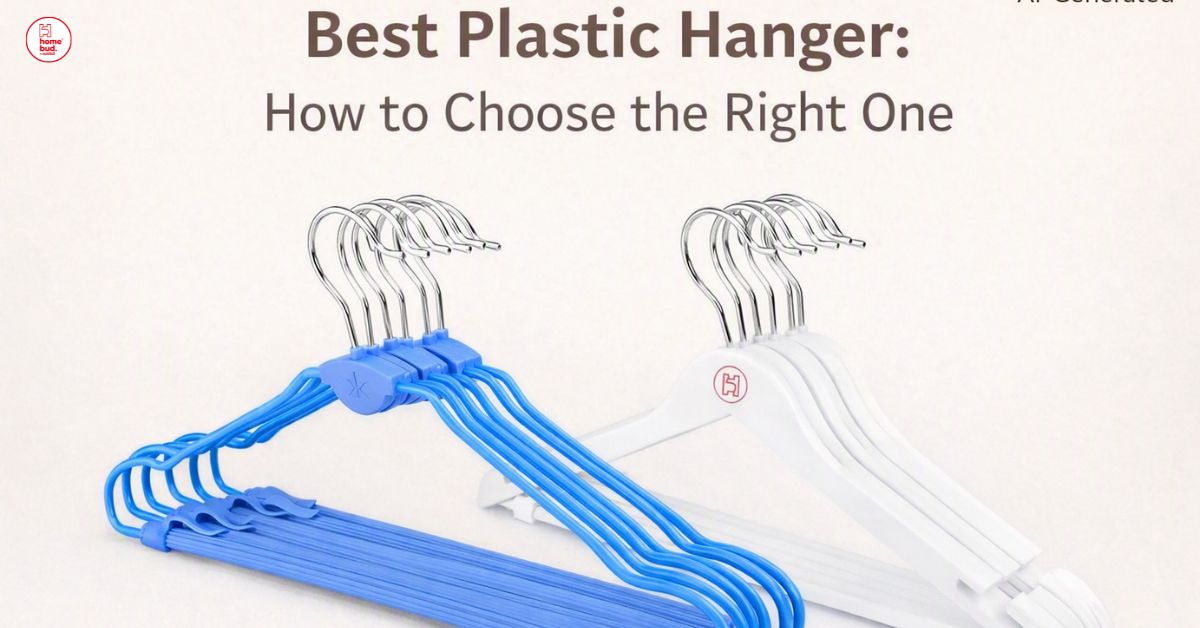
Open any overstuffed wardrobe and the problem is rarely the clothes — it’s the hangers. Wire ones bend under the weight of a winter coat within a month. Wooden ones take up so much rail space that half your shirts end up folded in a drawer instead. And the cheap plastic ones from the last shopping trip? Snapped at the shoulder within a season. A wardrobe only works as well as the hanger holding it up, and that’s a detail most people never think about until something falls off the rail at 8 AM on a workday.
A good plastic hanger solves all three problems at once — it holds weight without bending, takes up less rail space than wood, and doesn’t crack the way low-grade plastic does. This guide breaks down what actually makes a hanger strong, what to check before buying one, and how to make a set last for years instead of months.
What Actually Makes a Plastic Hanger "Strong"
Not all plastic is built the same, and this is where most cheap hanger sets fail. Strength in a hanger comes down to three things: the grade of plastic used, the thickness at the shoulder joint (the weakest point on any hanger), and the curve of the shoulder itself.
A well-made hanger uses a denser, impact-resistant plastic that flexes slightly under load instead of snapping. The shoulder — where a jacket or coat’s weight concentrates — needs to be reinforced or slightly thicker than the rest of the frame. And the curve should mirror the natural slope of a shoulder, so garments hold their shape instead of stretching out of place at the collar and sleeves over time.
A hanger that’s genuinely built to last should hold a heavy winter coat or a fully loaded blazer without any visible flex at the centre bar. If it bows noticeably under normal weight, it’s going to fail eventually — usually right when you’re in a hurry.
Why Plastic Hangers Are Replacing Wire and Wood in Everyday Wardrobes
Wire hangers came free with dry cleaning for decades, and wooden hangers still show up in premium wardrobe sets. But for daily use, plastic has quietly become the better option for most households:
- Wire hangers bend permanently under weight and leave sharp shoulder marks on knitwear and delicate fabric
- Wooden hangers are bulky, often taking up 25 to 30 percent more rail space than a slim plastic frame
- Wire tends to rust in humid climates, which can stain light-coloured clothing over time
- A well-made plastic hanger is lighter to handle in bulk — useful when you’re rehanging an entire laundry load at once
- Plastic doesn’t splinter or chip the way ageing wood does after a few years of use
None of this means wood is bad — for a display wardrobe or a handful of formal jackets, it still has its place. But for the 40-plus hangers doing daily duty in a working closet, a strong, slim plastic hanger is simply less friction.
Strength Without the Bulk: How a Slim Profile Saves Wardrobe Space
This is the detail most people don’t think about until they actually count their hangers. A slim-profile hanger — typically under 1 cm thick at the frame — lets you fit noticeably more garments on the same rail length compared to a bulky wooden one.
For a standard 3-foot wardrobe rail, that difference can mean fitting an extra 8 to 10 garments simply by switching hanger styles, without adding any new storage. That matters more in Indian homes, where wardrobe space is often shared between two or three family members and every inch of rail counts.
The trick is getting slim without getting weak — and that’s exactly the balance a good injection-moulded plastic hanger is designed around: a thin profile that still holds real weight because the strength comes from the shape and shoulder reinforcement, not from sheer bulk.
What to Check Before You Buy a Hanger
Since most people buying a new hanger set are comparing multiple options rather than grabbing the first pack they see, here’s what actually separates a hanger that lasts from one that doesn’t:
- Shoulder thickness — press gently at the shoulder curve; it should feel solid, not thin or hollow
- Weight test — a genuinely strong hanger shouldn’t visibly bow when a heavy jacket or coat is placed on it
- Notches for straps — useful for camisoles, dupattas, and thin-strapped garments that slide off a plain bar
- Non-slip bar — a textured or grooved lower bar keeps trousers and dupattas from sliding off
- Swivel hook — a rotating hook makes it easier to arrange garments facing the same direction without lifting the whole hanger off the rail
- Set size — buying in sets of 5 or 10 works out cheaper per piece than buying individual hangers repeatedly
- Colour consistency — matching sets make a wardrobe look considerably more organised than a mismatched mix collected over years
Homebud's Plastic Hangers — Built for Everyday Wardrobes
This is exactly where Homebud’s hanger range was designed to fit in — not as a one-time purchase you forget about, but as something your wardrobe actually relies on every single day.
The Ultimate Hanger (10 Pcs Set) is built for households that need to restock an entire wardrobe in one go — a full 10-piece set with reinforced shoulders that hold shirts, jackets, and everyday wear without bending, at a cost per piece that works out lower than buying smaller packs repeatedly.
For a lighter refresh, or for garments that need slightly more careful handling, the Legend Hanger (5 Pcs Set) offers the same strength and slim profile in a smaller set — a good fit for topping up a wardrobe that just needs a handful of reliable replacements rather than a full overhaul.
Both are part of Homebud’s wider plastic hanger collection, built around the same idea — a hanger that holds its shape, holds real weight, and doesn’t need replacing every season.
How to Make Your Plastic Hangers Last Longer
A few small habits go a long way in stretching the life of any hanger set:
- Avoid overloading a single hanger with multiple heavy garments stacked on top of each other
- Keep hangers out of direct, prolonged sunlight — UV exposure gradually makes plastic brittle
- Don't hang wet, heavy items like soaked towels or freshly washed jeans; let them dry flat or on a drying rack first
- Store hangers in a stable temperature range where possible — extreme heat can warp thinner plastic over time
- Rotate which hangers carry the heaviest garments instead of always loading the same few
Organising a Wardrobe Around a Strong Hanger Set
Once you've got a reliable hanger set, a few small organising habits make the whole wardrobe function better:
- Group by garment type first (shirts, trousers, jackets), then by colour within each group
- Use the swivel hook to keep everything facing the same direction — it looks tidier and makes finding an item faster
- Reserve one set for daily-wear items near the front of the rail, and a second set further back for occasional or seasonal wear
- Replace any hanger showing stress marks or a slight permanent bend before it fails completely, rather than waiting for it to snap
Frequently Asked Questions
A well-made plastic hanger with a reinforced shoulder holds heavy garments without bending, often better than thin wire. The key is checking shoulder thickness before buying, not just the overall size of the hanger.
Yes. A slim-profile plastic hanger is typically thinner than a wooden one, which means noticeably more garments fit on the same length of rail.
Most single-person wardrobes use somewhere between 30 and 50 hangers, depending on how much is folded versus hung. Buying in sets of 5 or 10 usually works out more economical than buying individually.
A hanger with a notched or grooved bar is designed specifically to stop thin, slippery fabrics like dupattas and sarees from sliding off, which a plain smooth bar often can't prevent.
Most breakage happens at the shoulder joint, usually from overloading a single hanger with multiple heavy garments or from long-term sun exposure that makes the plastic brittle over time.
A 10-piece set works out cheaper per hanger and suits a full wardrobe restock, while a 5-piece set is a better fit for topping up an existing collection without over-buying.
A wardrobe only stays organised if the hangers holding it up are actually doing their job. If yours are bending, cracking, or letting things slide off mid-week, it's usually not the clothes that need sorting out — it's the hangers. Homebud's Ultimate Hanger (10 Pcs Set) and Legend Hanger (5 Pcs Set) are both built around that one idea — a hanger strong enough to be forgotten about, in the best way.