
Best Bathroom Wiper That Dries Your Floor Every Single Time
-
Posted by
homebud
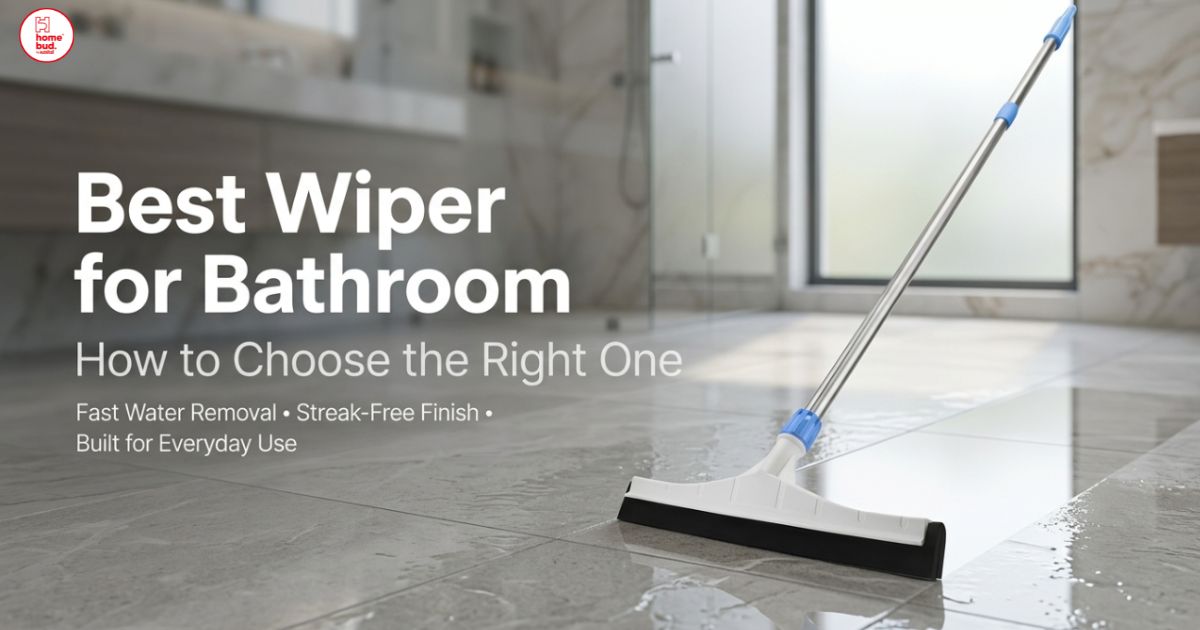
There’s a specific kind of annoyance that comes with stepping into a bathroom five minutes after someone’s used it, only to land on a puddle you didn’t see. Wet bathroom floors aren’t just inconvenient — they’re the number one reason for slips at home, they breed mould in tile grout, and they leave that permanent damp smell no amount of air freshener actually fixes. Most of the time, the fix isn’t a better mop or more ventilation. It’s the best wiper for bathroom floors — one that actually does its one job properly, every single time.
A good wiper sounds like the simplest tool in the house. Pull it across the floor, water goes away, done. But anyone who’s used a cheap one knows that’s not how it plays out. The blade skips over water instead of pulling it, streaks form in a fan pattern behind it, and you end up going over the same patch three or four times while water pools right back where you just cleared it.
Why Most Bathroom Floors Never Actually Dry Properly
The problem usually isn’t the floor. It’s the tool being used on it.
Cheap wipers use rubber blades that harden within a few months. Once that happens, the blade stops making full contact with the tile, and instead of pulling water into a clean line, it just smears it around. You end up with a floor that “looks” wiped but is still damp enough to be a slip risk twenty minutes later.
There’s also the handle problem. A wiper with a short or flimsy handle forces you to bend down repeatedly, which means most people simply do a quicker, less thorough job than the floor actually needs. And in Indian bathrooms — which are often smaller, tiled, and used multiple times a day by the whole family — that kind of shortcut adds up fast.
This is exactly why best wiper for bathroom has become something people actively search for rather than just grabbing whatever’s cheapest at the local store. The difference between a wiper that works and one that doesn’t shows up the very first time you use it.
What Actually Makes the Best Wiper for Bathroom Floors
A wiper that clears water properly comes down to a handful of design choices that most budget versions skip entirely.
- Full-contact blade design. The rubber edge needs to sit flush against the tile across its entire width, not just at the centre. That’s what actually pulls water rather than pushing it around in streaks.
- Flexible, durable rubber. Rubber that stays soft holds its shape against uneven grout lines. Rubber that hardens with age or heat starts skipping over water instead of clearing it.
- A handle length that matches how you’ll actually use it. Long enough that you’re not bending over the whole time, but balanced enough that you’re not fighting the weight of it with every stroke.
- A blade width suited to the space. A wide blade clears open floor fast. A narrower one is better for tighter corners and around fittings, which is where most water tends to collect anyway.
- Rust-resistant fittings. Any metal parts on the handle or blade mount need to survive constant water exposure without corroding, or the wiper starts falling apart within a season.
What to Check Before You Buy a Bathroom Wiper
Not every wiper on the shelf is built with these things in mind, so here’s what’s worth actually checking before you buy one:
- Test the blade flex. Press it gently — it should bend easily and spring back, not feel stiff or brittle.
- Check the water clearance in one pass. A well-designed wiper should clear a strip of water in a single, clean stroke, not require three passes over the same spot.
- Look at the blade-to-handle joint. This is usually the first place cheap wipers fail. A loose or wobbly joint means the blade won’t sit flat against the floor.
- Match the size to your bathroom. A large bathroom benefits from a wider blade for speed. A smaller or more fitted bathroom does better with something more manoeuvrable.
- Consider whether you need more than one. Bathroom floors and kitchen floors deal with completely different kinds of mess, and using the same wiper for both usually means it’s not optimised for either
Built for the Way Indian Homes Actually Use a Wiper
This is where most wipers on the market stop short. They’re built as a generic tool, sold as one-size-fits-all, and end up doing an average job everywhere instead of a great job anywhere.
The Heavy Duty 2 Blade Wiper takes a different approach. Instead of a single blade doing all the work, the double-blade setup clears water in both directions of the stroke, which means fewer passes and a floor that’s actually dry, not just visibly wiped. It’s built for bathrooms that get heavy daily use — the kind where one person showers in the morning and another right after, and the floor needs to be cleared fast, not eventually. For homes like that, it’s consistently the best wiper for bathroom floors that see back-to-back daily use.
For kitchens, water and mess behave differently — there’s grease, spills, and food residue mixed in, which a bathroom-style blade isn’t really designed to handle well. That’s where the Kitchen Wiper comes in, built with a blade profile suited to picking up liquid spills cleanly off kitchen flooring without smearing grease across the surface.
Both are part of Homebud’s full wiper range, each one designed around the specific room it’s meant for rather than treating every wet floor problem the same way.
The Real Test of a Good Wiper
Here’s a simple way to know if a wiper is actually doing its job: run it once across a wet patch of floor and check what’s left behind. If there’s still a faint layer of moisture or a streak trailing the blade, it’s not clearing water properly — it’s just spreading it thinner. A well-built wiper leaves a genuinely dry line behind it on the first pass, every time, not just when the floor is barely wet to begin with.
That’s the standard that actually matters, because a wiper that needs three attempts to do one job isn’t really saving you time or effort — it’s just turning a ten-second task into a two-minute one.
Frequently Asked Questions
The best wiper for bathroom floors is one with a full-contact rubber blade, a sturdy handle, and rust-resistant fittings — built to clear water in a single clean pass rather than smearing it around. A two-blade design, like the Heavy Duty 2 Blade Wiper, typically performs best for daily, heavy-use bathrooms.
A wiper clears water in a single directional pull, leaving the floor genuinely dry. A mop tends to spread water around and absorb it slowly, which often leaves the floor damp for longer and needs a separate drying step.
It depends on the blade quality, but once the rubber starts feeling stiff or you notice streaking instead of clean clearance, it's time to replace it — usually somewhere between six months and a year with daily use.
You can, but it's not ideal. Kitchen floors deal with grease and food residue that a bathroom-style blade isn't optimised for, which is why a dedicated kitchen wiper tends to perform noticeably better.
This usually means the blade isn't making full contact with the floor — either because the rubber has hardened with age or the blade-to-handle joint has loosened over time.
Yes, especially for bathrooms with frequent daily use. A two-blade design clears water on both the forward and return stroke, which means fewer passes to get the floor fully dry.
It matters more than most people expect. A handle that's too short forces awkward, rushed strokes, which usually means the floor doesn't get cleared as thoroughly as it should.
A wet bathroom floor isn't something you should have to deal with after every single use. If you're looking for the best wiper for bathroom floors that stay genuinely dry, explore Homebud's full range of bathroom and kitchen wipers and get a floor that's actually dry the moment you're done.