
Best Broom for Home That Sweeps Every Floor Effortlessly
-
Posted by
homebud
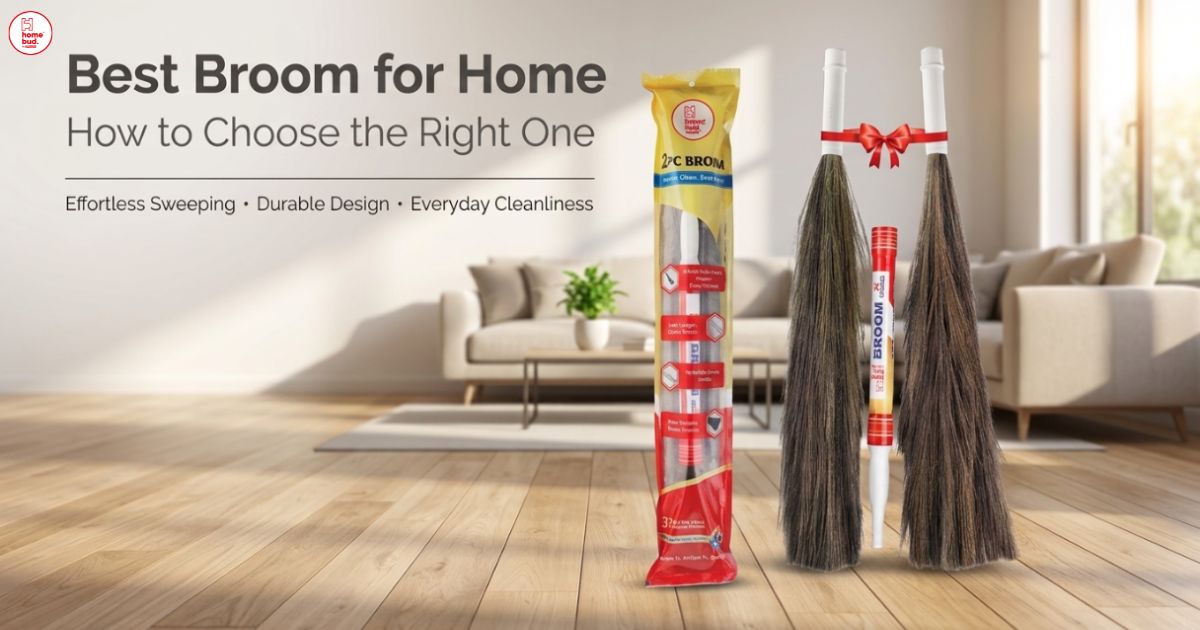
Every home has that one chore nobody talks about, but everyone does daily — sweeping. And every home also has that one broom that quietly makes the job harder than it needs to be. Bristles that scatter dust instead of collecting it. A handle that makes you bend lower than you should. Strands that snap off and end up stuck under the sofa, only to be found weeks later. If any of this sounds familiar, the problem was probably never your sweeping technique. It was the Best Broom for Home.
It’s easy to think of a broom as the most basic object in the house — something you don’t really “choose,” you just grab whatever’s near the door. But anyone who has swept a marble floor with a broom built for rough concrete, or tried cleaning a courtyard with a broom meant for delicate tiles, knows this isn’t true. The right broom changes how clean your home actually gets, and how much effort it takes to get there.
Why Your Current Broom Isn't Doing Its Job Properly
Watch someone sweep with a poor-quality broom and you’ll notice the same pattern every time. They sweep, the dust lifts into the air, settles a few feet away, and they sweep it again. And again. What should take two minutes stretches into ten, and the floor still doesn’t look properly clean.
This usually comes down to three things going wrong at once. The bristles are too soft or too sparse to actually grip dust and fine particles, so instead of collecting debris, the broom just pushes air around it. The broom head is too narrow, so you’re covering the same square foot of
Choosing the Best Broom for Your Home: Home Bud’s Broom Collection https://homebud.in/product-category/broom/
floor five separate times instead of one. And the material itself is low quality, which means bristles start shedding and splitting within a few weeks of regular use.
None of this is really about how “hard” you’re sweeping. It’s about whether the tool was actually built for the floor you’re using it on.
What Actually Makes a Broom "The Best Broom" for a Home
A genuinely good broom isn’t complicated, but it does need to get a few specific things right — and these are the same things worth checking before you buy one.
- Bristle density and stiffness. A broom with tightly packed, semi-stiff bristles picks up dust, hair, and fine debris far more effectively than one with thin, widely spaced strands. Density is what turns a “sweep” into an actual clean, rather than just rearranging the dust on your floor.
- Broom head width. A wider head covers more floor per stroke, which matters enormously in larger rooms, verandahs, or courtyards. A narrow head might feel fine in a small bathroom, but it turns sweeping a living room or terrace into a much longer job than it should be.
- Handle length and build. This is the part people underestimate the most. A handle that’s too short forces you to bend or hunch while sweeping, which adds up to real strain over months of daily use. A well-proportioned handle lets you sweep standing upright, which is a small change that makes a noticeable difference to how tiring the chore feels.
- Durability and shedding resistance. Bristles that are properly anchored into the head don’t come loose and scatter across the floor — which, ironically, is the opposite of what a broom is supposed to do. A durable broom holds its shape and bristle count through months of daily sweeping, not just the first few weeks.
- Floor compatibility. Smooth marble or tile floors need a broom that can glide without scratching, while rough or textured floors — courtyards, balconies, unfinished concrete — need slightly stiffer bristles that can dig into grooves and corners. A broom built to handle both smooth and rough surfaces saves you from needing two separate brooms for Best Broom for Home
Matching the Broom to Your Floor
This is where most people get it wrong without realising it. The broom that works beautifully on a kitchen tile floor might completely underperform on a rough outdoor patio, and vice versa Best Broom for Home
- Smooth floors (tile, marble, polished concrete): Look for finer, closely packed bristles that glide smoothly and don’t leave scratch marks, while still being firm enough to gather fine dust.
- Rough or textured floors (courtyards, balconies, unfinished surfaces): A slightly stiffer bristle set works better here, since it can get into uneven grooves and gaps that a softer broom would simply skim over.
- Mixed-use homes: If your home has a bit of both — tiled interiors and a rough outdoor space — a broom designed for both surface types means you’re not maintaining two different tools for two different jobs.
Where HomeBud Fits Into This
This is exactly the thinking behind HomeBud’s broom range — built around how Indian homes actually sweep, not a one-size-fits-all approach.
If your household goes through daily sweeping across multiple rooms — or you simply want a backup ready so you’re never caught without one — the 2 Pcs Broom gives you a reliable pair, so one is always on hand whether it’s the kitchen, the balcony, or a quick clean-up before guests arrive.
For a dependable, everyday option that handles both smooth and slightly rough surfaces without needing anything fancy, the Broom is built as a straightforward, sturdy option that does the basic job properly — dense bristles, a comfortable handle, and a build that holds up to daily use.
How to Choose the Best Broom for Your Home: A Quick Checklist
Before you pick one up, run through this:
- What’s your floor type? Smooth tile and marble need finer bristles; rough or outdoor surfaces need stiffer ones.
- How large is the area you’re sweeping regularly? Bigger spaces benefit from a wider broom head.
- How tall are you, and how do you usually stand while sweeping? A proportionate handle length reduces strain significantly.
- How often will it be used? Daily use in a busy household calls for a broom built specifically for durability, not just a light-use option.
- Do you need more than one? Many homes benefit from keeping a spare broom on hand, especially if different rooms have different floor types.
Making Your Broom Last Longer
A well-made broom, looked after properly, should hold its shape and bristle count for a long time. A few habits help:
- Store it hanging or standing upright rather than lying flat on the bristles, which can bend and deform them over time.
- Rinse and shake out the bristles occasionally to remove trapped dust and hair before it builds up at the base.
- Avoid using the same broom for wet mopping and dry sweeping — moisture weakens the bristle anchoring over time.
- Rotate between two brooms if you’re sweeping large areas daily, so no single broom takes on all the wear.
The Clean Sweep That Actually Feels Clean
Go back to that everyday moment — sweeping the floor before the house wakes up, or tidying the courtyard before guests arrive. With the right broom, that dust doesn’t scatter and resettle. It actually gets collected, in fewer strokes, without your back complaining halfway through. That’s really what “the best broom” means in practice — not a fancier tool, just one that was built to properly do the one job it exists for Best Broom for Home
Frequently Asked Questions
Focus on bristle density, broom head width, and handle length. Dense bristles pick up dust more effectively, a wider head covers more floor per stroke, and a proportionate handle lets you sweep without bending or straining your back.
It depends on the broom. Some are designed specifically to handle both tile or marble floors and rougher outdoor surfaces, which saves you from buying and maintaining two separate brooms. If your home has mixed flooring, look for a broom built for versatility.
This depends on frequency of use, but as a general guide, a good-quality broom used daily should last several months to a year before the bristles noticeably thin out or lose their stiffness. Keeping a spare broom on hand, like a 2-piece set, helps you rotate use and extend the life of each one.
Yes, significantly. A wider broom head covers more floor area in a single stroke, which reduces the number of passes needed and makes sweeping larger rooms, verandahs, or courtyards noticeably faster.
It's better not to. Repeated moisture exposure weakens how firmly the bristles are anchored into the broom head over time, which shortens its lifespan. Keeping sweeping and mopping tools separate helps your broom last longer.
This usually happens with lower-quality brooms where the bristles aren't securely anchored into the head. A well-built broom holds its bristle count through months of regular use, rather than shedding within the first few weeks.