
Best Duster for Floors to Clean Every Surface Fast
-
Posted by
homebud
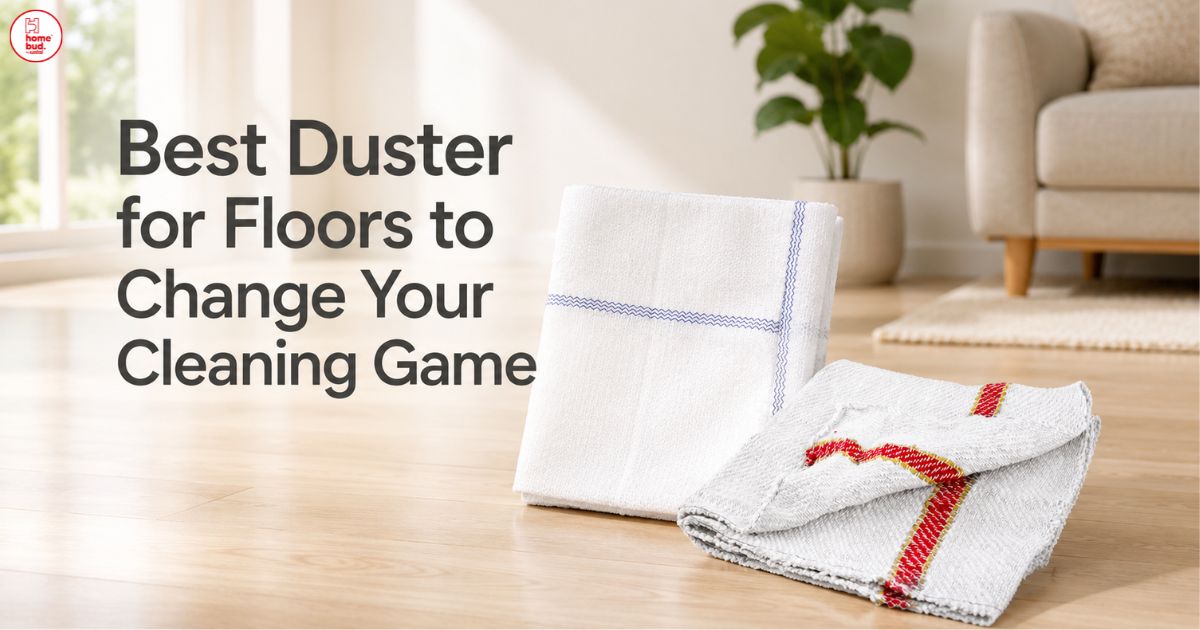
Dust doesn’t wait for a convenient time to settle. One afternoon of open windows, one evening of foot traffic, and your spotless tiles or polished hardwood are back to looking dull. If you’ve been relying on a broom or a dry cloth to keep up, you already know the problem — dust gets pushed around instead of picked up, and fine particles resettle within hours.
This is exactly where a good floor duster changes the game. Unlike a broom that scatters dust into the air, a proper duster for floors is designed to trap particles, allergens, and pet hair on contact, leaving surfaces cleaner for longer with a fraction of the effort. Whether you’re maintaining marble in a living room, hardwood in a bedroom, or tiles in a kitchen, the right duster does the job faster, safer, and with far less mess.
In this guide, we’ll walk through why a floor duster deserves a permanent spot in your cleaning kit, the different types available for different surfaces, what to actually look for before buying one, and how to use and maintain it so it lasts. We’ll also point you toward two of our most reliable picks if you’re ready to upgrade your routine.
Why a Floor Duster Deserves a Spot in Your Cleaning Kit
A broom was never built for fine dust — its bristles are spaced too far apart, and every pass sends a cloud of particles right back into the air you breathe. A dedicated duster solves that problem in a few clear ways:
- Traps dust instead of scattering it — microfiber and electrostatic fibers grip fine particles instead of pushing them across the room
- Safe for delicate and polished surfaces — no risk of scratching marble, granite, or lacquered hardwood the way a stiff broom can
- Cuts daily cleaning time — a few passes with a duster often replace a full mopping session for light, everyday maintenance
- Reduces allergens in the home — trapped dust means less of it circulating and settling on furniture, bedding, and surfaces
- Works dry or lightly damp — flexible enough to handle both quick daily touch-ups and slightly deeper cleans
If your current routine still leans on sweeping alone, switching to a duster is one of the simplest upgrades you can make to your home cleaning kit.
Types of Floor Dusters for Different Surfaces
Not every duster is built the same way, and the surface you’re cleaning should guide the type you choose.
For Tiles
Tiled floors, especially in kitchens and bathrooms, deal with a mix of dry dust and light grime. A flat microfiber duster works best here since it can be used dry for quick dusting and lightly dampened for a deeper wipe without leaving streaks.
For Hardwood
Hardwood needs a gentler touch. Look for a duster for floors made from soft, tightly woven microfiber that won’t scratch the finish. Electrostatic dry dusters are particularly effective on wood since they lift dust and hair without needing any moisture at all.
For Marble
Marble is porous and reacts poorly to harsh chemicals or rough textures. A washable, ultra-soft cloth duster is ideal — it picks up dust and fine debris while being gentle enough to protect the polished surface from micro-scratches over time.
What to Look for in a Good Duster for Floors
Before you add one to your cart, it helps to know what actually separates a durable, effective duster from one that falls apart after a few washes.
- Material quality — microfiber generally outperforms cotton for trapping fine dust and holding onto hair without leaving lint behind
- Washability and reusability — a duster you can machine wash and reuse hundreds of times is far more cost-effective than disposable options
- Handle design — if you’re buying a handled duster, an adjustable or long handle reduces strain on your back during use
- Surface compatibility — check whether the duster is suited for both dry and damp use, especially if you plan to use it across tiles, wood, and marble
- Durability of stitching and fibers — loose threads or thin fiber density usually mean the duster will shed or wear out quickly
A duster that checks these boxes will save you money over time, since you won’t be replacing it every few months.
Homebud's Floor Duster Picks
If you’d rather skip the trial-and-error and go straight to options that are already built around these standards, here are two from our own Floor Duster Collection worth checking out.
Superior Cleaning Advanced Floor Cloth (2 Pcs Set) — This set is designed for households that want one solution across multiple surfaces. The dual-piece design means you always have a backup ready while the other is being washed, which is especially useful if you’re cleaning larger homes or high-traffic areas daily. The fabric is built to handle both dry dusting and damp wiping, making it a flexible pick for tiles, hardwood, and marble alike.
Floor Duster — A straightforward, no-fuss option built for everyday use. It’s a solid choice if you want a dedicated duster for quick daily maintenance without switching between multiple cleaning tools. Lightweight and easy to wash, it fits naturally into a routine where speed matters more than a deep clean.
Both options are part of our broader floor duster collection, where you’ll find additional variants suited to different floor types and cleaning frequencies.
How to Use a Floor Duster the Right Way
Even a high-quality duster underperforms if it’s used incorrectly. Follow these steps for the best results:
- Start dry — always dust before you introduce any moisture, so you’re not just smearing dust into a paste
- Use long, overlapping strokes — short back-and-forth motions tend to leave streaks and miss patches of dust
- Work in one direction — pick a starting point and move consistently toward one end of the room instead of crisscrossing
- Shake out or rinse periodically — a duster loaded with dust becomes less effective; clean it out every few passes on larger floors
- Follow up with a damp pass if needed — for kitchens or high-traffic zones, a second pass with a lightly dampened duster lifts residual grime
- Wash after each use — rinse or machine-wash the duster so it’s ready and fully effective for the next session
Floor Duster vs Mop vs Broom
If you're still deciding whether a duster is really necessary alongside your existing tools, here's how the three compare:
- Broom — fast for large debris but pushes fine dust into the air instead of trapping it; not ideal for daily fine-dust maintenance
- Mop — effective for deep cleaning and stains but overkill for quick daily touch-ups, and can leave hardwood or marble excessively wet
- Floor duster — the middle ground; faster than mopping, far more effective than a broom at trapping fine particles, and gentle enough for daily use on any surface
Most homes benefit from using all three in rotation — a duster for daily maintenance, a mop for weekly deep cleans, and a broom for larger debris after gatherings or renovations.
Maintenance Tips for a Long-Lasting Duster
A little care extends the life of your duster significantly:
- Wash after every use to prevent trapped dust from breaking down the fibers over time
- Avoid fabric softener, since it coats microfiber and reduces its ability to trap dust
- Air dry instead of high-heat tumble drying to protect the fiber structure
- Store it flat or hung up rather than folded tightly, which can flatten the fibers
- Replace it once you notice reduced dust pickup or visible fiber shedding, even after washing
Conclusion
A good duster for floors isn't just a convenience — it's one of the fastest ways to keep tiles, hardwood, and marble looking genuinely clean without the effort of a full mop-down every day. Once you match the right type of duster to your flooring and build it into a simple routine, dust stops being a daily battle.
If you're ready to upgrade your cleaning kit, explore our full Floor Duster Collection and find the option that fits your home best.
Frequently Asked Questions
A microfiber cloth duster that works both dry and lightly damp, such as the Superior Cleaning Advanced Floor Cloth, is the most versatile choice since it adapts well across tiles, marble, and hardwood without needing separate tools for each.
Yes, as long as the duster is made from soft, non-abrasive microfiber. Avoid rough or stiff materials on both surfaces, since they can create fine scratches over repeated use.
Daily dusting is ideal for high-traffic homes, especially kitchens and living rooms. Bedrooms and lower-traffic areas can typically be dusted every two to three days.
For fine dust and allergens, yes. A broom tends to scatter particles into the air rather than trapping them, while a duster picks them up directly, making it more effective for everyday maintenance.
Rinse or machine-wash it after each use, avoid fabric softener since it reduces the fiber's dust-trapping ability, and air dry rather than using high heat to preserve the material.
With proper washing and care, a quality microfiber duster can last anywhere from six months to a year of regular use before its dust-trapping performance starts to decline.