
Best Brush Toilet Cleaner Combos for a Sparkling Bowl
-
Posted by
homebud
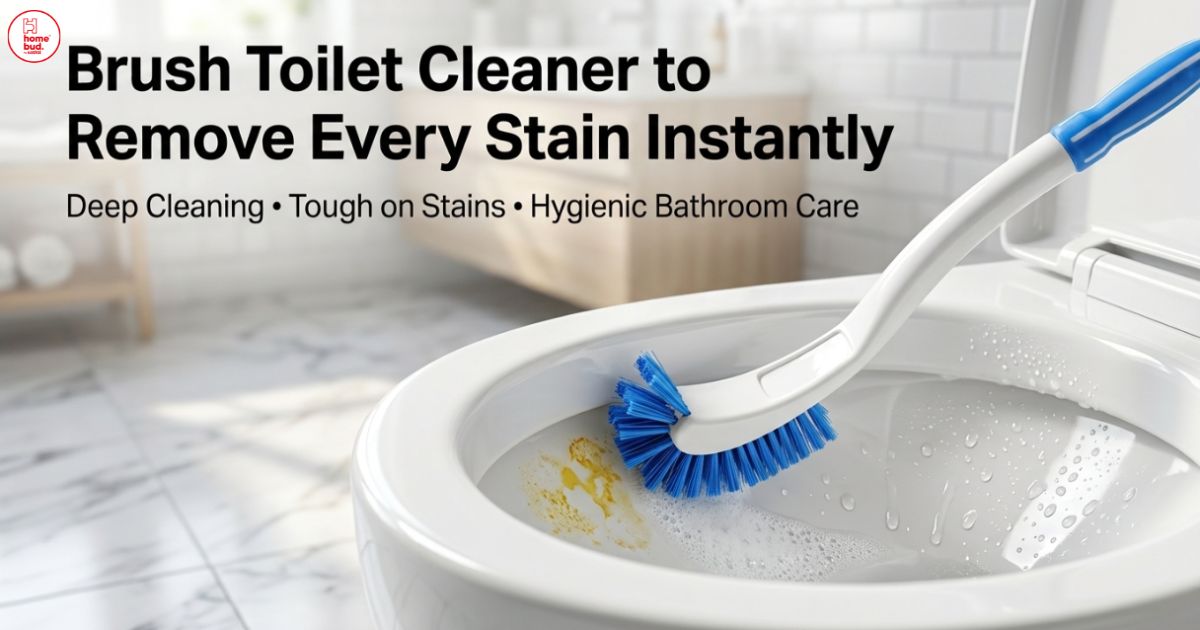
Every toilet stain that refuses to shift has two things in common. The wrong cleaner was used, or the wrong brush was used — and in most cases both. You can pour the best toilet bowl cleaner in the world under the rim, but if the brush you are scrubbing with cannot reach the underside of that rim, the cleaner never meets the stain it is meant to dissolve. The toilet looks the same after ten minutes of effort as it did before.
This is the fundamental toilet cleaning problem that most households live with without understanding why it persists. The toilet brush and the toilet cleaner work as a system, not as independent tools. The cleaner loosens, dissolves, and kills bacteria. The brush delivers the mechanical scrubbing force that removes what the cleaner has loosened. When either half of this system is inadequate — a weak cleaner, a brush that cannot reach where the stain is, or a brush with bristles too limp to generate real scrubbing friction — the result is a toilet that needs three times the effort to achieve two-thirds of the clean.
This article covers everything about the brush-toilet-cleaner system — what makes each component effective, which brush designs reach the areas that matter most, which cleaner types work best for different stain categories, how to use them together for the fastest and most complete clean, and why the Spark Clean Hockey Brush from Homebud is the brush side of this system that Indian households consistently choose for genuinely clean results.
Why the Toilet Brush Is the More Important Half of the System
This is counterintuitive but consistently true. In a brush-toilet-cleaner system, the brush determines the ceiling of cleanliness that the combination can achieve. The best cleaner in the world cannot remove staining from a surface the brush cannot reach and scrub.
The under-rim area of a western toilet bowl is the clearest example. A standard round toilet brush has a dome-shaped head. When you try to direct this dome under the toilet rim to scrub the underside surface, the handle presses against the toilet seat and the brush head is at the wrong angle to make bristle contact with the underside. You end up brushing the outer bowl surface rather than the under-rim area. The cleaner you applied under the rim sits there, partially loosens the staining, and then gets diluted and washed away by the flush without the stain ever being physically scrubbed off. The stain returns to the same appearance within days.
A hockey-shaped toilet brush has a flat, angled head that slides under the toilet rim at a natural angle and makes direct bristle contact with the underside surface in a comfortable wrist position. The same cleaner that sat unmet by the round brush’s bristles is now reached and scrubbed by the hockey brush in the exact location where the staining concentrates. The combination of cleaner chemistry and brush mechanical force removes the stain completely rather than partially, and the result after one thorough clean lasts significantly longer before requiring attention again.
This is why upgrading the brush is the most impactful single change any household can make to its toilet cleaning routine — more impactful than switching cleaners, more impactful than increasing cleaning frequency, more impactful than any other single change. The brush determines what gets cleaned and what gets missed.
The Homebud Spark Clean Hockey Brush — The Right Brush for the Cleaner System
The Spark Clean Hockey Brush at Rs. 195 is built around the hockey head design that solves the under-rim access problem permanently. The double-sided flat angled brush head extends on both sides of the handle, allowing the brush to reach under the toilet rim from both directions simultaneously and to maintain bristle contact with the underside surface across the full rim circumference in natural, comfortable scrubbing strokes.
Strong, dense bristles deliver the mechanical scrubbing force that makes the brush-toilet-cleaner system effective. The bristles need to be dense enough to generate real friction against the bowl surface and stiff enough to maintain that friction under the manual pressure of scrubbing without flopping away from the surface. Sparse, limp bristles make contact with the bowl but slide over the staining rather than scrubbing into it — the exact mechanical failure that makes most budget toilet brushes feel inadequate regardless of which cleaner is paired with them.
The ergonomic handle gives comfortable non-slip grip during scrubbing without bringing hands close to the bowl surface. Handle ergonomics matter more in toilet cleaning than in almost any other cleaning task because the cleaning posture — reaching into a toilet bowl and applying directed pressure to the brush — places the handle under varied directional forces from different scrubbing angles. A handle that twists or slips during under-rim scrubbing loses the directed contact pressure the bristles need to scrub effectively. An ergonomic non-slip grip maintains control through every angle of the cleaning stroke.
At Rs. 195 with free shipping, the Spark Clean Hockey Brush is the brush component of the toilet cleaning system that any household serious about bathroom hygiene should not compromise on.
Understanding Toilet Stains and Which Cleaner Type Addresses Each One
The toilet cleaner you pair with your hockey brush needs to match the type of staining you are dealing with. Different stains have different chemical compositions and respond to different cleaner types. Using a cleaner that does not match the stain chemistry means the brush is doing all the work with no chemical assistance — which is why some stains feel impossibly resistant even after extended scrubbing.
Hard water and limescale staining is the most common toilet bowl problem across Indian cities with hard tap water. Hard water contains dissolved calcium and magnesium compounds. When hard water sits in the toilet bowl, evaporates slightly, or flows over bowl surfaces repeatedly, these minerals deposit as a white, chalky, or brown-tinged scale on the bowl surface. Limescale is alkaline and responds to acid-based cleaners. A toilet bowl cleaner with hydrochloric acid or a weaker organic acid like citric acid dissolves limescale deposits chemically, softening them for brush removal. Apply an acid-based cleaner under the rim and to the bowl waterline — the two areas where limescale concentrates most — wait five minutes, and then scrub with the hockey brush. The limescale that seemed cemented to the bowl surface lifts significantly more easily than without chemical pre-treatment.
Bacterial and biological staining appears as brown, grey, or pink discolouration typically developing in the bowl water area and under the rim. This is biological material — bacterial colonies and biofilm — that accumulates in the areas of the bowl that are sheltered from the flush water cycle. A disinfectant toilet cleaner with quaternary ammonium compounds or sodium hypochlorite (bleach) kills these bacterial colonies chemically before brush scrubbing removes the dead material and residual staining. The disinfectant also kills bacteria that cause the unpleasant toilet odour that persists even after visual cleaning. Apply under the rim first — the primary bacterial accumulation zone — allow three to five minutes of contact time, and then scrub with the hockey brush working from the rim downward into the bowl.
Mold and mildew staining appears as black or green-black patches typically in the upper bowl areas, under the rim, and around the waterline. Mold staining requires a bleach-containing cleaner or a fungicidal toilet cleaner rather than an acid-based one. Bleach denatures the mold cell walls chemically and breaks down the dark pigment compounds that cause the visible staining. Apply the bleach-containing cleaner to the mold patches, allow a longer contact time of five to ten minutes for established mold staining, and then scrub with the hockey brush. The hockey head’s ability to reach under the rim is particularly important for mold cleaning because under-rim mold staining is the most persistent and the most commonly missed by round brushes.
Iron and rust staining appears as orange-brown or reddish-brown staining typically concentrated at the waterline and below. This comes from iron content in the water supply and from the corrosion of metal fittings in older plumbing. Iron staining does not respond to standard disinfectant or bleach cleaners. It requires an acid-based cleaner — specifically one containing hydrochloric acid or oxalic acid — that dissolves the iron oxide compounds causing the staining. Apply directly to the rust staining, allow a longer contact time, and scrub with the hockey brush. Stubborn iron staining that has been present for months may require multiple treatment sessions.
Organic and food-contact staining in the bowl from general use responds to standard disinfectant toilet cleaners. This is the everyday maintenance staining that develops from normal toilet use and that weekly cleaning addresses effectively. A disinfectant cleaner with a short two-to-three-minute contact time followed by a thorough scrub with the hockey brush covers this everyday cleaning category completely.
The Correct Brush Toilet Cleaner Technique for a Complete Clean
Understanding which cleaner to use is the first step. Using the cleaner and brush correctly together is what delivers the genuinely clean result that the right system is capable of.
Apply the toilet cleaner before picking up the brush. Squeeze the cleaner under the rim first — this is the primary application zone because the under-rim area is where the most serious staining concentrates and where the cleaner needs the longest contact time. After the rim, apply to the visible bowl surface, the waterline, and the water area. Close the toilet lid and allow the cleaner to work for the contact time specified on the product — typically two to five minutes for standard cleaners and five to ten minutes for heavy limescale or mold treatments.
The contact time is the most commonly skipped step in toilet cleaning and the one that makes the largest difference to the effort required for the scrubbing phase. Cleaner applied and immediately brushed off has not had time to dissolve mineral deposits, kill bacteria, or penetrate into the staining material. The brush then has to do all the removal work with no chemical assistance. Cleaner allowed to work for the full contact time has softened, dissolved, or killed what it was applied to — the brush then removes material that has already been chemically weakened. The same scrubbing effort that produces a mediocre result against unloosened staining produces a thorough clean against chemically pre-treated staining.
Pick up the hockey brush and begin scrubbing under the rim. The hockey head slides under the rim at a natural wrist angle. Work the brush head around the full circumference of the underside of the rim in one direction, maintaining bristle contact with the underside surface throughout. Then work back in the other direction for a second pass. The under-rim scrub is the most important and most time-consuming part of the cleaning session — the majority of serious staining and all the mold and bacterial accumulation is concentrated here.
Move to the upper bowl surface and scrub in firm circular motions working downward from the waterline. Apply additional pressure to any visible staining areas and make repeated strokes on these specific spots. The hockey brush head’s flat profile maintains even bristle contact across the curved bowl surface in these circular strokes, which is what generates consistent scrubbing force without pressure being lost around the curve of the bowl.
Scrub the base of the bowl and the entry to the drain opening with shorter, more directed strokes using the end of the hockey head. These areas accumulate mineral scale and biological residue that the main circular scrubbing pattern covers less thoroughly. The hockey brush’s angled head can be directed into these tight base areas more precisely than a round brush head.
Flush the toilet while holding the brush in the flow of the flush water for ten to fifteen seconds. This rinses the bristles and the loosened staining from the bowl surface simultaneously. The flush water removes both the cleaned staining material and the cleaner residue from the bowl, leaving a clean surface.
Allow the brush to drip over the bowl for thirty seconds before returning it to the holder. This minimises contaminated drips onto the bathroom floor and the area around the toilet base.
Toilet Cleaning Frequency — Daily, Weekly and Monthly
The brush-toilet-cleaner system delivers the best results when used at the right frequency rather than in concentrated occasional sessions. A toilet that is cleaned thoroughly every week with the right brush and cleaner maintains a genuinely clean state between sessions. A toilet that is cleaned occasionally requires significantly more effort to recover from the accumulated staining of multiple weeks and never achieves the same standard between cleaning sessions.
Daily quick maintenance takes thirty seconds. A brief scrub with the hockey brush and no cleaner after every morning use prevents the thin biological film that begins developing within twenty-four hours of a toilet bowl being flushed. This thirty-second daily brush pass removes the surface film before it becomes established staining and keeps the bowl visibly clean between weekly cleaning sessions.
Weekly deep clean with cleaner takes five to eight minutes. Apply the appropriate cleaner for your dominant stain type under the rim and to the bowl. Allow the full contact time. Scrub thoroughly with the hockey brush through the full under-rim, bowl surface, and base sequence. Flush with the brush in the water. Wipe the external toilet surfaces, the seat, the hinge area, and the base with a disinfectant cloth. Replace the brush in its holder.
Monthly limescale treatment for hard water areas takes ten to fifteen minutes. Apply an acid-based limescale cleaner to all bowl surfaces, with concentrated application to the waterline and any visible scale deposits. Allow a longer contact time of ten minutes. Scrub with the hockey brush using firm pressure over scale deposits. Flush. For severe scale accumulation, repeat the treatment in the same session. This monthly targeted treatment prevents scale from accumulating to the level where daily and weekly cleaning cannot manage it.
Storing the Toilet Brush Hygienically Between Uses
The hockey brush needs correct storage to remain hygienic between uses. An incorrectly stored toilet brush becomes a contamination source in the bathroom rather than a cleaning tool.
A proper holder stand that keeps the brush suspended above the holder base with space for air to circulate around the brush head is the essential storage requirement. The brush head should never sit directly in pooled water inside the holder between uses. Pooled water in the holder base is contaminated from every previous use of the brush and keeps the bristles permanently wet in a bacterial growth environment.
After the weekly deep clean session, clean the holder itself. Empty any collected water from the holder base and rinse the holder under hot running water. Wipe the inside of the holder with a disinfectant cloth. Allow to dry before returning the brush. A holder that is never cleaned becomes as contaminated as a poorly stored brush and negates the hygiene benefit of a quality cleaning routine.
Disinfect the brush itself every two weeks by adding a small amount of toilet cleaner to the holder, placing the brush head in the cleaner, and allowing it to soak for fifteen minutes before rinsing and returning to dry storage. This periodic disinfection of the brush itself kills the accumulated bacterial load on the bristles from multiple scrubbing sessions and prevents the persistent unpleasant odour that develops on toilet brushes that are rinsed but never disinfected.
Replace the brush every six to twelve months. The bristles of a quality hockey brush maintain their shape and scrubbing effectiveness for this period under regular use. When bristles have splayed significantly outward and no longer form a compact scrubbing surface, when the brush has a persistent odour despite disinfecting, or when visible bristle staining does not clear after cleaning, replacement is the right next step. At Rs. 195 for the Spark Clean Hockey Brush with free shipping, the replacement cost per month of service is approximately Rs. 16 to Rs. 32 — the most affordable component of a complete bathroom hygiene routine.
Common Toilet Cleaning Mistakes and How the Right Brush-Cleaner System Corrects Them
Flushing before the cleaner has worked. The most common toilet cleaning mistake. Apply the cleaner and wait the full contact time before scrubbing or flushing. The cleaner needs to make sustained contact with the staining surface to do its chemical work.
Using a round brush that cannot reach under the rim. The most impactful structural mistake. The under-rim area is where the majority of serious staining accumulates and where the majority of bathroom odour originates. A brush that cannot reach this area will never produce a genuinely clean result regardless of how long or how vigorously you scrub the visible bowl surface.
Rinsing the brush without disinfecting it. Rinsing the brush after each use removes gross contamination but does not kill bacteria on the bristles. A brush that is only rinsed accumulates bacteria progressively until the brush itself becomes an odour source and a contamination risk. Disinfect every two weeks.
Using bleach-based cleaner for limescale. Bleach kills bacteria effectively but does not dissolve limescale. A toilet with hard water limescale that is being treated with only bleach-based cleaner will remain visually clean between cleaning sessions but the limescale will continue accumulating. Use an acid-based cleaner for limescale treatment and a bleach-based cleaner for disinfection — alternating between the two types addresses both cleaning needs.
Storing the brush without a proper holder. A brush stored without a holder drips contaminated water, stays wet, develops odour and bacterial growth faster, and contaminates the bathroom floor area around the toilet base. A proper holder is not an optional accessory — it is an essential component of a hygienic toilet cleaning system.
FAQ on Brush Toilet Cleaner
A hockey-head toilet brush is the most effective design for pairing with any toilet cleaner because it reaches the under-rim area where the cleaner needs to be scrubbed in. A round brush head cannot make direct bristle contact with the underside of the toilet rim regardless of which cleaner is used. The Spark Clean Hockey Brush from Homebud delivers the under-rim access that makes the brush-cleaner combination effective at removing the staining that concentrates in this area.
For standard maintenance cleaning, two to three minutes of contact time is sufficient. For limescale treatment, five to ten minutes allows the acid-based cleaner to dissolve mineral deposits more completely. For mold staining, five to ten minutes with a bleach-based cleaner allows the bleach to penetrate and break down the mold material. Never brush immediately after applying the cleaner — the contact time is what makes the cleaner useful rather than decorative.
Yes. The hockey brush head's flat angled design navigates the wider, flatter geometry of an Indian squat toilet bowl effectively and reaches the drain area and side channels that a round brush cannot access in this design. The long ergonomic handle maintains comfortable cleaning distance from the bowl surface in the lower posture required for cleaning a squat toilet.
An acid-based toilet bowl cleaner containing hydrochloric acid or citric acid is the most effective type for hard water limescale in Indian cities with hard tap water. Standard disinfectant cleaners containing bleach kill bacteria but do not dissolve mineral scale. For a complete cleaning system in a hard water area, alternate between an acid-based cleaner for the monthly limescale treatment and a disinfectant bleach-based cleaner for weekly routine cleaning.
The Spark Clean Hockey Brush is available at Rs. 195 at homebud.in/product-category/hockey-brush/ with free shipping across India and a surprise gift on every order.
Both the Floor Duster at Rs. 110 and the Superior Cleaning Advanced Floor Cloth 2 Pcs Set at Rs. 150 are available at homebud.in/product-category/floor-duster/ with free shipping across India and a surprise gift on every order.