
Broomstick for House Cleaning What Actually Separates a Good One From a Bad One
-
Posted by
homebud
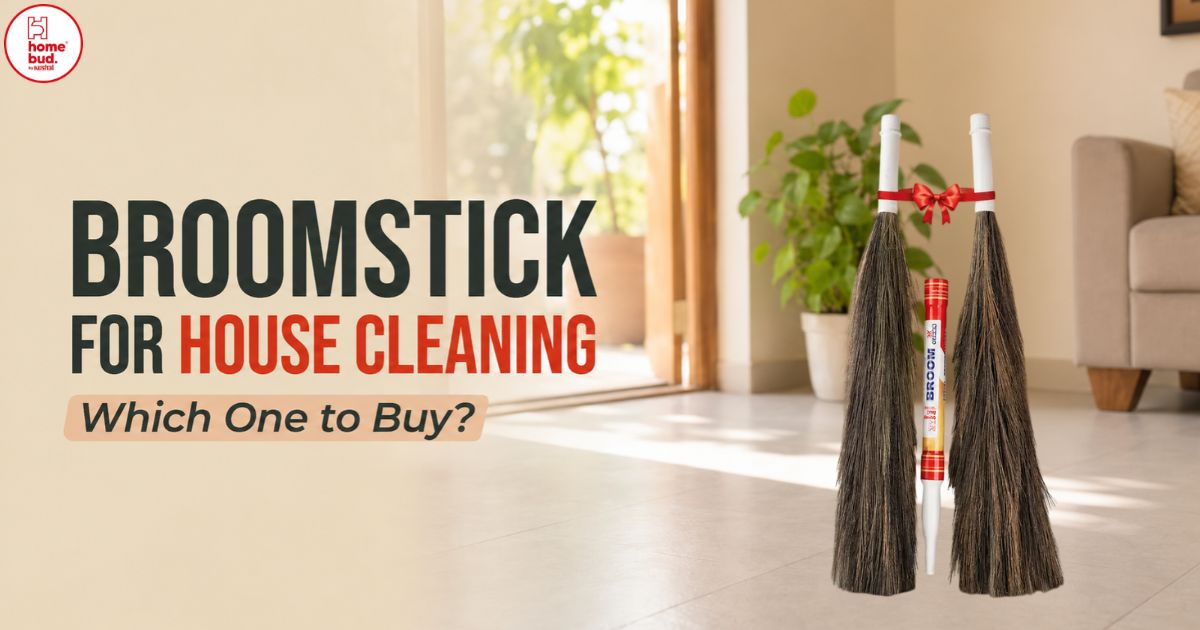
Pick up ten different brooms at a hardware store and most of them look the same from three feet away. A long stick, a flat head, bristles splayed out at the bottom. The differences that actually matter only show up once you start sweeping: how much dust kicks back up into the air, how far the bristles reach into a corner, how long the handle lasts before it wobbles loose from the head. A broomstick for house cleaning earns its place in your home through those small, repeated details, not through how it looks standing in a corner.
That distinction, dry versus wet, is the one thing worth sorting out before you buy anything. Everything else follows from it.
Why bristle design matters more than bristle material
Most shoppers ask about material first: coconut fiber, plastic, nylon. That’s a reasonable question, but it’s the second question. The first is whether the bristles are flagged, meaning each strand splits into finer tips rather than ending in a single blunt point. Split tips create far more contact points against the floor, and that’s what actually traps fine dust and hair rather than pushing it around. A broom with unflagged, blunt-ended bristles can look identical on a shelf and still leave a visible film of dust behind on tile or hardwood.
Row count adds to that effect. A head with five tightly packed rows of bristles picks up more debris per pass than one with three rows and wider gaps between them. That’s worth checking before you buy, since product photos rarely show it clearly and listings almost never mention it.
On the material question itself, there isn’t one correct answer. Fine dust, wet debris, coarse gravel, and pet hair each respond differently depending on bristle stiffness and fiber type, so the “best” material shifts with what you’re actually sweeping up. Synthetic bristles, generally polypropylene, nylon, or recycled PET, dominate household brooms today because they hold up to daily use without the frizz and shedding that natural fiber brooms tend to develop after a few months, and most decent angle brooms on the market now use exactly this kind of synthetic, flagged-tip bristle.
Twin-bristle brooms: when the extra coverage is worth it
HomeBud’s 2 Pcs Broom, priced at ₹290, uses a twin-bristle head built specifically for wider coverage per pass, aimed at larger rooms and halls where a single-head broom means doubling back over the same stretch of floor. It carries a 4.78 out of 5 rating, among the highest in the category, and its own listing frames the design plainly: twin-bristle for maximum coverage in less time.
That extra width only pays off if your rooms are actually large enough to use it. In a small kitchen or a narrow passage, a wide twin-bristle head spends more time bumping into furniture legs than sweeping floor, and a standard single-head broom maneuvers faster. The plain Broom at ₹240, rated 4.57, is built around heavy-duty bristles for everyday dust and dirt removal with a lighter, narrower head, and it’s the better fit for compact spaces, bathrooms, and tight corners where reach matters more than width.
Broom and wiper combos buying the second job you didn’t budget for
A sweeping job rarely ends with sweeping. Most Indian homes mop or wipe right after, which is why combo listings outnumber standalone brooms in HomeBud’s own catalog. The 2 Pcs Broom + Kitchen Wiper Combo pairs the wide-coverage broom with a compact kitchen wiper meant for floor sweeping and quick spill wipe-ups, priced at ₹300 after a 21% discount from ₹380. The 2 pcs Broom + WipeExpert Bathroom Wiper goes further, bundling a broom with a wiper built for pushing away standing water, at ₹385 against an original ₹510.
The single Broom + WipeExpert Bathroom Wiper combo, at ₹350 down from ₹460, is the smallest and cheapest version of that same pairing, and it’s also the highest-rated item in the whole category at a perfect 5.00 out of 5. That rating is worth noting on its own: a product doesn’t reach 5.00 across a meaningful number of reviews by accident, and it suggests the single-broom-plus-bathroom-wiper pairing matches what most buyers actually needed rather than what looked good as an upsell.
If you already own a wiper you’re happy with, paying for a combo just to get a duplicate wiper isn’t a saving, it’s dead weight in your cleaning cupboard. But if you’re setting up a new kitchen or bathroom from scratch, buying the pair together usually costs less than the broom and wiper purchased separately, and you only make one buying decision instead of two.
Handle length and the back problem nobody mentions in reviews
Review sites spend most of their word count on bristles and barely mention handles, yet a broom with the wrong handle length is a common reason people complain about back strain while sweeping. A broomstick built for someone 5’2″ forces a taller person to bend at the waist with every stroke, and that bend repeats dozens of times in a single cleaning session.
There’s no universal “correct” length because it depends entirely on your own height and how upright you prefer to stand while sweeping, so the only real test is holding the broom the way you would at home, not propped against a wall in a shop. If a broom’s listing states its full handle length, measure your own comfortable sweeping height against it before ordering online, since returns on a ₹240 broom rarely feel worth the hassle of shipping it back.
Building a cleaning kit without five separate purchases
Trying to buy the perfect single broom for every room in a house is usually the wrong goal. A wide twin-bristle broom for the living room and hallway, paired with a narrower single-head broom for the kitchen and bathroom, covers more ground than either one alone, and that’s effectively what the combo listings in HomeBud’s broom collection are already built around.
For the mopping or wiping half of the job, HomeBud’s Wiper category covers everything from kitchen wipers to the WipeExpert bathroom range on its own, which is useful if you want to mix and match rather than take the bundled combo. And if dusting shelves, fans, and furniture is the gap in your current setup rather than floor sweeping, the Floor Duster collection picks up where a broom’s reach stops. For buyers who’d rather see every paired option side by side before choosing, HomeBud’s Combo page lists the broom-and-wiper bundles together in one place.
A sensible starting kit, in order of what actually gets used daily, looks like one general-purpose broom, one wiper for wet cleanup, and a duster added later once you know which shelves and corners collect the most dust in your own home. Buying all of it on day one rarely matches how a household’s cleaning habits actually settle in after a few weeks.
Frequently asked questions
A single-head broom with a lighter, narrower build, like HomeBud’s plain Broom at ₹240, works better in tight kitchens and bathrooms than a wide twin-bristle model, since maneuverability around furniture legs and tight corners matters more than covering wide open floor space.
It covers more floor per pass, which saves time in large rooms and halls, but that width works against you in narrow passages and small rooms. The right choice depends on room size, not a fixed ranking of one design over the other.
A combo usually costs less than buying a broom and a matching wiper separately, and it’s worth it if you don’t already own a wiper you’re satisfied with. If you already have one, buying a combo just adds a duplicate you won’t use.
Check whether the listing mentions flagged or split-tip bristles and how many rows the head has, since split tips and denser rows both pick up more fine dust per sweep. Plain, blunt-ended bristles in sparse rows tend to leave a dust film behind even on a clean-looking floor.
Yes, more than most buyers expect. A handle too short for your height forces you to bend at the waist on every stroke, and that repeated bending is a common cause of back strain during regular sweeping, not the broom’s weight or bristle stiffness.
Replace a broom once the bristles splay outward permanently and no longer meet the floor evenly, which usually happens somewhere between six months and a year under daily household use, sooner if it’s used on rough outdoor surfaces as well as indoor floors.
A kitchen wiper combo is built for floor sweeping paired with quick spill wipe-ups on kitchen surfaces, while a WipeExpert bathroom wiper combo pairs the same broom with a wiper designed to push away standing water, which matters more in a bathroom that sees regular wet use.