


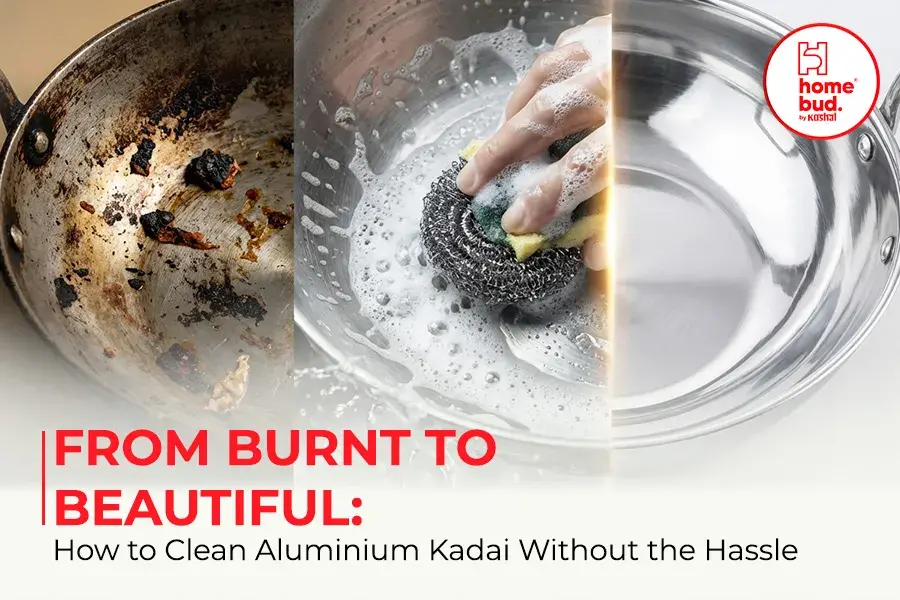
Every Indian kitchen has that one aluminium kadai that has seen it all. The daily tadkas, the deep frying sessions, the accidental high-flame moments, the stubborn haldi stains that never quite came off no matter how hard you scrubbed. It is the most used vessel in the kitchen and usually the hardest one to keep clean.
The frustration of dealing with a blackened, greasy, or burnt aluminium kadai is something almost every home cook knows. You scrub hard, use whatever you have nearby, and either the stain does not budge or the kadai surface starts looking dull and scratched. Neither result is what you wanted.
Here is the truth that makes all the difference. Aluminium is a reactive metal. It responds to heat, acid, and abrasion in ways that steel and cast iron do not. Cleaning it effectively requires the right method matched to the right problem, not just more effort. This step by step guide covers exactly how to clean aluminium kadai at home, from everyday grease to stubborn burnt black patches, using both everyday dish cleaning tools and natural home remedies that actually work.
Why Aluminium Kadai Gets Dirty and Discoloured So Fast
Understanding why your aluminium kadai gets dirty the way it does helps you clean it more effectively and prevent the worst buildup from developing in the first place.
Aluminium is an excellent heat conductor, which is what makes it such a popular material for Indian cooking vessels. It heats up fast and distributes heat evenly across the base and sides. But this same property means that when oil or food is left in contact with a very hot aluminium surface even for a short time, it bonds to the metal at a molecular level. This is what creates the sticky, dark film that forms on the inside of the kadai over repeated cooking sessions and resists ordinary washing.
The outside and base of the kadai blacken from direct flame exposure. The carbon deposits from gas flame contact accumulate on the underside and outer walls of the kadai over months of daily cooking, creating the hard black layer that looks almost like paint and feels equally difficult to remove.
Aluminium also oxidises when exposed to air and moisture, which is what causes the dull grey discolouration that develops on kadais over time. This is not dirt — it is a thin layer of aluminium oxide on the surface. It is harmless but makes the kadai look old and uncared for. The right cleaning method can restore much of the original brightness.
Strongly alkaline cleaners and harsh abrasive scrubbers damage aluminium by stripping away the surface layer, which creates microscopic pitting and makes the kadai even more likely to stain and discolour in future. This is why the cleaning method matters as much as the cleaning product.
What You Need Before You Start Cleaning Aluminium Kadai
Having the right tools and cleaning agents ready before you start makes the process faster and prevents the frustration of stopping mid-clean to find something else.
For everyday cleaning, you need warm water, a mild dish soap or liquid cleaner, and a soft scrub sponge. The Homebud Sandwich Sponge Scrub is the ideal tool for aluminium kadai cleaning. Its soft foam side is gentle enough for daily aluminium cleaning without scratching, and the slightly abrasive scrub side handles light grease and food residue that the soft side alone cannot lift. Using a non-scratch sponge on aluminium kadai is not optional — it is what keeps the surface intact and shiny over years of daily use.
For burnt stains and heavy grease, you need baking soda, white vinegar, and lemon with salt — natural cleaning agents that are effective on aluminium without the surface damage that harsh chemical cleaners cause. These are the home remedies that professional cooks and experienced homemakers rely on for aluminium kadai deep cleaning.
For the outer base with heavy carbon blackening, the Homebud Stainless Steel Scrubber can be used carefully on the exterior base only — never on the interior cooking surface of an aluminium kadai. The steel scrubber is for the carbon deposits on the outside bottom of the kadai where the flame makes direct contact.
Step 1 — Let the Kadai Cool Down Completely Before Cleaning
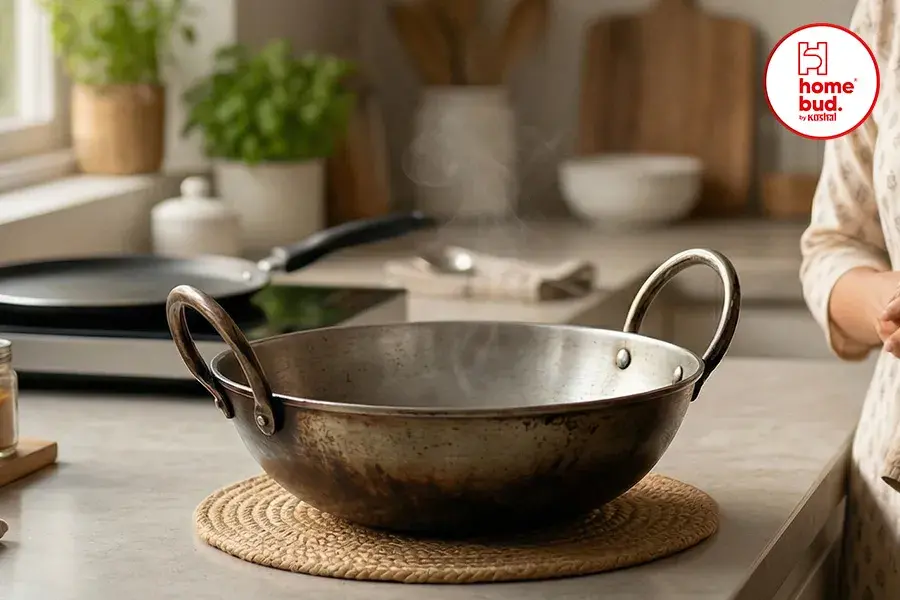
This step feels obvious but is more important than most people realise. Plunging a hot aluminium kadai into cold water or running cold water directly onto a heated aluminium vessel causes thermal shock. Aluminium expands significantly when heated and contracts rapidly when cooled suddenly. Repeated thermal shock warps the base of the kadai over time, which ruins the even contact with the gas burner and causes uneven heating during cooking.
Beyond the structural damage, a hot kadai is also more likely to cause any oil or food residue to harden further when water hits it rather than loosening it. Allow the kadai to cool on the counter for ten to fifteen minutes after cooking before introducing any water or cleaning solution. A slightly warm kadai is fine and actually makes cleaning slightly easier because the grease has not completely reset to room temperature. A hot kadai fresh off the flame should always be left to cool first.
Step 2 — Rinse Away Loose Food and Oil Before Scrubbing
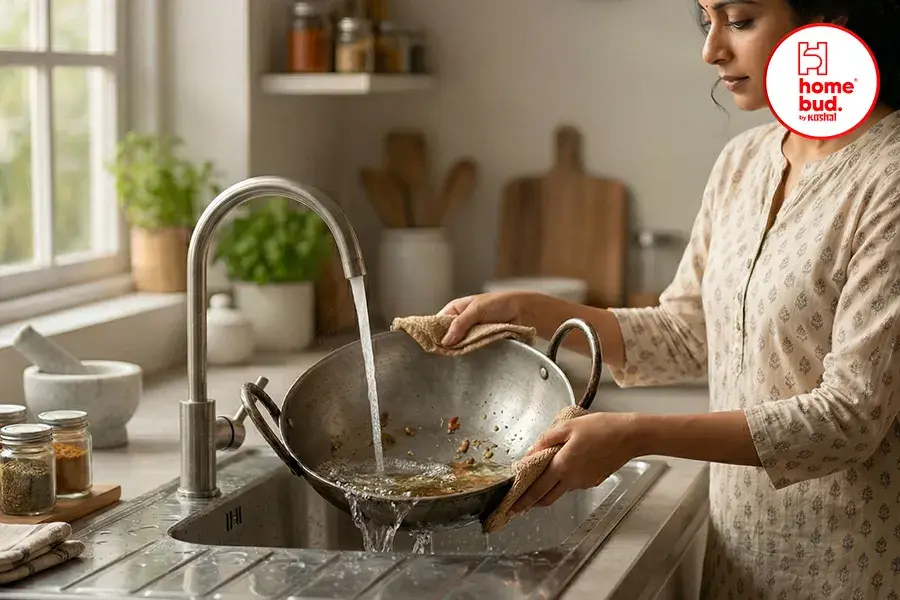
Once the kadai is at a comfortable temperature, hold it under warm running water and rinse away all loose food particles, oil, and cooking residue. Use your hand or a soft cloth to wipe out any large pieces of food while rinsing. This initial rinse removes the surface layer of loose grease and food that does not need any cleaning solution to shift, which means your sponge and cleaning solution can focus their effort on the actual staining rather than being used up on material that water alone would have removed.
For a kadai with significant oil residue from deep frying, pour a small amount of hot water into the kadai while it is still slightly warm and allow it to sit for two minutes before rinsing. The hot water loosens the oil film and makes the rinse significantly more effective before any soap is introduced.
Step 3 — Apply a Mild Cleaning Solution and Let It Soak
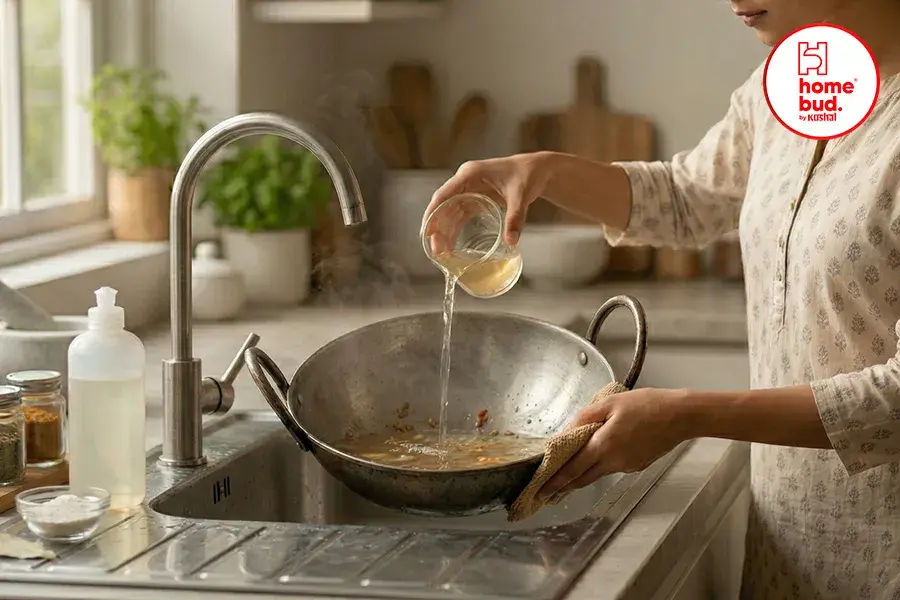
After rinsing, fill the kadai with warm water and add a small amount of mild liquid dish soap. Do not use washing powder, strong alkaline cleaners, or bleach-based products on aluminium. These react with the aluminium surface, cause discolouration, and strip the natural oxidised layer that actually protects the metal over time.
For an aluminium kadai with light to moderate grease buildup from regular cooking, a standard dish soap and warm water soak for five to ten minutes is sufficient to loosen the grease before scrubbing. For heavier grease buildup, add a tablespoon of white vinegar to the warm soapy water and allow it to soak for fifteen minutes. The mild acidity of the vinegar helps break down oil and grease bonds with the aluminium surface without damaging the metal.
The soaking time is what does most of the actual cleaning work. Skipping the soak and going straight to scrubbing means you are using physical force to remove what a soaking solution would have loosened on its own.
Step 4 — Scrub Gently with the Right Sponge
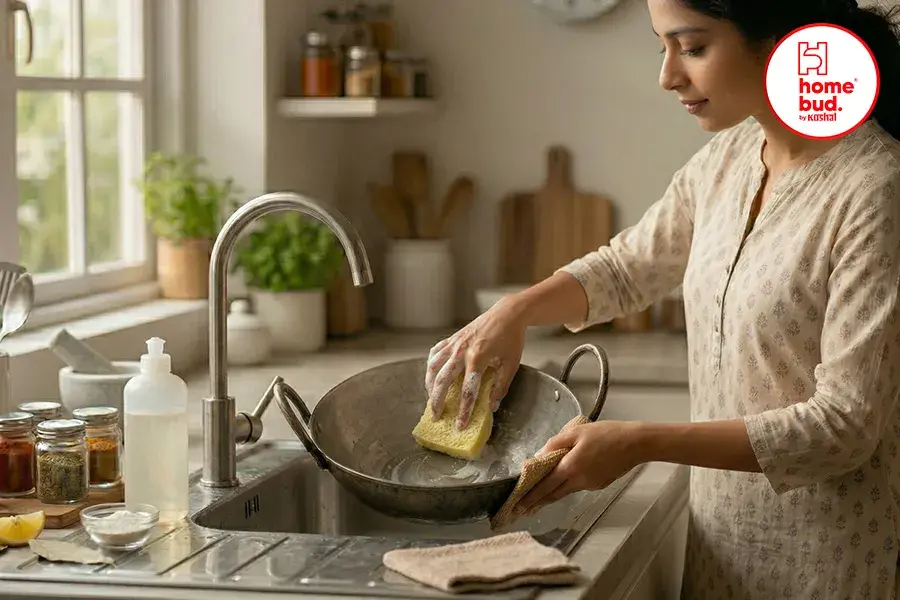
After soaking, use the Homebud Sandwich Sponge Scrub to clean the interior surface of the kadai. Start with the soft foam side for the main interior surface, working in gentle circular motions from the centre outward. The foam side with dish soap and the loosened grease from the soak should clean the standard cooking surface with minimal effort.
For areas with more stubborn residue — the bottom interior where food makes direct contact with the heat, the curved sides where tadka splatter settles and dries — flip to the slightly abrasive scrub side of the sandwich sponge and apply slightly firmer circular scrubbing pressure. The scrub side provides the friction needed to lift baked-on residue without scratching the aluminium surface the way a steel scrubber or rough pad would.
Never use a steel scrubber on the interior cooking surface of an aluminium kadai. Steel wool and steel mesh scrubbers leave microscopic scratches that roughen the surface, make it more likely to accumulate food residue in future, and over time can create pitting that becomes difficult to clean properly. The sandwich sponge is designed to give you effective scrubbing without surface damage.
Step 5 — Tackle Burnt Spots and Black Stains with Natural Remedies
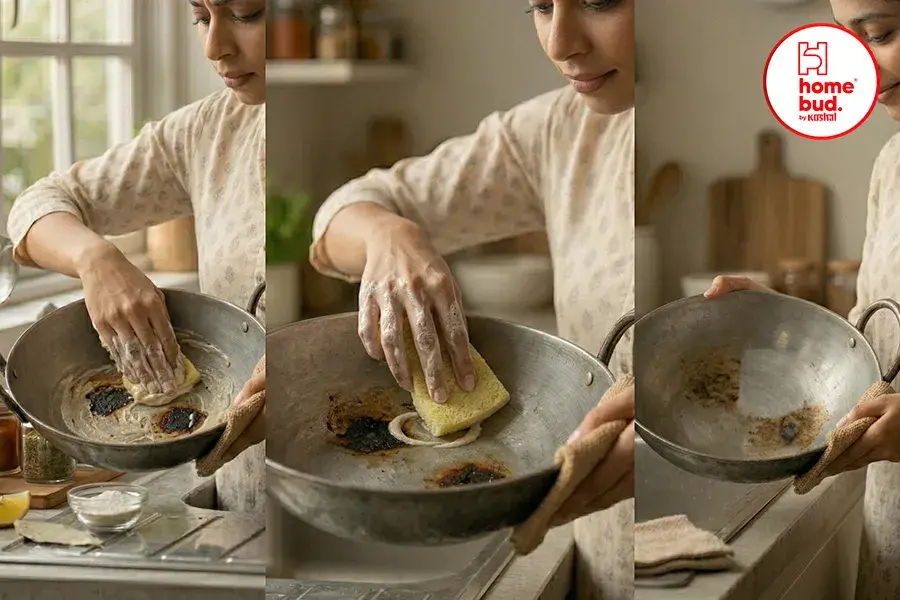
Burnt spots and black stains on the interior of an aluminium kadai need a more targeted approach than regular scrubbing. Here are the home remedies that work best and how to use each one correctly.
Baking soda paste is the most effective and gentlest method for burnt interior stains on aluminium. Mix two tablespoons of baking soda with just enough water to form a thick paste. Apply the paste directly to the burnt area and allow it to sit for fifteen to twenty minutes. The alkaline baking soda gently reacts with the carbon deposits in the burnt stain, loosening the bond with the aluminium surface. After soaking, scrub the area with the soft side of your sandwich sponge in circular motions. For stubborn patches, apply fresh paste and repeat the soak. Most interior burnt stains respond well to two rounds of this method.
Lemon and salt is a traditional Indian kitchen cleaning method that works particularly well for light staining and for restoring some of the natural brightness to a dull aluminium kadai surface. Cut a lemon in half, dip the cut side in coarse salt, and use the lemon directly to scrub the stained area in circular motions. The citric acid in the lemon breaks down the stain chemically while the salt provides gentle physical abrasion. This method is safe on aluminium and leaves a fresh smell. Rinse thoroughly after scrubbing.
White vinegar boil method is the most effective approach for widespread interior staining or for a kadai that has significant yellowing or dullness across the entire interior surface. Fill the kadai with equal parts water and white vinegar and bring it to a gentle boil on the stove. Allow it to boil for five to seven minutes, then turn off the flame and allow the solution to cool in the kadai. The acetic acid in the vinegar loosens staining and mineral deposits from the aluminium surface during the boiling process. Once cool, empty the kadai and scrub with the soft sponge. This method is excellent for a periodic deep clean every few weeks.
For the exterior base and outer walls with heavy carbon blackening from direct gas flame exposure, use the Homebud Stainless Steel Scrubber with dish soap and water on the outside surface only. The steel scrubber is safe on the exterior of the kadai where the flame makes contact and where the surface does not need the same protection as the interior cooking surface. Scrub the base and outer walls in firm circular motions, rinsing frequently to check progress.
Step 6 — Rinse Thoroughly and Dry Properly
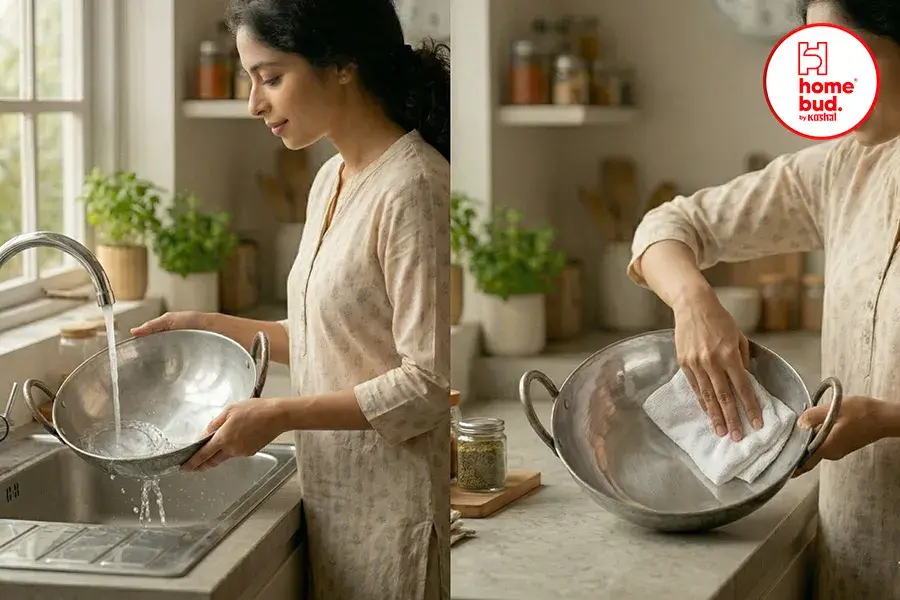
Once cleaning is complete, rinse the kadai thoroughly under running water, ensuring all soap, baking soda, vinegar, or lemon residue is completely washed away. Residual baking soda or vinegar left on aluminium after cleaning can continue reacting with the metal surface and cause discolouration over time if not rinsed completely. Run water over the entire interior and exterior surface and use your hand to feel for any soapy residue that needs a final rinse.
After rinsing, dry the kadai immediately with a clean, dry cloth rather than allowing it to air dry. Aluminium left wet for extended periods develops water marks that look like white or grey spots on the surface — these are mineral deposits from the water. Immediate drying with a cloth prevents these marks from forming and keeps the kadai looking clean and shiny after every wash.
Store the kadai in a dry place rather than stacking it while still damp. Moisture trapped between stacked vessels is one of the leading causes of dull grey oxidation and water staining on aluminium cookware.
Natural Home Remedies for Deep Cleaning Aluminium Kadai
Beyond the step by step routine, here are the most effective natural remedies for specific aluminium kadai problems that come up in Indian kitchens.
For heavy haldi and masala staining on the interior surface, make a paste of baking soda and lemon juice rather than baking soda and water. The combination of alkaline baking soda and acidic lemon juice creates a mild fizzing reaction that is particularly effective at lifting pigment-based staining from spices. Apply to the stained area, allow to sit for twenty minutes, and scrub with the soft sponge side.
For restoring shine to a dull aluminium kadai, a paste of cream of tartar and water applied to the interior surface and left for fifteen minutes before scrubbing and rinsing can noticeably brighten an oxidised aluminium surface. Cream of tartar is acidic and gently removes the grey oxidised layer that causes aluminium to look dull without damaging the metal beneath.
For a kadai with old accumulated grease that regular washing has not removed, fill it with water, add two tablespoons of baking soda and two tablespoons of white vinegar, and bring it to a boil. The combination is more effective than either ingredient alone for heavy grease that has been baked onto the aluminium surface over multiple cooking sessions.
Common Mistakes That Damage Aluminium Kadai During Cleaning
Even people who clean their kadai regularly make these mistakes without realising the damage they are causing.
Using a steel scrubber on the interior cooking surface is the most damaging mistake. The scratches from a steel scrubber accumulate over time, roughening the interior surface and making it significantly more difficult to clean in future. Always use a soft non-scratch sponge on the interior.
Using dishwasher or washing powder instead of liquid dish soap is harmful to aluminium. The strong alkaline compounds in laundry detergents react with aluminium and cause visible pitting, darkening, and surface damage that cannot be reversed.
Soaking the kadai in water for hours at a time causes mineral deposits to settle on the aluminium surface and accelerates oxidation. A fifteen to twenty minute soak is sufficient. Never leave aluminium vessels soaking overnight.
Cleaning immediately after cooking while the kadai is still very hot, as discussed in Step 1, causes thermal shock that warps the base over time.
Skipping drying after washing and leaving the kadai wet is one of the most common causes of the dull grey water marks and oxidation that develop on aluminium kadais over months of use.
How to Maintain Your Aluminium Kadai and Keep It Looking Good Longer
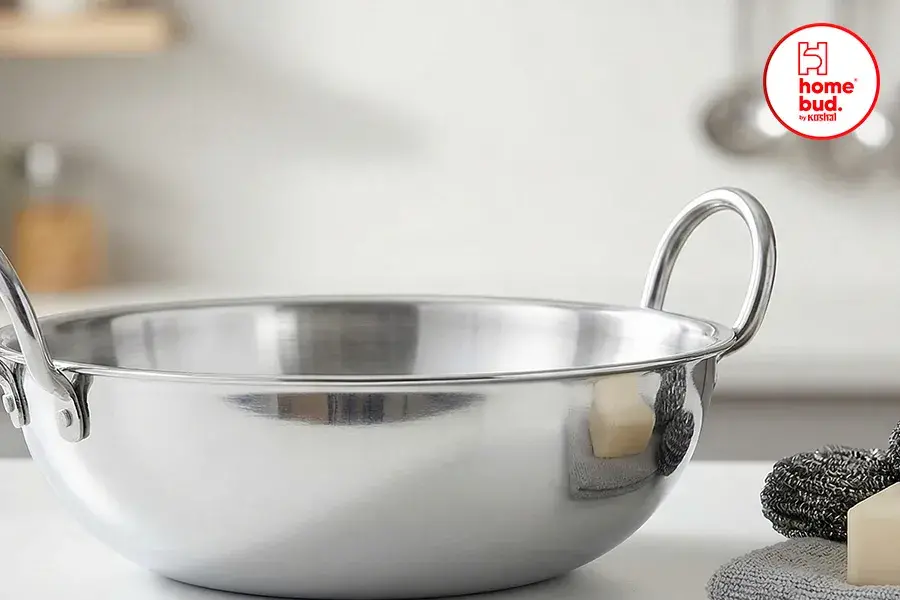
Maintaining your aluminium kadai well between deep cleaning sessions keeps it in better condition and makes regular cleaning significantly easier.
Clean the kadai after every single use rather than leaving it for later. A kadai that is rinsed and lightly washed immediately after cooking when the grease is still fresh takes thirty seconds to clean properly. A kadai left with dried grease overnight takes ten minutes of soaking and scrubbing to get to the same result.
After drying, rub a very small amount of cooking oil onto the interior surface of the kadai with a dry cloth before storing it. This thin oil layer acts as a protective coating that prevents oxidation, reduces food sticking during the next cooking session, and keeps the aluminium surface conditioned between uses.
Avoid cooking highly acidic foods like tomatoes, tamarind, and lemon-based dishes in an aluminium kadai for extended periods. The acid reacts with the aluminium and can cause a slightly metallic taste in the food as well as accelerating surface discolouration. For long-simmering acidic dishes, a stainless steel or coated vessel is the better choice.
FAQ — How to Clean Aluminium Kadai
How do I remove burnt black stains from inside my aluminium kadai?
Make a thick paste of baking soda and water, apply it directly to the burnt area, and allow it to sit for fifteen to twenty minutes before scrubbing with a soft non-scratch sponge in circular motions. For severe burning, try the white vinegar boil method — fill the kadai with equal parts water and white vinegar, boil for five to seven minutes, cool, and then scrub. Repeat if needed. Never use a steel scrubber on the interior surface.
Can I use a steel scrubber to clean aluminium kadai?
Use a steel scrubber only on the exterior base and outer walls of the kadai where direct gas flame creates carbon blackening. Never use a steel scrubber on the interior cooking surface of an aluminium kadai as it causes scratches that roughen the surface and make future cleaning harder. The Homebud Sandwich Sponge Scrub is the right tool for interior cleaning.
Why does my aluminium kadai turn grey and dull even after washing?
The grey dullness is aluminium oxide — a natural oxidation layer that forms on aluminium when it is exposed to air and moisture. It is harmless but makes the kadai look old. To restore brightness, use the lemon and salt scrubbing method or a cream of tartar paste on the interior surface, which gently removes the oxidised layer without damaging the metal beneath.
How often should I deep clean my aluminium kadai?
Light cleaning after every use keeps the kadai in good daily condition. A deeper clean using baking soda paste or the vinegar boil method should be done every two to four weeks depending on how frequently the kadai is used and what type of cooking it handles. If you deep fry regularly, a weekly deep clean is worthwhile.
Can I use tamarind to clean an aluminium kadai?
Yes. Soaking a small piece of tamarind in warm water and using it to scrub the interior surface is a traditional Indian method that works on light staining and dullness. The mild tartaric acid in tamarind is safe on aluminium and effective at lifting light tarnish and food residue. It is not strong enough for heavy burnt stains but works well as a regular maintenance clean.
What dish soap is safe for cleaning aluminium kadai?
Any standard mild liquid dish soap is safe for aluminium. Avoid washing powder, laundry detergent, bleach-based cleaners, and strongly alkaline cleaning products. These react with aluminium and cause surface damage over time. A gentle liquid dish soap with warm water and a soft sponge is all you need for daily cleaning of an aluminium kadai.
A clean aluminium kadai is not just about appearance. It cooks better, lasts longer, and makes every meal preparation feel like a fresh start. Follow the six steps above consistently, use the right tools for the right surfaces, and rely on natural home remedies for deeper cleaning when needed. Your kadai has years of great cooking ahead of it — give it the care that keeps it performing at its best.
Ready to clean smarter? The Homebud Sandwich Sponge Scrub and the Homebud Stainless Steel Scrubber are built for exactly this kind of kitchen cleaning — gentle where it needs to be, tough where it counts.