
How Do You Clean a Water Bottle
-
Posted by
homebud
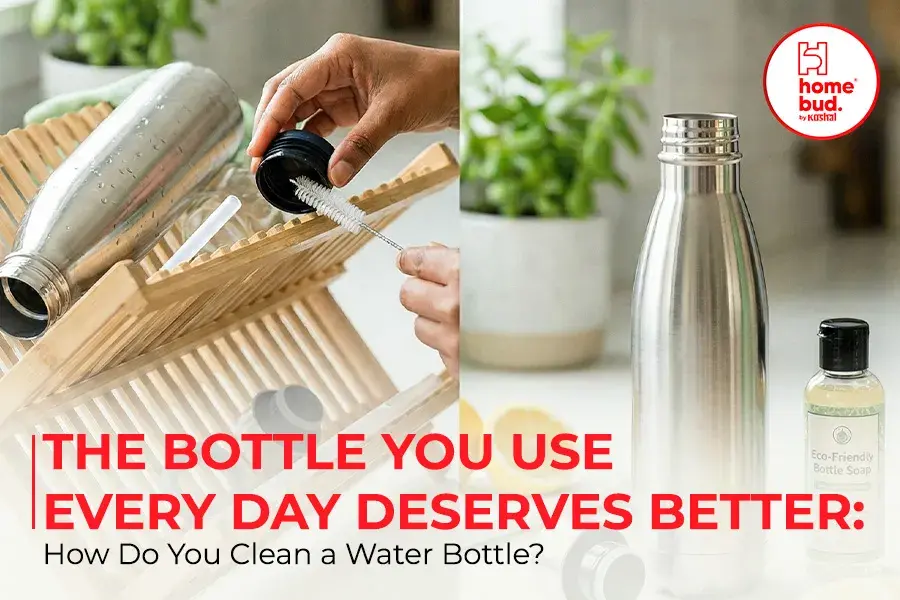
Your water bottle goes everywhere with you. To the office, to the gym, to school, on travel, and back home again. You fill it multiple times a day, drink from it constantly, and if you are honest, you probably rinse it quickly under the tap and call it clean.
Here is what is actually happening inside that bottle between those quick rinses. Moisture sits inside a sealed dark environment every time you close the lid. Backwash from drinking deposits saliva and oral bacteria into the water with every sip. If you ever fill it with anything other than plain water — jeera water, lemon water, coconut water, nimbu pani, or a protein shake — residue from those drinks clings to the inner walls and the lid seal. Over days and weeks, this residue builds into a biofilm that develops odour, and in the right conditions, mould.
The good news is that a clean, fresh-smelling water bottle is not difficult to achieve. It requires the right method matched to your bottle material, a good cleaning tool, and a simple routine that takes less than five minutes a day. This guide covers exactly how to clean water bottle at home whether yours is stainless steel, plastic, or has a silicone lid with hidden crevices — using ingredients already in your kitchen.
Why Your Water Bottle Needs More Than a Quick Rinse
Most people assume that because they only put water in their bottle, a quick rinse is sufficient. This assumption is why so many reusable bottles develop that stale, musty smell within a few weeks of purchase.
Even plain water leaves behind mineral deposits from hard water — the white chalky residue you may notice building up around the mouth and inner walls of the bottle over time. Hard water is particularly common across Indian cities, and the mineral buildup it creates inside a bottle provides a surface for bacteria to attach to and multiply on.
The inside of a closed water bottle is dark, moist, and warm — exactly the conditions that mould and bacteria thrive in. The lid, the silicone sealing ring under the cap, the threads of a screw top, and the inside of any straw or spout are the areas where bacterial and mould growth concentrates first because they trap moisture and are the most difficult to rinse clean with plain water.
A bottle that smells sour, musty, or stale even right after rinsing is a bottle that needs a proper clean — not just more water.
What You Need to Clean a Water Bottle Properly
Having the right tools makes the difference between a bottle that looks clean and one that actually is clean all the way to the bottom.
A bottle brush or a sponge that can reach the interior base of the bottle is the most important tool. Most standard kitchen sponges are too wide to fit inside a narrow-mouth bottle. The Homebud Kitchen Scrub Sponge with its soft foam side and slightly abrasive scrub surface is ideal for wider-mouth bottles and for cleaning the exterior and lid area thoroughly. For bottles with a narrower opening, use the soft side of the Homebud Sandwich Sponge Scrub folded slightly to reach inside.
For stainless steel water bottles with mineral scale buildup or residue on the exterior base, the Homebud Stainless Steel Scrubber can be used carefully on the outer surface of the bottle — never inside a steel bottle as it scratches the interior lining.
For cleaning agents, you need mild liquid dish soap for daily cleaning, baking soda for odour removal and deep cleaning, and white vinegar for mineral deposit removal and stainless steel bottle deep cleaning. All three are standard Indian kitchen staples.
A small brush, a toothbrush, or a cotton bud is essential for cleaning the threads of a screw cap, the silicone sealing ring under the lid, and the inside of any straw or spout. These narrow areas trap the most residue and are where mould develops first.
How to Clean Water Bottle — Daily Cleaning Method
Daily cleaning does not need to be complicated. The goal is to remove the day’s buildup before it settles and becomes harder to remove tomorrow.
Fill the bottle halfway with warm water and add two to three drops of liquid dish soap. Close the lid and shake the bottle vigorously for thirty seconds so the soapy water reaches every part of the interior. Open the lid and use your sponge or scrubber to reach inside and scrub the inner walls, working from the opening down toward the base. If your sponge can reach the base, give it a thorough scrub. If not, continue shaking with the soapy water and follow up with several vigorous rinses.
Remove the lid and clean it separately. The lid is the most bacteria-prone part of the bottle and needs individual attention every single day. Wash the outside of the lid, the threads of the screw top, and the inside of the lid where it contacts your mouth. Use a small brush or a toothbrush to clean the threads and any grooves. If the lid has a silicone ring or seal inside it, remove it if possible and wash it separately under warm running water with a small amount of dish soap, making sure to clean both sides.
Rinse the bottle and lid thoroughly under running water until all soap is removed. Soap residue left inside a water bottle makes the water taste sour and can irritate the throat. Make sure the rinse water runs clear and there is no soapy film remaining. Allow both the bottle and the lid to air dry completely with the lid off before reassembling. Never store the bottle with the lid on while still damp inside.
How to Clean Inside of Water Bottle — Deep Cleaning with Baking Soda
For a proper deep clean that removes built-up residue, odour, and the early stages of discolouration, baking soda is the most effective and safest cleaning agent for both plastic and stainless steel water bottles.
Add one to two tablespoons of baking soda to the empty bottle. Fill the bottle with warm water — not boiling, just warm. For a stainless steel bottle, warm water is safe and effective. For a plastic bottle, use warm rather than hot water to avoid warping or releasing any compounds from the plastic. Close the lid and shake the bottle well for a full minute so the baking soda solution reaches every surface inside. Then set the bottle down and allow the solution to soak for fifteen to thirty minutes.
After soaking, use your sponge to scrub the interior walls and base while the baking soda solution is still inside. The baking soda acts as a gentle abrasive that lifts residue and biofilm from the walls without scratching the interior surface. Rinse the bottle thoroughly with clean water — baking soda needs at least three to four good rinses to remove completely. Check that no white powdery residue remains on the interior walls before drying.
Add a tablespoon of baking soda to the lid and any detachable parts and allow them to soak in warm water in a bowl alongside the bottle cleaning. Scrub the lid thoroughly with a small brush after soaking and rinse well.
This deep clean method should be done at least once a week if you use the bottle daily, and after every time you fill the bottle with any drink other than plain water.
How to Remove Smell from Water Bottle — Vinegar Soak Method
A persistent smell from a water bottle — particularly that sour, stale smell that does not go away even after soap washing — is a sign that bacterial biofilm has built up on the interior surfaces. White vinegar is the most effective household remedy for this.
Fill the bottle halfway with equal parts white vinegar and water. For a bottle with a strong smell, use a slightly stronger solution of two parts vinegar to one part water. Close the lid and shake well, then set the bottle on its side or upright and allow the vinegar solution to soak for at least thirty minutes. For severe odour or a bottle that has been left unused for a long time, soak overnight.
The acetic acid in white vinegar breaks down the bacterial biofilm and neutralises the compounds causing the odour at the source rather than masking them. After soaking, empty the bottle and rinse thoroughly — at least four to five rinses with clean water to remove the vinegar smell completely. Allow to air dry completely with the lid off.
For stainless steel water bottles specifically, the overnight vinegar soak is the best method for removing the metallic or stale smell that can develop over months of daily use. The vinegar also helps dissolve the mineral deposits from hard water that accumulate on the interior walls of steel bottles over time.
For the lid and silicone seal, soak them in undiluted white vinegar for fifteen minutes, then scrub with a small brush and rinse well. The silicone sealing ring is the single most common source of persistent bottle odour because it traps moisture between the ring and the lid body and rarely gets cleaned properly during a regular wash.
How to Clean Stainless Steel Water Bottle
Stainless steel water bottles are more hygienic than plastic in the long run because the smooth non-porous interior surface does not absorb odour or harbour bacteria the way plastic does. However, they develop their own specific cleaning challenges — primarily mineral scale from hard water and the metallic-sour smell that develops when they are not cleaned frequently enough.
For daily cleaning, follow the standard dish soap method described earlier. Use warm water — never boiling — for a stainless steel bottle. Boiling water is not necessary for effective cleaning and rapid temperature changes can affect the vacuum seal in insulated bottles over time.
For weekly deep cleaning of a stainless steel water bottle, the white vinegar soak method is the most effective. Fill with equal parts vinegar and water, soak for thirty minutes, and rinse thoroughly. This removes both odour and the mineral deposits from hard water that build up as a white chalky film on the interior walls.
Never use a steel scrubber, a rough abrasive pad, or bleach inside a stainless steel water bottle. Steel scrubbers scratch the interior lining and create microscopic grooves where bacteria can accumulate. Bleach reacts with the stainless steel and can affect the taste of water permanently. Use only a soft sponge or a bottle brush on the interior of a stainless steel bottle.
For the exterior of a stainless steel bottle, a damp cloth with mild soap is sufficient for regular cleaning. For stubborn marks or residue on the outer surface, the Homebud Stainless Steel Scrubber works well on the exterior metal surface without scratching it.
How to Clean Plastic Water Bottle
Plastic water bottles require slightly more careful handling than steel because plastic is a porous material at the microscopic level. This means plastic absorbs odour over time, can stain from coloured drinks, and the microscopic pores can harbour bacteria that a surface wash does not fully remove.
For daily cleaning, fill with warm water and a few drops of dish soap, shake well, and scrub with the soft side of the Homebud Kitchen Scrub Sponge. The soft foam is gentle enough for plastic surfaces and will not create scratches that worsen the porous nature of the material. Never use hot water in a plastic bottle — heat causes plastic to leach compounds and also warps the bottle shape over time, particularly around the lid threads.
For odour in a plastic bottle, the baking soda soak method works better than vinegar because vinegar’s acidity can interact with certain types of plastic over time. Fill with warm water, add two tablespoons of baking soda, soak for thirty minutes, scrub, and rinse thoroughly.
For discolouration or staining from drinks like nimbu pani, haldi water, or protein shakes, a paste of baking soda and water applied to the stained area and left for fifteen minutes before scrubbing with the soft sponge side removes most staining without damaging the plastic surface.
Replace a plastic water bottle if the interior surface shows visible scratching, if the plastic has developed a permanent cloudiness or yellowing, or if odour persists even after thorough cleaning with baking soda. These are signs that the porous surface has degraded to the point where effective cleaning is no longer possible.
The Hidden Part Most People Never Clean — Silicone Lid and Seal
If your water bottle has a silicone lid, a sealing ring, or a push-button spout, this section is the most important part of the guide for you. These components are where mould grows fastest and where the source of persistent bottle odour is almost always located — even in bottles that otherwise look perfectly clean.
The silicone ring inside the lid of most water bottles sits in a groove that is almost impossible to clean thoroughly without removing the ring. Every time you close the lid, any water or residue inside the bottle is pressed against this ring and trapped in the groove behind it. Over days of use without cleaning this groove, mould can begin growing in a hidden location that regular washing never reaches.
Check your lid for a removable silicone sealing ring. If it is removable, take it out every time you deep clean the bottle. Soak the ring in undiluted white vinegar for fifteen minutes, scrub both sides with a small brush, rinse thoroughly, and allow it to dry completely before replacing it. Clean the groove in the lid where the ring sits with a toothbrush or a cotton bud dipped in white vinegar. This one step eliminates the most common source of water bottle odour and mould in most households.
For push-button or flip-top lids, use a toothbrush with dish soap to clean the moving parts, the button mechanism, and the inside of the spout opening every single week. These mechanisms trap moisture and residue in their hinges and seals and are extremely common sources of mould in gym water bottles and children’s water bottles.
How Often Should You Clean Your Water Bottle
Here is the simple cleaning schedule that keeps a water bottle genuinely hygienic.
Rinse with warm water after every single use, even if you only put plain water in it. This thirty-second step prevents the majority of residue from settling.
Deep clean with dish soap and a sponge every day if you use the bottle daily. This is the minimum standard for a bottle used multiple times a day. If the bottle is only used occasionally, clean it before every use and again after.
Do a baking soda or vinegar deep clean at least once a week for daily-use bottles. If you ever fill the bottle with anything other than plain water, do a baking soda or vinegar soak immediately after that use before washing normally.
Clean the lid and silicone seal every week as a separate cleaning step, not just when you wash the bottle body. Remove the silicone ring if possible and clean the groove each time.
Replace the bottle if you notice cracks, permanent discolouration, a smell that does not go away after a full cleaning cycle, or visible mould that has penetrated into the material rather than sitting on the surface.
Quick Troubleshooting Guide for Common Water Bottle Problems
Bottle smells even after washing — The odour source is almost always the silicone lid seal or the lid threads. Remove the silicone ring, soak everything in white vinegar for thirty minutes, scrub, and rinse. Repeat twice if needed.
White chalky deposits on the inside — This is mineral scale from hard water. Fill with equal parts white vinegar and water, soak for one hour, and rinse thoroughly. The vinegar dissolves mineral deposits effectively.
Black or green spots inside the lid or bottle — This is mould. Use undiluted white vinegar applied directly to the mould with a small brush, allow to sit for fifteen minutes, scrub, and rinse with hot water. For heavy mould growth, repeat the treatment and allow the solution to soak longer before scrubbing.
Bottle tastes like plastic even after cleaning — Fill with a baking soda and warm water solution, soak overnight, and rinse thoroughly. If the plastic taste persists, it is a sign the plastic surface has degraded and the bottle should be replaced.
Stains from coloured drinks inside the bottle — A baking soda paste applied to the stain and left for fifteen to twenty minutes before scrubbing removes most organic staining from drinks. For stubborn protein shake staining, repeat the treatment twice.
FAQ — How to Clean Water Bottle
Use the Homebud Sandwich Sponge Scrub folded slightly to reach inside the bottle opening. For deep cleaning without any brush, fill the bottle with a baking soda and warm water solution and shake vigorously for two minutes before soaking and rinsing. The agitation of shaking combined with the cleaning solution reaches all interior surfaces.
Fill the bottle with equal parts white vinegar and water and allow it to soak overnight. The vinegar neutralises the bacterial biofilm causing the odour. Rinse thoroughly the next morning with at least four to five clean water rinses. Allow to air dry completely with the lid off. This method is safe and effective for all stainless steel bottles.
Yes. Baking soda is the safest and most effective deep cleaning agent for plastic bottles. Add two tablespoons of baking soda to warm water in the bottle, soak for fifteen to thirty minutes, scrub with a soft sponge, and rinse thoroughly. It removes odour, light staining, and biofilm without damaging the plastic surface.
Rinse with warm water after every use. Wash with dish soap and a sponge daily. Do a baking soda or vinegar deep clean at least once a week. Clean the lid and silicone ring separately every week. If you fill the bottle with any drink other than water, deep clean it immediately after that use.
The silicone sealing ring inside the lid is the most common location for mould growth in water bottles. It traps moisture in its groove and is the area most often missed during regular washing. Remove the ring during deep cleaning, soak in white vinegar, and clean the groove in the lid separately with a toothbrush or cotton bud every week.
You can use the same sponge as long as it is clean and has not been used on raw meat or strongly spiced dishes that may leave residue. The Homebud Kitchen Scrub Sponge is a practical everyday option for both dish and bottle cleaning. Always ensure the sponge itself is clean and dry between uses — a dirty sponge introduces bacteria rather than removing it.
A clean water bottle is one of the simplest investments you can make in your daily health and hygiene. It takes less than five minutes a day done properly, costs nothing beyond what is already in your kitchen, and means the water you drink tastes exactly the way it should — clean, fresh, and completely neutral. Follow the routine above, pay special attention to the lid and silicone seal that most people miss, and your bottle will stay genuinely clean for as long as you use it.
Looking for the right scrubber for your kitchen cleaning routine? Explore the full Homebud sponge and scrubber range at homebud.in/product-category/sponge/ and find the right tool for every surface in your home.