
Every Indian Kitchen Has That One Burnt Vessel
-
Posted by
homebud
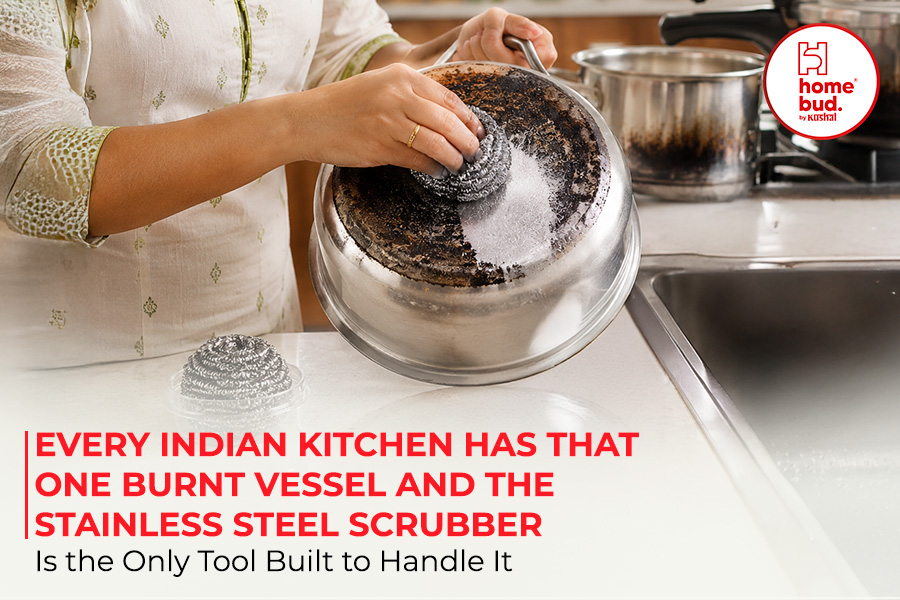
You know the one. The pressure cooker base with the burnt dal that has been sitting since last night. The iron kadai with the baked-on masala from the Sunday mutton that no sponge has made any impression on. The steel pot with the blackened bottom that you have soaked twice, scrubbed with the soft side and then the rough side of your kitchen sponge, and still left on the drying rack looking exactly as charred as when you started.
There is a specific kitchen frustration in giving genuine effort to cleaning a vessel and having almost nothing to show for it. And most Indian households experience this regularly because the tool that the situation calls for is not a sponge. It is not steel wool from a box of soap pads. It is a stainless steel scrubber — a compact, dense ball or pad of interwoven or wound stainless steel wire that generates the abrasive force needed to break through the carbonised food deposits, baked-on grease, and stubborn mineral scale that daily Indian cooking leaves on pots, kadais, and pressure cookers.
What a Stainless Steel Scrubber Actually Is and How It Works
A stainless steel scrubber is a cleaning tool made from fine gauge stainless steel wire that has been either tightly woven into a mesh structure or wound into a dense coil ball. The result is a compact, highly abrasive cleaning surface that looks like a small metallic ball or pad and that generates significantly more scrubbing force per square centimetre than any sponge, foam pad, or natural fibre scrubber can produce.
The mechanism is simple and effective. The steel wire creates hundreds of tiny contact points against the vessel surface with every scrubbing stroke. Each contact point generates a micro-abrasive force that breaks down the carbonised food residue, baked-on grease, and mineral deposits that bond to the surface of steel vessels during cooking. The wire itself is thin and flexible enough to reach into the curved interior of a kadai or the ridged base of a pressure cooker without requiring extreme pressure from the user.
What makes stainless steel specifically the right material for this scrubber is the combination of hardness, corrosion resistance, and wire formability. Steel is hard enough to generate the abrasive force needed for serious burnt food removal. Stainless steel’s corrosion resistance means the scrubber does not rust when used in a wet kitchen environment, which is what distinguishes it from ordinary steel wool that leaves rust marks on the vessels it cleans and that deteriorates rapidly in the presence of moisture. The fine wire gauge allows the scrubber to be formed into a compact, dense structure that handles the curved and textured surfaces of Indian cooking vessels effectively.
The Two Types of Stainless Steel Scrubber and What the Difference Means for Your Kitchen
When you look at stainless steel scrubbers available in the Indian market, you will find two distinctly different constructions — the woven type and the winding type. Both use stainless steel wire. Both clean burnt utensils. The construction difference between them has real implications for how long the scrubber lasts and how it performs over its lifespan.
The woven stainless steel scrubber is made by interlacing fine stainless steel wire strands into a mesh fabric that is then shaped into a ball or pad. Think of it like a tightly knitted fabric but made from steel wire rather than thread. The interlocking structure means each wire strand is held in place by the surrounding strands. When you use the scrubber, the mesh structure flexes as a unit rather than individual wires moving independently. This structural integrity means the woven scrubber maintains its shape and density over extended use. Individual wires do not separate from the ball and end up embedded in the vessel surface or washed down the drain. The scrubbing surface remains consistent from first use to final use. For these reasons, woven construction is considered higher quality and is the preferred type for regular heavy-duty kitchen use.
The winding stainless steel scrubber is made by winding a continuous length of steel wire into a coil or spiral ball. This is the more commonly available and more affordable construction in the Indian market. The winding structure is simpler to manufacture and works effectively when new. Over time with repeated use, the wound wire tends to unravel slightly from the outer layers, which causes individual wire strands to come loose. These loose strands can scratch vessel surfaces unevenly, can embed in softer materials, and reduce the overall density and effectiveness of the scrubber as it loses its tight wound structure. Winding type scrubbers are a practical everyday option but typically have a shorter effective lifespan than woven types under the same use conditions.
For daily Indian kitchen use on pressure cookers, steel kadais, and heavy pots, a woven or tightly constructed stainless steel scrubber delivers more consistent long-term performance. The Homebud Stainless Steel Scrubber is built to a construction standard that maintains its structure and scrubbing effectiveness through regular daily use rather than degrading quickly after the first few uses.
Stainless Steel Grades and Why They Matter for an Indian Kitchen Scrubber
This is the technical detail that most product listings mention without explaining. The stainless steel grade used in a scrubber wire determines how rust-resistant the scrubber is and how long it maintains its performance in a kitchen environment.
Grade 410 stainless steel is a martensitic grade with good hardness and moderate corrosion resistance. It is the most commonly used grade for kitchen scrubbers because its hardness gives it excellent abrasive performance for breaking through tough burnt deposits. It provides adequate rust resistance for normal kitchen use where the scrubber is rinsed and dried between uses. Grade 410 is the balance point between abrasive effectiveness and corrosion resistance that makes it the standard recommendation for Indian kitchen scrubbers.
Grade 430 stainless steel is a ferritic grade with better corrosion resistance than grade 410 but slightly lower hardness. It is a good option for scrubbers used in particularly humid environments or for households that do not always dry their scrubbers between uses. The improved rust resistance reduces the risk of the scrubber developing surface oxidation in sustained damp conditions.
Grade 304 stainless steel is an austenitic grade with the highest corrosion resistance of the three. It is used in the most premium scrubbers and maintains its clean silver appearance longest under wet kitchen conditions. Grade 304 wire is also the most expensive, which is why it appears in higher-priced products. For most Indian household use, grade 304 provides more rust resistance than is strictly necessary for the actual conditions of daily kitchen use.
For the large majority of Indian home kitchens where the scrubber is used daily, rinsed after each use, and stored in a reasonably dry position, grade 410 or 430 stainless steel provides excellent practical performance at a price that makes the scrubber affordable as a regularly replaced consumable kitchen item.
Which Utensils a Stainless Steel Scrubber Is Safe On and Which Ones It Will Damage
This is the most important practical information about stainless steel scrubbers and the detail that prevents the most common and most costly kitchen cleaning mistake. A stainless steel scrubber is an abrasive tool. Abrasive tools are powerful on the right surfaces and damaging on the wrong ones.
Safe and effective surfaces for stainless steel scrubbers
Stainless steel cooking vessels including pressure cookers, steel kadais, heavy-bottomed steel pots, steel dekchis, and steel plates are the primary and most effective use case for an SS scrubber. The scrubber’s abrasive surface generates exactly the right force for cleaning the carbonised deposits and baked-on grease that daily Indian cooking leaves on these vessels without risking any damage to the robust steel surface.
Iron and cast iron cookware including seasoned iron kadais and tawas can be cleaned with an SS scrubber for serious burnt food removal. After scrubbing, always re-season the cast iron surface immediately with a thin coat of cooking oil to restore its protective layer, which the scrubbing removes along with the burnt deposit.
Hard anodised aluminium cookware in good condition can tolerate gentle SS scrubbing for tough stains. Use lighter pressure than you would on steel and avoid scrubbing the anodised surface aggressively or repeatedly in the same area.
Outdoor grills, gas burner grates, and stove rings accumulate carbonised grease and food splatter that an SS scrubber removes efficiently. These are hard metal surfaces that have no coating to protect and can tolerate the full abrasive force of the scrubber.
Surfaces where a stainless steel scrubber will cause permanent damage
Non-stick cookware with Teflon, ceramic, or any other coated surface is the most important category to never use an SS scrubber on. The abrasive wire scratches the non-stick coating in the first use, creating micro-grooves that food sticks to in all future cooking sessions. As the scratching continues with subsequent uses, the non-stick coating begins to flake. Flaking non-stick coating ends up in the food. A single use of an SS scrubber on a non-stick pan can effectively end the pan’s useful life. This is the most costly scrubber mistake in any Indian kitchen and it is irreversible.
Aluminium vessels without hard anodising including thin aluminium pressure cookers, dabbas, and uncoated aluminium pots will scratch and discolour with SS scrubber use. The scratching also exposes fresh aluminium surface to oxidation, which causes the vessel to darken and affects the taste of food cooked in it subsequently.
Glass and ceramic cookware including casserole dishes, glass pressure cooker lids, and ceramic-coated bakeware will scratch visibly with SS scrubber contact. Use a soft sponge on these surfaces regardless of the severity of the staining.
Copper vessels are too soft for SS scrubber abrasion and will scratch deeply with even light pressure. Copper needs a dedicated copper cleaning method rather than any metal scrubber.
The rule is simple and worth repeating every time you reach for the SS scrubber. Hard uncoated metal surfaces only. If the surface has any kind of coating, layer, or special finish, put the stainless steel scrubber down and use a soft or medium sponge instead.
The Indian Kitchen Conditions That Make a Stainless Steel Scrubber Essential
Using the SS scrubber correctly produces the maximum cleaning result with the minimum effort and also protects both the scrubber and the vessel surface from unnecessary wear.
Always wet the vessel and the scrubber before starting. Dry scrubbing with an SS scrubber on a dry vessel creates excessive friction that can scratch even steel surfaces and causes the wire scrubber to wear faster. Wet scrubbing allows the wire contact points to glide across the surface with controlled abrasion rather than scoring it with uncontrolled friction.
Apply a small amount of dish soap to the scrubber or directly to the burnt area of the vessel. The soap acts as a lubricant that helps the wire contact points work more efficiently and also helps lift the loosened deposits away from the surface as you scrub rather than redistributing them.
Scrub in small circular motions rather than long linear strokes. Circular motion on a burnt area allows the scrubber to work the residue from multiple angles simultaneously and loosens the deposit evenly across the affected area. Long linear strokes tend to create parallel score marks on the surface that are less effective at breaking up a carbonised deposit.
For very heavily burnt areas, apply dish soap and pour a small amount of hot water into the vessel and allow it to soak for five to ten minutes before scrubbing. The heat softens the carbonised layer and the soaking time allows the cleaning solution to penetrate under the edges of the deposit. Scrubbing after this brief soak produces significantly better results with less physical effort than scrubbing a dry or cold burnt surface immediately.
After scrubbing, rinse the vessel thoroughly and check the result. Stubborn deposits may need a second round of the same sequence — apply soap, soak briefly, scrub in circular motions. Most burnt steel vessel deposits respond within two rounds of this method.
The Homebud Stainless Steel Scrubber at Rs. 50 for Two Pieces
The Homebud Stainless Steel Scrubber at Rs. 50 for a pack of two is the practical daily kitchen scrubber for Indian homes that cook heavily and need a reliable tool for burnt utensil cleaning without paying a premium price for each replacement.
At Rs. 50 for two scrubbers, each scrubber costs Rs. 25 — which makes regular replacement affordable rather than something households delay beyond the scrubber’s effective life to save money. The rust-resistant stainless steel construction handles the wet kitchen environment without developing the rust that ordinary steel wool produces within days of use. The dense wire construction maintains its abrasive surface effectively through regular use on pressure cookers, steel kadais, heavy-bottomed pots, and all the other steel vessels that Indian daily cooking demands.
Free shipping on every Homebud order and the Surprise Gift that comes with every purchase make this a kitchen tool that delivers more value than its Rs. 50 price suggests. For a kitchen that cooks three meals a day from scratch in steel vessels, this scrubber pack is the most useful Rs. 50 you will spend on cleaning supplies this month.
Browse the complete Homebud kitchen scrubber range including sponge scrubbers, sandwich sponge scrubs, and kitchen scrub sponges at homebud.in/product-category/sponge/ to find the right cleaning tool for every vessel type in your kitchen.
FAQ on Stainless Steel Scrubbers
Never. A stainless steel scrubber will scratch the non-stick coating from the very first use, creating micro-grooves that food sticks to and that eventually cause the coating to flake. Flaking non-stick coating contaminates food. Use only a soft sponge or the soft side of a sandwich sponge scrub on non-stick, Teflon-coated, and ceramic-coated cookware.
A woven scrubber is made by interlacing steel wire strands into a mesh structure that holds its density and shape over extended use. A winding scrubber is made by coiling a continuous wire into a ball shape. Woven construction is more durable because the interlocked structure prevents individual wires from separating and coming loose. Winding construction is more commonly available and works well when new but loses its tight structure with repeated use.
Apply dish soap to the burnt area, add a small amount of hot water into the cooker base, and allow it to soak for ten minutes. Then scrub in circular motions with the stainless steel scrubber using firm, even pressure. Repeat the soap and soak step if necessary for very heavy deposits. Most pressure cooker base burnt residue responds within two rounds of this method.
A quality stainless steel scrubber made from grade 410, 430, or 304 stainless steel will not rust under normal kitchen use conditions where the scrubber is rinsed after each use and allowed to dry in a ventilated position. Ordinary steel wool rusts rapidly in wet conditions. The stainless steel grade is what distinguishes a non-rusting kitchen scrubber from steel wool that leaves orange rust marks on everything it touches.
With daily use on burnt Indian cooking vessels and regular post-use rinsing and drying, a quality stainless steel scrubber typically lasts four to eight weeks before needing replacement. Heavier daily use on severely burnt vessels shortens this. Lighter use or less frequent use extends it. The Homebud pack of two at Rs. 50 provides two scrubbers for a total of eight to sixteen weeks of effective kitchen use at Rs. 25 per scrubber.
For removing tough stains and mineral deposits from a stainless steel sink, an SS scrubber is effective and safe. Scrub in the direction of the sink's grain pattern rather than against it, which minimises any visible surface marks and produces a cleaner result. Avoid scrubbing across the grain direction on brushed stainless steel finishes as this creates visible cross-grain marks on the sink surface.
The stainless steel scrubber is the kitchen tool that does the job no other scrubber can. The burnt kadai that has been soaking since last night, the pressure cooker base with three layers of carbonised deposit, the steel pot with the baked-on milk film — these are the jobs that an SS scrubber handles in minutes rather than hours of ineffective sponge scrubbing.
Used on the right surfaces with the right technique, the Homebud Stainless Steel Scrubber at Rs. 50 for two pieces is the most useful and most affordable kitchen cleaning upgrade you can make today.
Get the Homebud Stainless Steel Scrubber with free shipping and a surprise gift and find out what your burnt vessels have been waiting for.