
Scrubber for Kitchen That Handles Every Tough Cleaning Job
-
Posted by
homebud
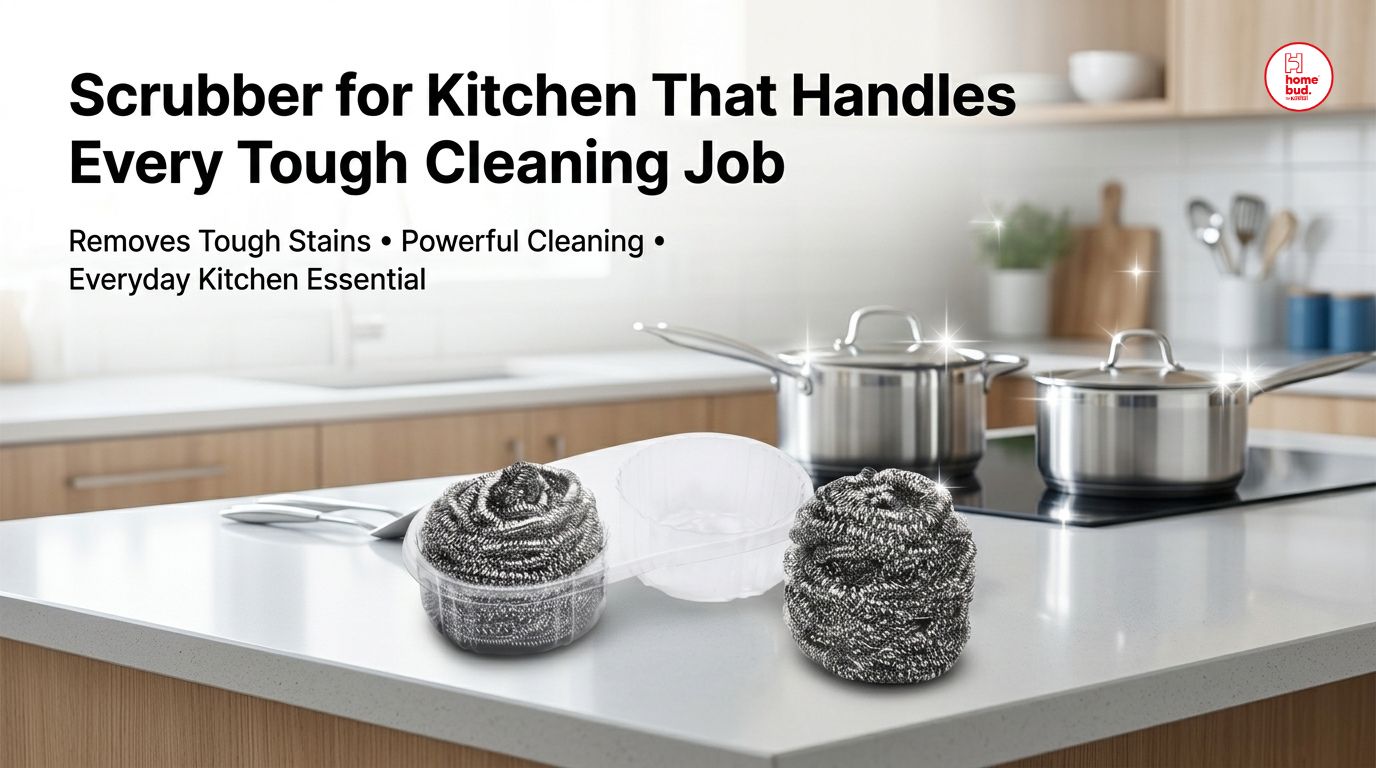
Every Indian kitchen produces cleaning challenges that most cleaning tools are not truly built for. The pressure cooker base with a week of baked-on dal. The non-stick tawa that needs cleaning without a single scratch on its coating. The steel kadai with the carbonised masala from Sunday’s mutton that has been soaking since yesterday and is still not shifting. The kitchen slab with the haldi stain that every cloth pass smears rather than lifts. A scrubber for kitchen cleaning is the tool that handles all of these — but only when the right type of scrubber is matched to the right surface and the right cleaning problem. Using a steel scrubber on non-stick cookware destroys the coating in one use. Using a soft sponge on a burnt pressure cooker base achieves almost nothing. Using the same scrubber for every surface in the kitchen produces mediocre results on all of them.
Why Indian Kitchens Need More Than One Type of Scrubber
The cleaning demands of an Indian kitchen are more varied than almost any other cooking environment in the world. A single cooking session can produce a non-stick tawa that needs the gentlest possible cleaning touch, a steel pressure cooker with a baked-on base residue that needs serious abrasive force, a glass vessel with a light food film that needs soft foam cleaning, and a kitchen sink with mineral scale that needs targeted scrubbing on a hard metal surface.
No single scrubber type handles all four of these cleaning tasks correctly. A steel scrubber powerful enough for the pressure cooker damages the non-stick tawa irreversibly. A soft sponge safe for the tawa makes no impression on the pressure cooker base. A kitchen scrubber toolkit for an Indian household that cooks three meals a day from scratch needs at minimum a soft sponge for delicate surfaces, a dual-sided scrub for everyday general use, and a steel scrubber for heavy burnt deposits on hard metal surfaces.
This is exactly the three-product structure of the Homebud scrubber range — each product calibrated for a specific cleaning intensity level, used together as a complete kitchen scrubbing system.
1. Homebud Kitchen Scrub Sponge — Best for Everyday Gentle Dishwashing
The Kitchen Scrub Sponge at Rs. 50 is the everyday gentle dishwashing scrubber for the majority of vessels in a standard Indian kitchen. Soft yet effective for removing grease and stains, gentle on hands and safe for delicate cookware, and designed for long-lasting everyday dishwashing performance.
This is the scrubber for the daily dishwashing load of plates, bowls, steel glasses, serving spoons, and cooking vessels that have everyday food residue rather than burnt or baked-on deposits. The soft foam construction generates excellent lather from a small amount of dish soap and covers vessel surfaces smoothly, lifting food residue and grease through the chemistry of the soap rather than through abrasive friction.
The gentle construction is specifically important for non-stick cookware — the Teflon and ceramic-coated vessels that most Indian kitchens use for roti, dosa, omelettes, and light cooking where the non-stick property matters for both cooking performance and ease of cleaning. The kitchen scrub sponge is the only scrubber in any range that should touch these surfaces. The coating scratches invisibly at first and then visibly after a few sessions if any abrasive scrubber is used even once. The soft sponge removes all standard food residue from non-stick surfaces safely with warm water and dish soap without any abrasive contact.
Rated 4.43 out of 5 and available at Rs. 50 with free shipping, the Kitchen Scrub Sponge is the foundation scrubber that every Indian kitchen needs as its daily dishwashing tool. It handles the majority of vessels in the kitchen correctly and should be the default reach-for scrubber for any surface where abrasion is a risk.
2. Homebud Sandwich Sponge Scrub — Best for Versatile Everyday Heavy Cleaning
The Sandwich Sponge Scrub at Rs. 60 is the three-layer construction scrubber that covers the mid-range cleaning intensity gap between gentle daily dishwashing and heavy steel scrubbing. Crafted with 3 powerful layers for deep, effective cleaning, it holds froth inside to prevent mess and maximise detergent use while being gentle on hands and tough on stubborn grease and stains.
The three-layer construction is what makes this scrubber the most versatile in the Homebud range. The soft foam layer handles delicate surface cleaning and lather application the same way the Kitchen Scrub Sponge does. The dense foam middle core retains dish soap within its structure throughout the washing session, generating consistent lather from first stroke to last without the rapid soap depletion that a thin sponge produces. And the abrasive scrub outer layer handles the cleaning intensity level between standard food residue and heavy burnt deposits — dried masala residue, the oil ring on a steel kadai after deep frying, the light scale on a pressure cooker lid, and any food deposit that the soft side alone cannot lift.
The practical implication of this construction is that the Sandwich Sponge Scrub replaces two separate scrubbers for most cooking residue situations. You do not need a separate soft sponge and a separate scrub pad for most Indian kitchen vessels because the Sandwich Sponge provides both in a single tool. Use the soft side on non-stick and delicate surfaces. Use the scrub side on steel and aluminium vessels with moderate food residue. The middle foam core ensures consistent lather performance throughout both applications.
The froth retention of the middle foam core is a practical benefit that most buyers notice immediately. Where a thin sponge depletes its soap in the first few seconds of contact with a vessel and requires constant reloading, the Sandwich Sponge Scrub’s dense core releases soap gradually throughout the washing process, covering more vessels per soap application and producing better cleaning results with less detergent.
At Rs. 60 and rated 4.29 out of 5, the Sandwich Sponge Scrub is the everyday multi-task scrubber for an Indian kitchen that cooks a full range of dishes and needs one tool that handles the majority of cleaning situations without constantly switching between products.
3. Homebud Stainless Steel Scrubber 2 Pcs — Best for Burnt Deposits and Heavy Grime
The Stainless Steel Scrubber 2 Pcs at Rs. 50 is the heavy-duty scrubber for the cleaning jobs that no sponge can handle — burnt deposits, carbonised masala residue, baked-on oil film on steel surfaces, mineral scale on the kitchen sink, and the hard, dark crust that builds up on the exterior base of a pressure cooker or kadai from direct gas flame contact.
Heavy-duty steel for tough burnt deposits and stubborn grime, rust-resistant and long-lasting for everyday kitchen cleaning, tough on stains and safe for utensils — these are the operating parameters that define what the stainless steel scrubber is for. The interwoven steel wire creates hundreds of contact points per square centimetre that generate the abrasive force needed to break through carbonised food bonds with metal surfaces. This force is precisely what makes it effective on steel and iron surfaces and precisely what makes it destructive on any coated surface.
The critical rule for the stainless steel scrubber is the surface it should never touch. Non-stick, Teflon, ceramic-coated, aluminium without hard anodising, glass, and glazed ceramic are all surfaces that a steel scrubber scratches permanently with the very first use. The coating that a non-stick pan took months of careful cooking to maintain can be destroyed in a single scrubbing session with a steel scrubber. The visual clarity of a glass vessel can be permanently dulled by the micro-scratches from one steel scrubber pass. This is not recoverable damage. It is permanent and it requires replacing the vessel.
Used correctly — exclusively on hard uncoated metal surfaces including stainless steel pressure cookers, steel kadais, iron cookware, stainless steel sinks, and gas burner grates — the stainless steel scrubber performs in a way that no other scrubber type can match. The burned dal base that has been soaking for an hour and showing no response to sponge scrubbing lifts in two minutes of circular steel scrubber work. The baked-on masala on a steel kadai’s exterior that mopping and sponging have ignored for weeks responds to a steel scrubber within a single cleaning session.
At Rs. 50 for two scrubbers — Rs. 25 each — and rated 4.67 out of 5 as the highest-rated scrubber in the Homebud range, the Stainless Steel Scrubber is the most powerful and most specific kitchen cleaning tool in the collection. It should be in every Indian kitchen that uses steel or iron vessels for serious daily cooking.
The Complete Indian Kitchen Scrubber System
Using all three Homebud scrubbers as a system rather than choosing one for everything covers the complete range of cleaning intensity and surface type that an Indian kitchen produces in a single daily cooking cycle.
The Kitchen Scrub Sponge handles the non-stick tawa, the ceramic-coated kadai, the glass pressure cooker lid, the serving plates, bowls, glasses, and any vessel or surface where abrasion is a risk. This is the tool for the majority of daily dishwashing by volume.
The Sandwich Sponge Scrub handles the standard steel vessels with everyday cooking residue, the kitchen platform and backsplash tiles for daily surface cleaning, the aluminium pressure cooker exterior, and any vessel with dried food residue that the soft sponge cannot lift without some abrasive assistance. This is the versatile mid-range tool for the moderate cleaning jobs that fall between gentle and heavy.
The Stainless Steel Scrubber handles the burnt pressure cooker base, the iron kadai with carbonised masala, the kitchen sink with mineral scale, and the gas burner grates with baked-on cooking residue. This is the heavy-duty specialist tool for the cleaning situations that nothing else resolves.
Three scrubbers. Three cleaning intensity levels. Every vessel type covered. Every surface protected from the wrong tool and cleaned effectively by the right one.
How to Keep Your Kitchen Scrubbers Hygienic and Long-Lasting
A kitchen scrubber that is not properly maintained between uses becomes less effective and less hygienic progressively. The kitchen scrubber sits in a wet environment, contacts food residue, and is used repeatedly — conditions that require consistent care to prevent bacterial buildup and accelerated material degradation.
Rinse every scrubber thoroughly under running water after every use. This means squeezing and working the sponge under running water until the water runs clear for foam scrubbers, and holding the steel scrubber under strong running water while turning it to flush water through the wire structure. Post-use rinsing removes the food material and soap residue that bacteria feed on between uses and that causes the sour smell that develops in poorly maintained scrubbers within days.
After rinsing, squeeze out all excess water and store the scrubber in a position where air circulates around all surfaces. A small drainage rack beside the sink, a hook, or a sponge holder that keeps the scrubber elevated rather than sitting in pooled water dries the scrubber between uses. The faster the scrubber dries between uses, the slower bacterial growth accumulates.
Once a week, do a deeper clean of foam scrubbers. Soak in a bowl of hot water with a small amount of white vinegar for ten minutes, squeeze thoroughly, and rinse completely. This kills accumulated bacteria within the foam structure and eliminates the odour compounds that regular rinsing does not fully address.
Replace foam scrubbers every three to four weeks under daily heavy kitchen use. A scrubber that has developed a persistent smell, visible discolouration from accumulated masala and grease, or structural compression that has reduced its thickness should be replaced rather than continued in use. At Rs. 50 to Rs. 60 per replacement, the cost of timely replacement is far smaller than the hygiene cost of persisting with a contaminated scrubber on the vessels that your family eats from.
Replace steel scrubbers when individual wires begin separating from the structure and appearing on vessels during scrubbing, or when the scrubber shows visible rust spots on the wire surface. A rust-spotted steel scrubber leaves rust marks on vessels and should be discarded immediately.
FAQ on Scrubber for Kitchen
The Kitchen Scrub Sponge at Rs. 50 is the only scrubber that should be used on non-stick, Teflon, and ceramic-coated cookware. Its soft foam construction cleans these surfaces safely through soap chemistry without any abrasive contact. Any abrasive scrubber — including the scrub side of the Sandwich Sponge and all steel scrubbers — scratches non-stick coatings permanently from the very first use.
The Stainless Steel Scrubber 2 Pcs at Rs. 50 is the right tool for burnt deposits on the interior of steel pressure cookers. Apply dish soap, add a small amount of hot water to the vessel, soak for five to ten minutes, then scrub in circular motions with the steel scrubber. Most burnt base deposits respond within one to two rounds of this method. Never use a steel scrubber on the rubber gasket, glass lid, or any coated interior surface of the pressure cooker.
The Kitchen Scrub Sponge is a single-material soft foam scrubber designed exclusively for gentle cleaning on delicate surfaces. The Sandwich Sponge Scrub is a three-layer construction with a soft foam outer layer, a dense foam middle core for soap retention, and an abrasive scrub outer layer — covering both gentle cleaning on delicate surfaces with the soft side and moderate abrasive cleaning on steel and aluminium with the scrub side. The Sandwich Sponge Scrub is the more versatile tool. The Kitchen Scrub Sponge is the more specifically safe option for exclusively non-stick and delicate surfaces.
The Kitchen Scrub Sponge and Sandwich Sponge Scrub last three to four weeks under daily heavy kitchen use with proper post-use rinsing and weekly deep cleaning. The Stainless Steel Scrubber lasts four to eight weeks depending on the intensity and frequency of heavy burnt deposit cleaning tasks. Replace all scrubbers at the first sign of persistent odour, structural degradation, or visible contamination regardless of how recently they were purchased.