
Dish Scrubber That Removes Grease and Keeps Dishes Spotless
-
Posted by
homebud
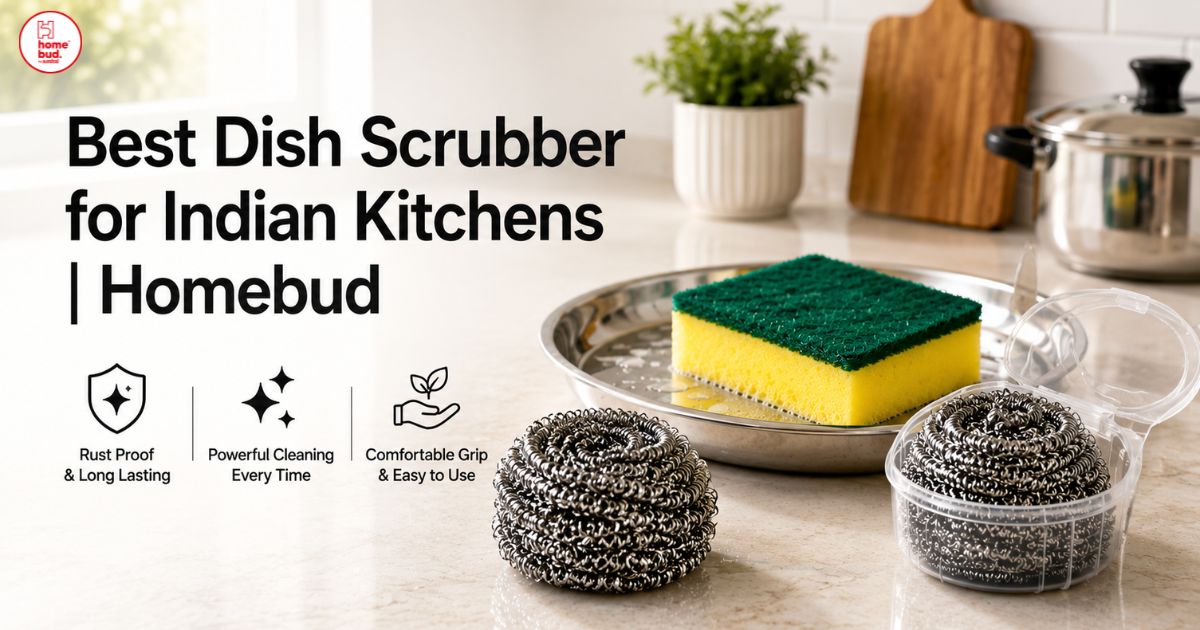
There is a specific kind of frustration that happens at the kitchen sink.
You have already cooked the meal, served the family, and sat down for five minutes. Now comes the pile — the kadhai with mustard oil baked into the base, the pressure cooker with dal crusted around the rim, the non-stick tawa that absolutely cannot be touched with anything rough. You pick up the sponge sitting on the side of the sink. It smells off, it is falling apart at one corner, and it is doing almost nothing against the grease.
This is not a cleaning problem. It is a dish scrubber problem.
The right scrubber changes the dishwashing experience completely. Grease lifts in two passes instead of ten. Surfaces come out actually clean, not just rinsed. Your hands do not feel raw at the end. And the vessel you spent good money on does not end up scratched because someone grabbed the wrong tool.
This guide covers everything you need to know — what makes a good dish scrubber, which type works for which vessel, how to keep your scrubbers hygienic, and the exact Homebud products that do the job right for Indian kitchens.
Why Most Dish Scrubbers Fail Indian Kitchens Specifically
Indian cooking is harder on dishwashing tools than most cuisines in the world. This is not an exaggeration.
Consider what a typical Indian kitchen produces in a day:
- Mustard oil and ghee residue that clings to vessel walls even after rinsing
- Haldi and masala stains that bond to metal surfaces if left to sit
- Burnt bases from pressure cooking and slow simmering on high heat
- Dal and sambar that dries into a cement-like crust if the vessel is not soaked
- Non-stick tawa surfaces that need gentle cleaning but still carry oily residue
A cheap sponge from a random brand handles none of this well. It either disintegrates under the pressure of daily use, spreads grease instead of lifting it, or scratches the surfaces it was never designed to touch.
A scrubber built for daily Indian kitchen use needs to be durable, genuinely effective at cutting grease, and available in formats that match the vessel — because the same tool that cleans a non-stick pan will destroy it if applied to a steel kadhai with the wrong side, and vice versa.
The Three Types of Dish Scrubbers and Which One You Actually Need
Not every scrubber belongs in every kitchen. Matching the scrubber to the vessel is the single most important thing you can do to get dishes clean without damaging anything.
Type 1 — Kitchen Scrub Sponge (Soft, Single-Body Foam)
A single-body foam sponge is the gentlest cleaning tool in the dish scrubber family. It is designed specifically for:
- Non-stick pans, dosa tawa, and Teflon-coated cookware
- Ceramic and glass vessels
- Regular plates, bowls, and cups used daily
- Delicate crockery that shows scratches easily
The foam structure absorbs dishwashing liquid and holds it throughout the cleaning process, which means better lather from a smaller amount of soap. It lifts grease and food residue through contact and absorption rather than abrasion — so the surface underneath stays completely undamaged.
The Homebud Kitchen Scrub Sponge is rated 4.4 out of 5 across customer reviews, with buyers consistently noting that it removes grease without spreading it and stays firm through multiple uses without breaking apart. At ₹50, it is the most affordable entry point in the Homebud scrubber range and the right daily-use tool for any household with non-stick cookware.
Key features:
- Soft on hands, especially for people with sensitive skin
- Effective on grease and oil residue without requiring hard pressure
- Long-lasting foam that does not disintegrate after a few washes
- Safe for non-stick, Teflon, ceramic, and glass surfaces
- Comfortable grip that gives you control during scrubbing
Type 2 — Sandwich Sponge Scrub (Multi-Layer, Dual-Sided)
The sandwich sponge scrub is the most versatile tool in the dish scrubber range for Indian kitchens. The three-layer construction — soft foam on one side, absorbent inner core, and an abrasive mesh layer on the other side — means you get two different cleaning tools in a single piece.
Use the soft foam side for:
- Non-stick surfaces
- Regular plates and glasses
- Any vessel where light cleaning is enough
Flip to the abrasive mesh side for:
- Stainless steel vessels with dried food or stains
- Pressure cooker bases and rims
- Baking trays and heavy-bottomed pans
- Any vessel where the soft side simply cannot move the residue
This is the scrubber that belongs in most Indian kitchens because most households use a mix of cookware — non-stick tawa, steel kadhai, pressure cooker, plates, glasses, serving bowls — and no single surface type dominates the whole sink.
The inner foam core of the sandwich design also holds froth inside the sponge during cleaning, which prevents soapy water from spraying and reduces the amount of detergent needed per session. Reviewers note this specifically as one of the practical advantages of the layered construction.
Type 3 — Stainless Steel Scrubber (Heavy Duty Metal Mesh)
A Stainless Steel Scrubber is a completely different category of tool. It is not a sponge. It is a metal mesh pad designed for one specific job: removing stubborn burnt deposits, mineral scale, and heavily baked-on food from hard metal surfaces.
Use a steel scrubber for:
- Iron kadhai with years of built-up residue
- Pressure cooker bases after long simmering sessions
- Steel vessels with burnt masala or dal stuck to the bottom
- Mineral scale deposits inside pots and pans
Never use a steel scrubber on:
- Non-stick or Teflon-coated cookware
- Aluminium vessels
- Glass or ceramic surfaces
- Any coated or painted cookware
The Homebud Stainless Steel Scrubber comes in a pack of 2 at ₹50, making it extremely cost-effective for the job it does. It is rust-resistant and built to survive the wet, humid environment of an Indian kitchen sink. Customer reviews give it a 4.67 rating, the highest in the Homebud scrubber range, with buyers praising its performance against tough burnt deposits.
How to Choose the Right Dish Scrubber for Each Vessel
|
Vessel Type |
Right Scrubber |
Why |
|
Non-stick tawa / dosa pan |
Kitchen Scrub Sponge (soft side) |
Foam lifts grease without scratching coating |
|
Ceramic / glass vessels |
Kitchen Scrub Sponge (soft side) |
Non-abrasive, safe on glazed surfaces |
|
Steel plates and bowls |
Sandwich Sponge (either side) |
Soft for daily, abrasive mesh for stains |
|
Pressure cooker body |
Sandwich Sponge (mesh side) |
Needs more scrubbing power than foam alone |
|
Pressure cooker base (burnt) |
Stainless Steel Scrubber |
Only tool that handles baked-on deposits |
|
Iron kadhai |
Stainless Steel Scrubber |
Heavy residue needs metal-grade abrasion |
|
Mixing bowls and serving dishes |
Soft sponge side |
Gentle cleaning only, these show scratches |
|
Glasses and cups |
Kitchen Scrub Sponge |
Small, precise cleaning tool |
What Makes a Good Dish Scrubber — The Features That Actually Matter
If you have ever bought a pack of cheap sponges that lasted four days before disintegrating, this section will save you money going forward.
Foam density and shape retention are the most important quality indicators in a kitchen scrub sponge. Low-density foam compresses immediately under pressure, loses its shape after a few washes, and starts shedding pieces into the sink within a week. High-density foam holds its structure through daily use, maintains its cleaning effectiveness longer, and does not leave foam fragments on your vessels.
Abrasive layer quality in a dual-sided sponge determines whether the scrub side actually cleans or just scratches. A well-designed abrasive layer removes food residue effectively without being so rough that it damages standard steel or coated surfaces.
Absorbency affects how much dishwashing liquid you use per session. A high-absorbency sponge holds soap throughout the cleaning process and distributes it evenly across vessel surfaces. A low-absorbency sponge forces you to keep adding soap because it cannot retain enough to cover the area you are cleaning.
Rust resistance in steel scrubbers is non-negotiable in an Indian kitchen environment. A steel scrubber that is not rust-resistant will begin to deteriorate within days of regular use in a wet sink. Rust from a scrubber can transfer to vessels during cleaning — exactly the opposite of what you are trying to achieve.
Ergonomics — how the scrubber feels in your hand during use — matters more than most product descriptions acknowledge. A scrubber that is the right size, the right thickness, and has enough grip gives you control and reduces the effort needed per cleaning session. One that is awkward to hold makes dishwashing harder than it needs to be.
How Indian Kitchens Should Think About Scrubber Selection
A common mistake is treating the dish scrubber as a single-tool category. Most Indian households actually need two or three different scrubbers in the kitchen at any given time, each designated for a specific purpose.
The minimal Indian kitchen scrubber kit:
- One soft kitchen scrubber sponge kept exclusively for non-stick cookware and delicate surfaces
- One sandwich sponge scrub for everyday plates, steel vessels, and mixed-use cleaning
- One steel scrubber for iron cookware and heavy burnt-deposit cleaning
Keeping these tools separate — and using each one only for its designated purpose — extends the life of all three, protects your cookware, and makes dishwashing faster because you are not scrubbing with the wrong tool.
Color-coding is a practical habit: keep different colors for different purposes if your scrubbers look similar. Some households use one color in the bathroom and another in the kitchen to prevent cross-contamination. It sounds minor until you remember the alternative.
How to Keep Your Dish Scrubber Hygienic and Long Lasting
A wet sponge in a kitchen environment is the highest-bacteria-contact object in most Indian homes. This is not alarmist — it is straightforward biology. Moisture, warmth, food residue, and daily contact with everything in the sink create ideal bacterial growth conditions inside a sponge that is not properly maintained.
After every use:
- Rinse the scrubber thoroughly under running water
- Squeeze out all trapped water and soap residue
- Shake out excess moisture
- Store in a position where air circulates on all sides — not flat in a pool of water
Between uses:
- Do not leave the scrubber sitting wet inside a closed cabinet
- A simple holder or upright position on the sink edge is enough
- Air circulation is the most effective anti-bacterial measure for sponges
Replacement schedule:
- Kitchen scrub sponge: every 3 to 4 weeks under daily use
- Sandwich sponge scrub: every 4 to 5 weeks, or sooner if the abrasive layer wears flat
- Steel scrubber: every 2 to 3 months, or when rust appears
Replace immediately if:
- The sponge develops a smell that does not wash out
- Foam is visibly breaking apart or shedding
- The abrasive layer has flattened and no longer creates friction
- The steel scrubber shows visible rust spots
A worn scrubber does not just clean less effectively — it can actually contaminate the vessels you are trying to clean. Replacement on schedule is the hygienic choice, not a waste.
Why Homebud Scrubbers Work for Daily Indian Kitchen Use
Homebud designs cleaning tools specifically for Indian household use. The sponge density, the abrasive mesh layer construction, and the steel scrubber material specification are all built around the demands of daily Indian cooking and cleaning rather than the lighter cleaning requirements that most imported scrubber brands are designed for.
The Kitchen Scrub Sponge is soft enough to be completely safe on non-stick and ceramic surfaces while being effective enough against oil and masala residue — the combination Indian kitchens specifically need, and one that cheap sponges consistently fail to deliver.
The Stainless Steel Scrubber is rust-resistant, which is essential in a kitchen where the sink area stays damp through most of the day. At ₹50 for two pieces, it makes heavy-duty scrubbing completely accessible.
Explore the complete Homebud scrubber collection for all three formats — soft sponge, sandwich scrub, and steel scrubber — with free shipping on every order.
The Right Scrubber Makes Every Dishwashing Session Faster
Dishwashing is not a glamorous task. But with the wrong scrubber, it becomes genuinely harder than it needs to be — more scrubbing, more soap, more time, and vessels that still come out looking greasy.
The right dish scrubber does not make dishwashing exciting. It makes it fast, effective, and done — so you can move on.
Pick the soft Kitchen Scrub Sponge for your non-stick and delicate surfaces. Reach for the Stainless Steel Scrubber when the kadhai or pressure cooker needs serious work. And browse the full Homebud scrubber collection to find the complete range built for the way Indian kitchens actually cook and clean every day.
Frequently Asked Questions
For a soft foam-only sponge, yes — as long as you use it gently on non-stick surfaces. For a dual-sided sandwich sponge, use only the soft foam side on non-stick and coated cookware. Never use the abrasive mesh side or a steel scrubber on any non-stick, Teflon, or ceramic surface.
Under daily use, replace a foam sponge every three to four weeks. Replace it sooner if it develops an odour, starts shedding foam pieces, or loses its shape. A worn sponge cleans less effectively and is less hygienic than a fresh one.
No. A steel scrubber is safe for stainless steel vessels, iron cookware, and heavy-bottomed metal pans. It should never be used on non-stick, Teflon, aluminium, glass, or coated surfaces, as it will cause visible and permanent scratching.
A kitchen scrub sponge is a single-body soft foam tool for gentle, everyday cleaning. A sandwich sponge scrub has multiple layers including an abrasive outer mesh, giving you a soft side and a scrubbing side in one piece. The sandwich format is more versatile for mixed-use Indian kitchens.
Rinse completely after every use and squeeze out all trapped water and soap. Store in a position where air circulates on all sides between uses. Replace every three to four weeks regardless of appearance, since bacterial buildup inside the foam is not always visible even when it is producing the smell.
Use the abrasive mesh side of the sandwich sponge scrub for the body and outer surfaces. For the base of the cooker after a long cooking session with burnt residue, use a stainless steel scrubber. For the rubber gasket and lid seal, always use a soft sponge to avoid damaging the rubber.
Yes. A stainless steel scrubber is designed for exactly this use — removing burnt food and heavy residue from steel cooking vessels. Apply a small amount of dishwashing liquid, use circular scrubbing motions, and rinse thoroughly.
Yes. A soft kitchen scrub sponge is the most hand-friendly option because the foam does not create friction against skin during use. If you wash dishes frequently, the soft foam option reduces skin irritation compared to abrasive mesh tools. The Homebud Kitchen Scrub Sponge is specifically noted by reviewers as gentle on hands during extended washing sessions.